

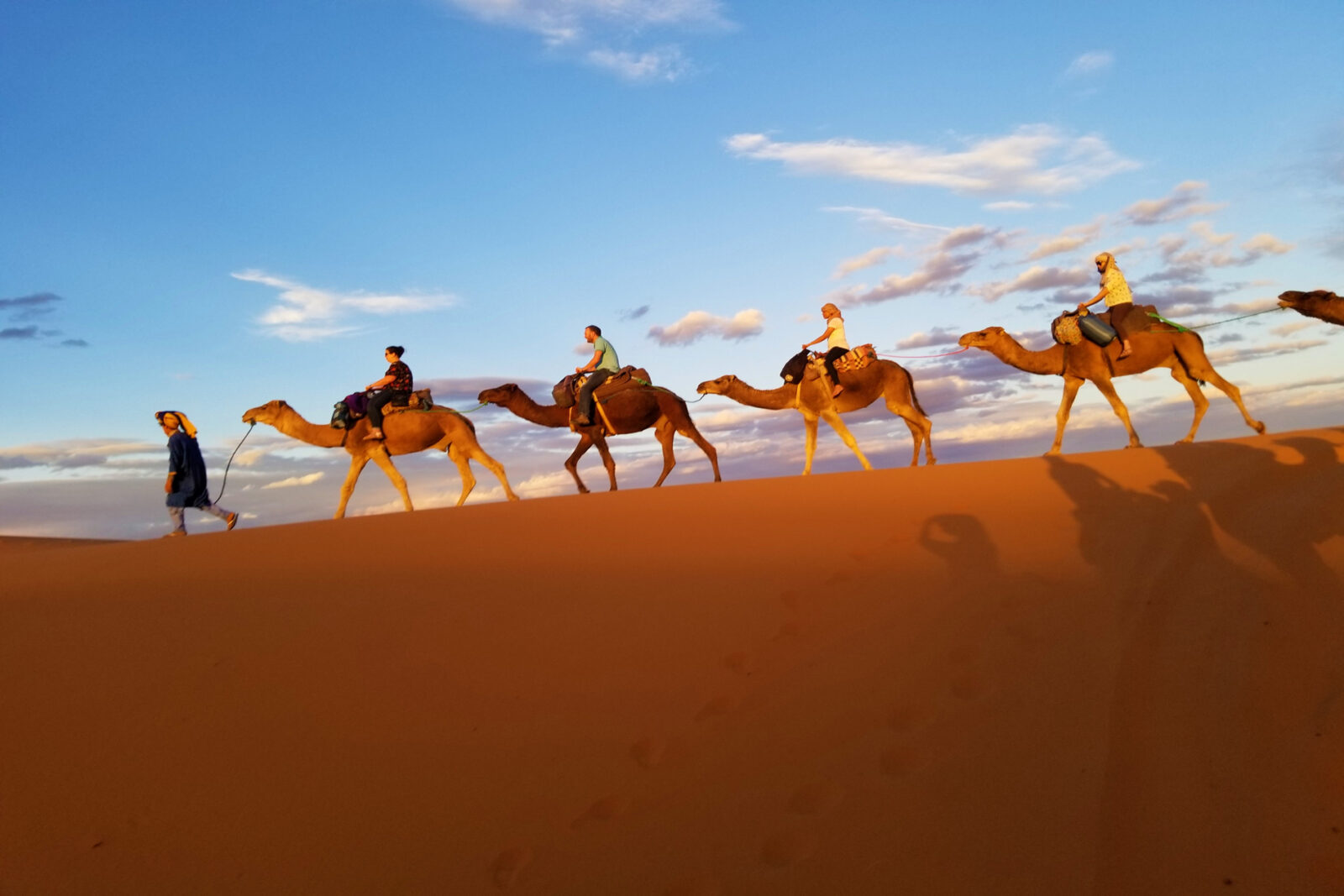
Before the sun rises, the Sahara is a world made of shadows and silence. The dunes are cool underfoot, their curves soft and unbroken, stretching toward a horizon that barely exists in the half‑light. Your camel shifts its weight beside you, exhaling a warm, grainy breath that smells faintly of hay and dust. When the first streak of gold cuts across the sky, the desert changes in an instant—shapes sharpen, colors deepen, and the dunes glow as if lit from within. This is the beginning of a journey that unfolds at the pace of sand and wind, a trek through one of the most elemental landscapes on Earth.
Into the Heart of the Dunes
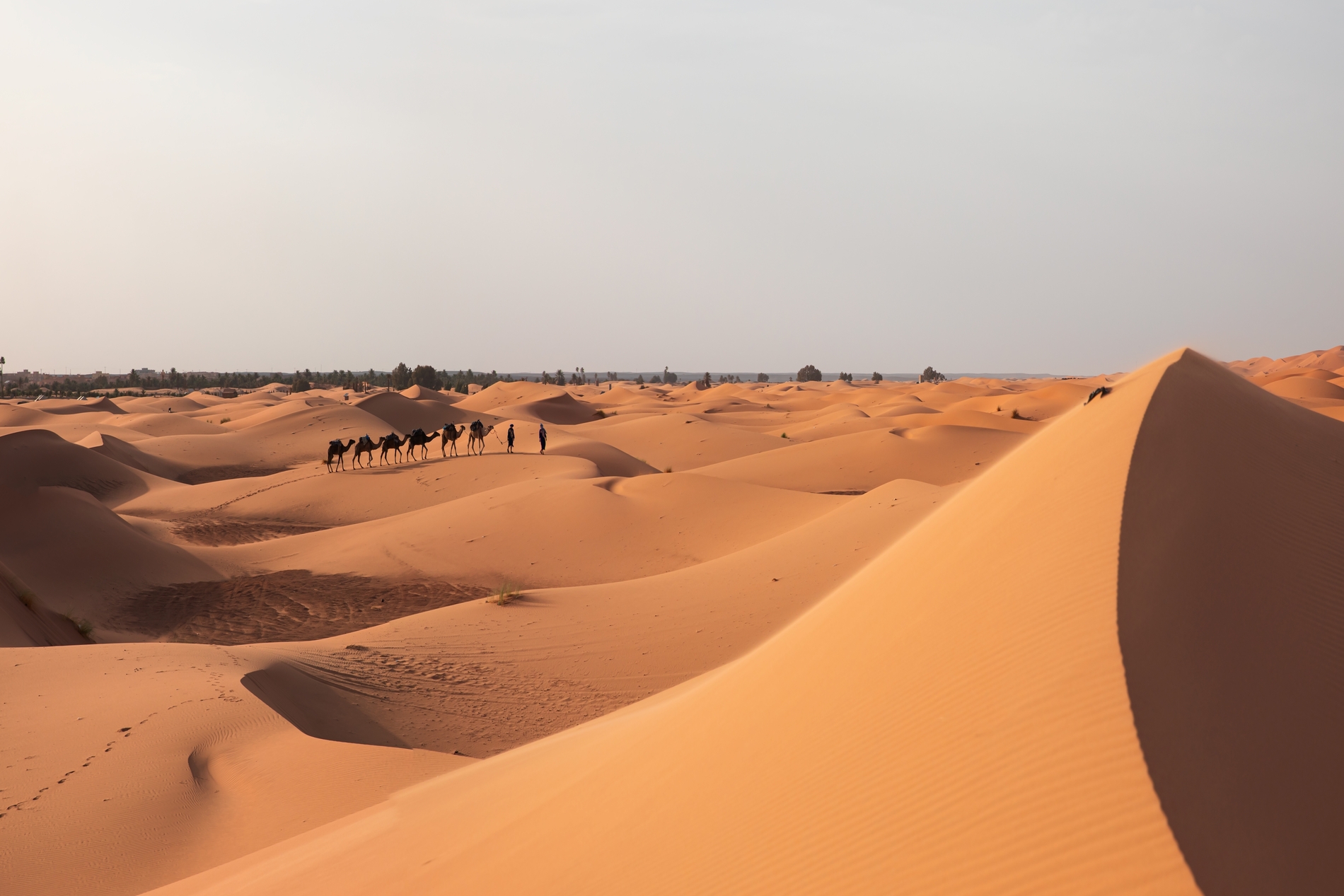
Riding a camel is not elegant at first. The sway is slow and deliberate, a rolling motion that forces your body to loosen and adapt. But once you settle into the rhythm, the desert begins to reveal itself. The dunes rise and fall like frozen waves, their ridges etched by the night wind. The sand is warm by mid‑morning, slipping through your fingers like fine powder. Every direction feels infinite.
The Sahara has a way of stripping life down to essentials. You drink water often. You watch the sky for signs of shifting weather. You learn to read the dunes—how their shadows mark the time of day, how their crests guide the path forward. The silence is immense, but never empty. It hums with the movement of distant caravans, the whisper of wind, the soft groan of your camel’s steps.
Life in the Nomad Camps
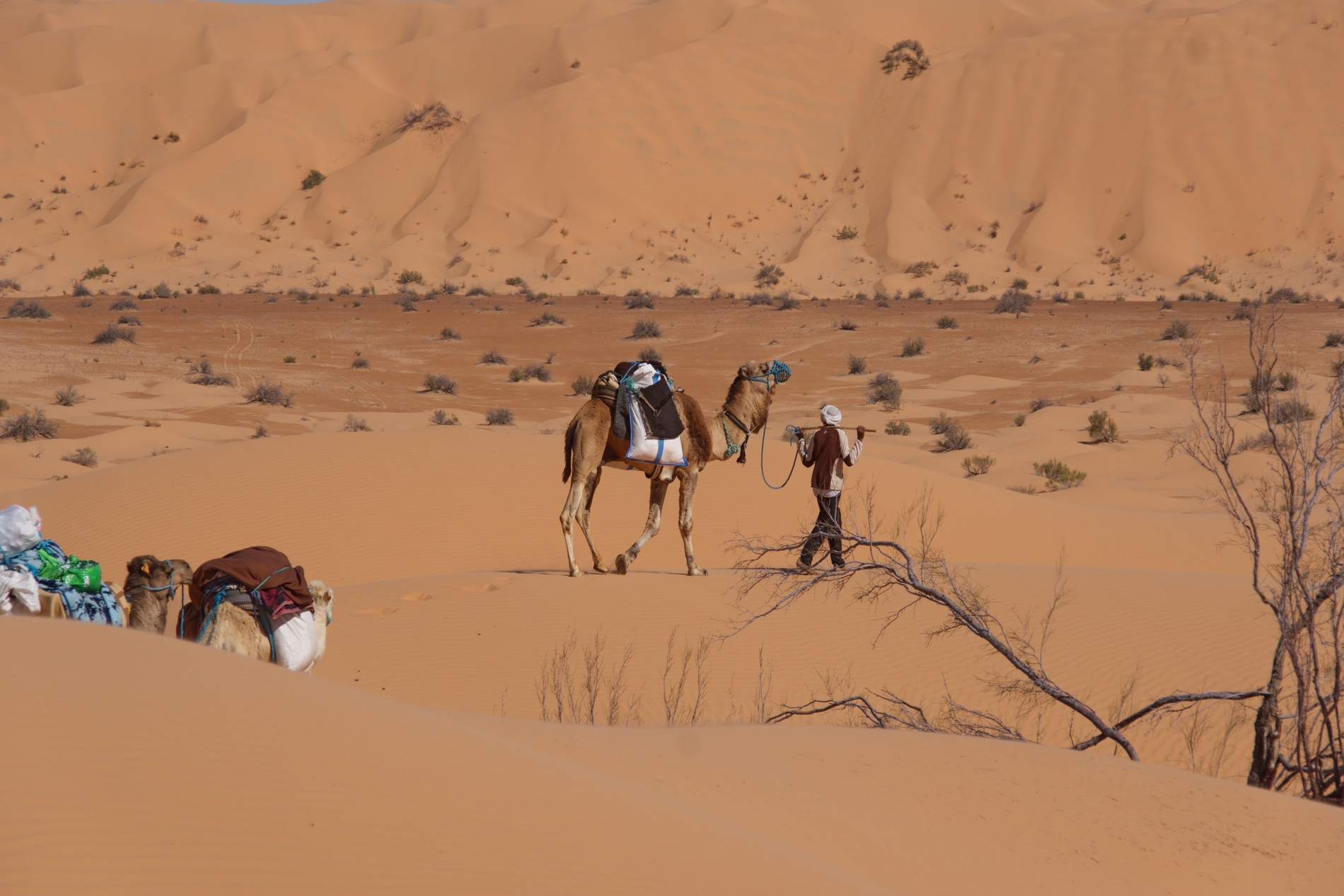
By midday, the heat presses down with a weight that demands rest. Your guide leads you to a nomad camp tucked between two towering dunes. The tents are woven from camel hair, dark and cool inside. Mint tea is poured in long, graceful arcs, the steam rising in fragrant curls. Bread bakes under the sand, pulled out warm and smoky. You sit on low cushions, sharing a simple meal while the desert outside shimmers in the heat.
These camps are more than overnight stops—they’re windows into a way of life shaped entirely by the desert. Stories flow easily in the shade: tales of long journeys, shifting dunes, and the constellations that guide travelers across the night. The pace slows. The world narrows to essentials: shade, water, rest.
The Long Walk at Sunset
As the sun begins to drop, the desert softens. Shadows stretch across the dunes, turning them into a landscape of gold and violet. You dismount and walk barefoot along the ridge, the sand still warm but no longer scorching. Each step sinks gently, leaving temporary imprints that the wind will erase by morning.
This is the Sahara at its most hypnotic. The air cools. The sky deepens. The dunes glow with a quiet fire. You climb to the highest crest you can find and watch the sun slip behind the horizon in a slow, deliberate descent. The moment feels suspended—timeless, weightless, almost unreal.
Nights Under a Thousand Stars
When darkness settles, the desert becomes a cathedral of stars. The Milky Way spills across the sky in a bright, shimmering band. The air is crisp, carrying the faint scent of sand and smoke from the campfire. You lie back on a blanket, listening to the low murmur of the wind and the occasional grunt of camels settling for the night.
The silence is profound, but comforting. It wraps around you like a second skin. You fall asleep to the sound of nothing but your own breath and the shifting sand.
What the Sahara Leaves Behind
A camel trek through the Moroccan Sahara stays with you long after the journey ends. You remember the sway of the camel beneath you, the heat rising from the dunes, the taste of mint tea in the shade, the shock of cold desert nights. You remember the vastness—how it made you feel small, but never insignificant.
The Sahara teaches patience, presence, and humility. It asks you to move slowly, to listen closely, to let the landscape guide you. And when you leave, you carry with you the memory of standing alone on a dune at sunrise, the desert stretching endlessly in every direction, the world reduced to sand, sky, and the steady rhythm of your own heartbeat.