

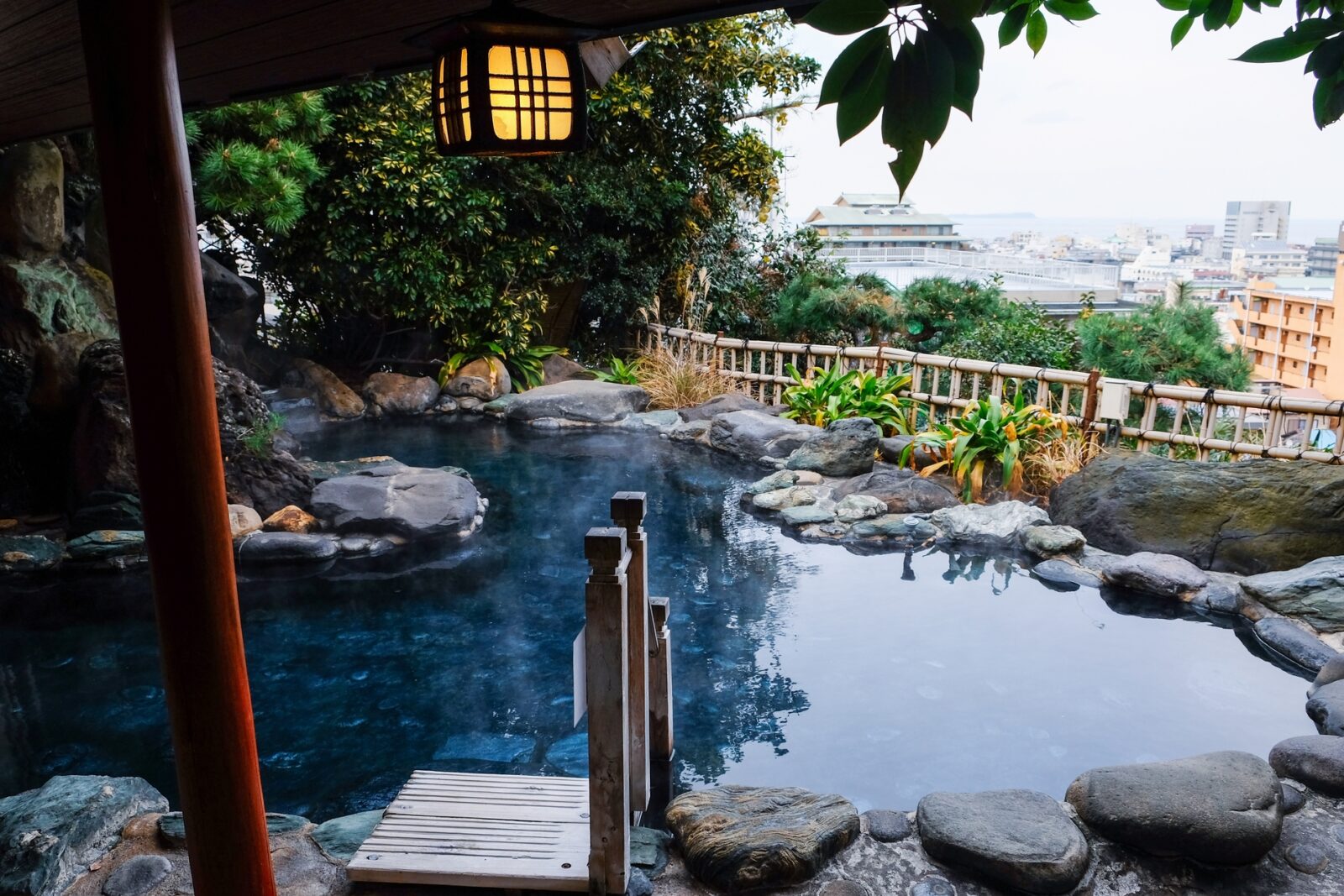
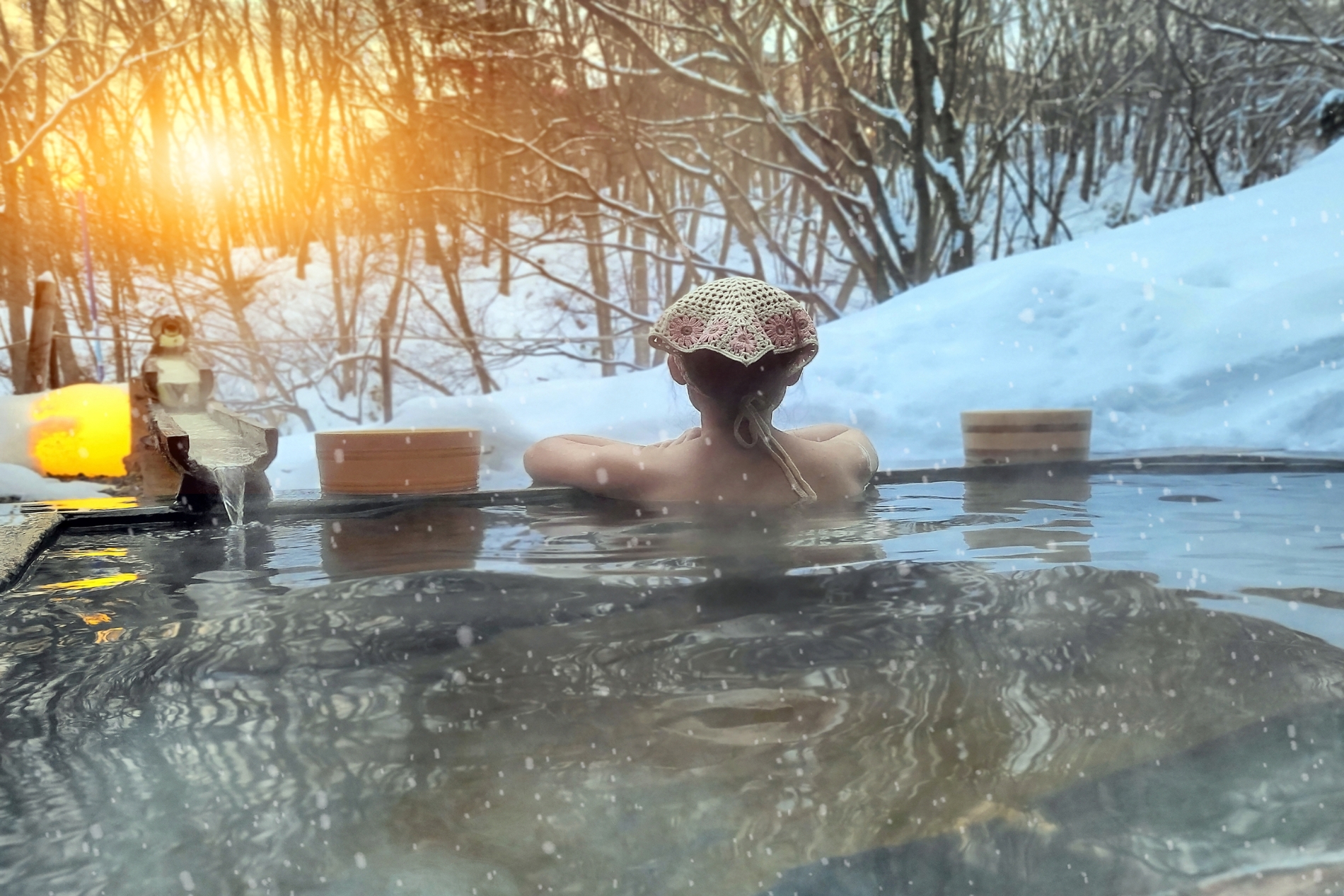
Steam rises in slow, silvery ribbons from the surface of the water. Outside, snow settles on black volcanic rock, softening the edges of the world. You lower yourself into the onsen and feel the heat wrap around you—first startling, then enveloping, then deeply, almost spiritually grounding. A cedar bucket floats nearby. Somewhere behind the bamboo fence, a nightingale calls once, then falls silent. Your phone is nowhere near you. Time loosens its grip. In this moment, the bath becomes more than water. It becomes a teacher.
Japan’s bathing culture carries a quiet authority. It asks nothing of you except your presence. Onsens—fed by mineral‑rich hot springs—are not indulgences but rituals, woven into the country’s daily rhythm. The atmosphere is hushed, reverent without being rigid. You hear the soft splash of water, the rustle of a yukata, the muted footsteps of someone entering the washing area. The world outside feels distant, irrelevant. Here, the body is allowed to soften, and the mind follows.
There is a tenderness to the experience, a sense that the bath is holding you rather than the other way around.
Where Water Becomes Wisdom
The onsen ritual begins long before you enter the pool. You sit on a small wooden stool, washing slowly, deliberately, letting warm water run over your shoulders. This is not cleansing as a task; it’s cleansing as a reset. The Japanese call it hadaka no tsukiai—the intimacy of shared nakedness, not in a vulnerable sense, but in a human one. Everyone is equal in the bath. Everyone is quiet. Everyone is here to let go.
Once you step into the onsen, the minerals begin their work. Sulfur, iron, sodium, magnesium—each spring has its own character, its own healing properties. The heat seeps into your muscles, dissolving tension you didn’t realize you were carrying. Your breath deepens. Your thoughts slow. The water becomes a kind of oracle, revealing what your body has been trying to tell you.
When Japan Feels Its Most Restorative
Japan’s bathing culture is rooted in centuries of tradition. Monks once used hot springs as part of purification rituals. Villagers gathered in communal baths to share stories and warmth. Today, the practice remains a cornerstone of wellness, not because it is fashionable, but because it works. The combination of heat, minerals, silence, and ritual creates a physiological and emotional shift that feels both ancient and immediate.
Ryokans—traditional inns—elevate the experience. Tatami mats, sliding shoji screens, the faint scent of hinoki wood. After your bath, you slip into a cotton yukata and drink tea that tastes faintly of roasted barley. Dinner arrives in small, artful dishes: simmered vegetables, grilled fish, pickles bright with vinegar. Everything is intentional. Everything is designed to bring you back to yourself.
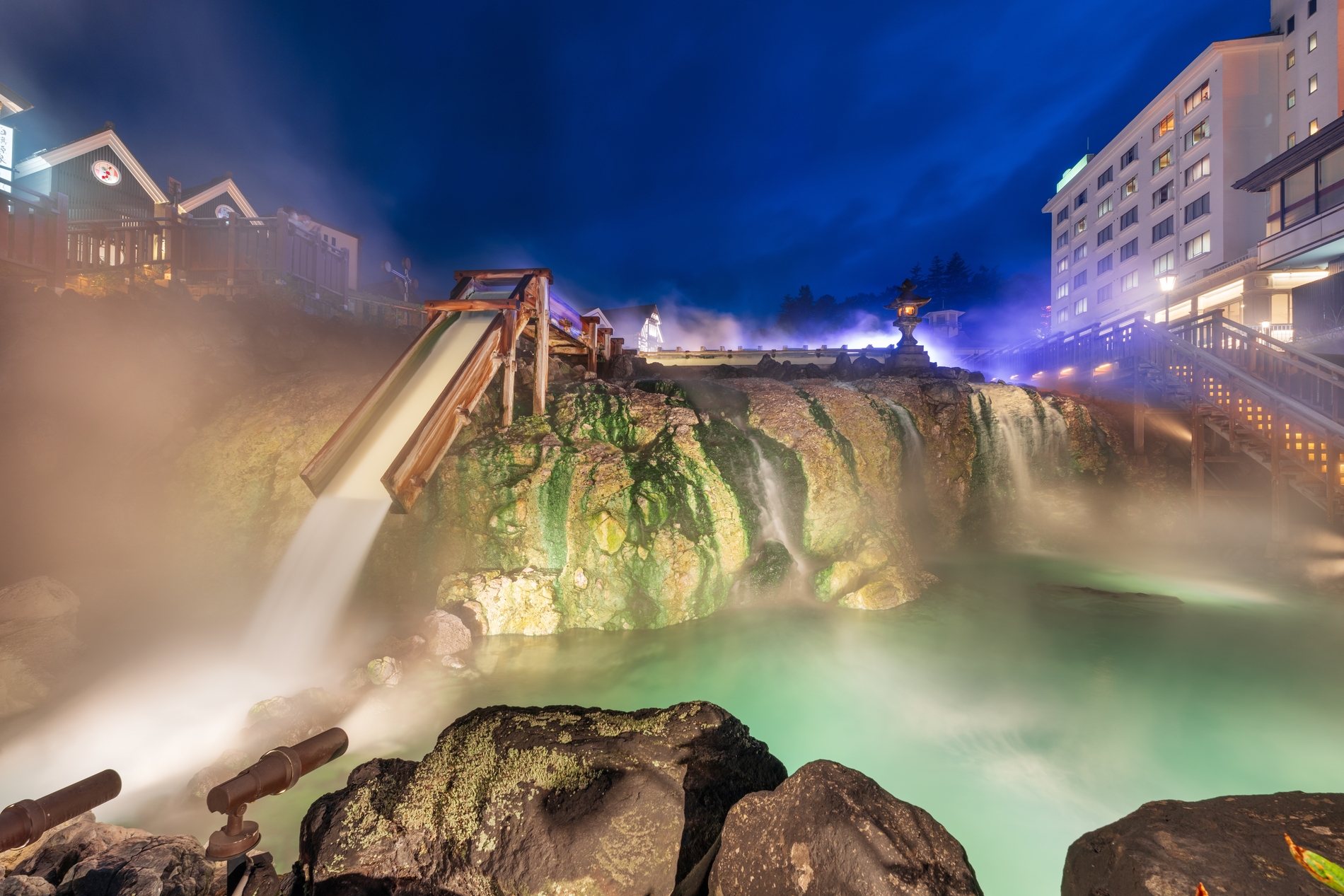
Winter is the season when onsens feel almost otherworldly. Snow falling around an outdoor bath creates a cocoon of warmth and cold, a contrast that heightens every sensation. Spring brings cherry blossoms drifting across the water like pale confetti. Autumn wraps the mountains in red and gold, turning every outdoor soak into a painting. Even summer, humid and lush, offers relief in cooler mountain springs. Each season reveals a different facet of the ritual, a different lesson from the water.
What You Carry Home
The onsen stays with you long after you leave Japan. It lingers in the memory of heat against skin, the scent of cedar, the quiet discipline of washing before entering the bath. More than anything, it leaves you with a recalibrated sense of pace. A reminder that wellness doesn’t always require effort. Sometimes it simply requires space—space to breathe, to soften, to listen. The onsen teaches you that restoration is not a luxury. It’s a practice. A way of returning to the body with gentleness and intention.