

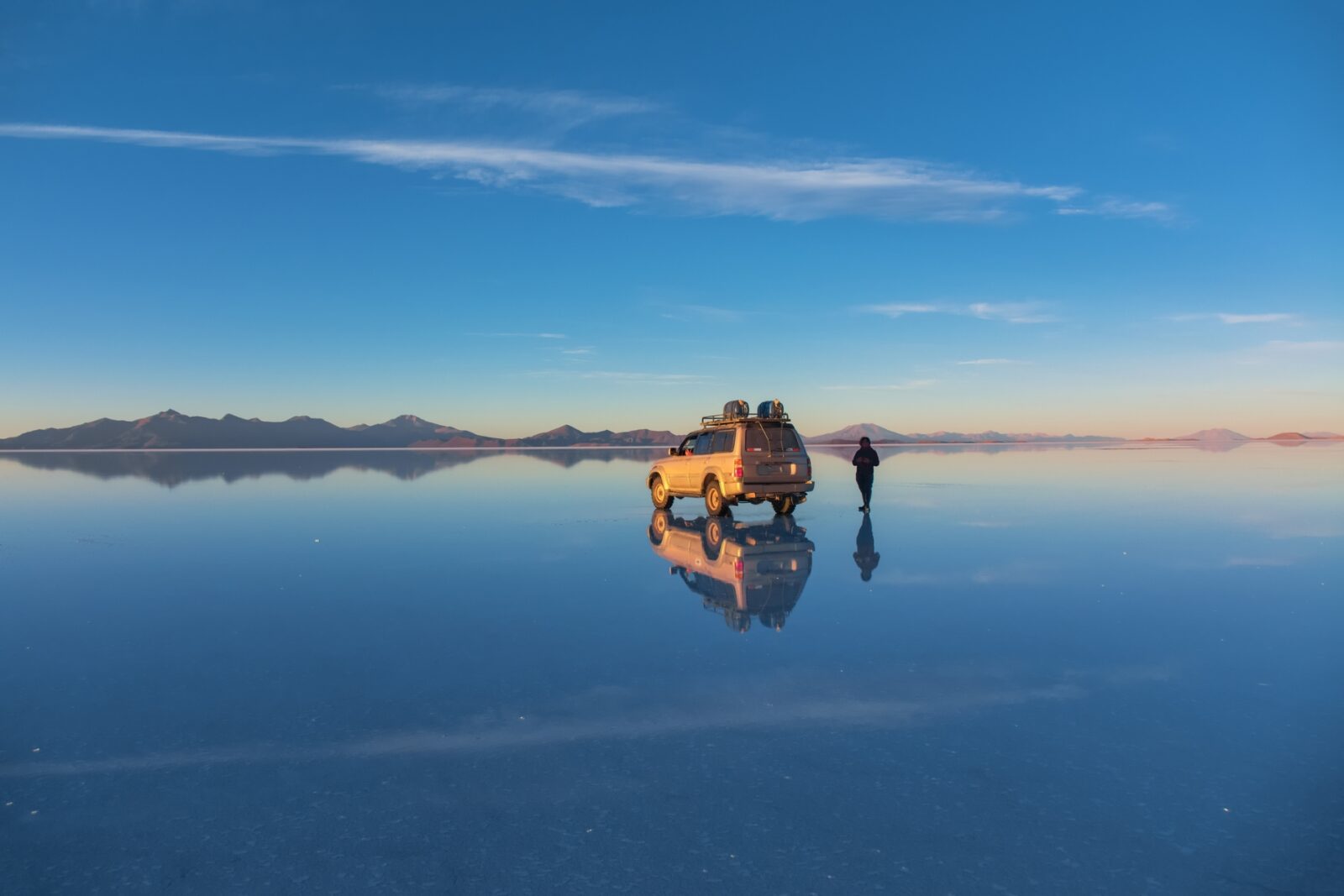
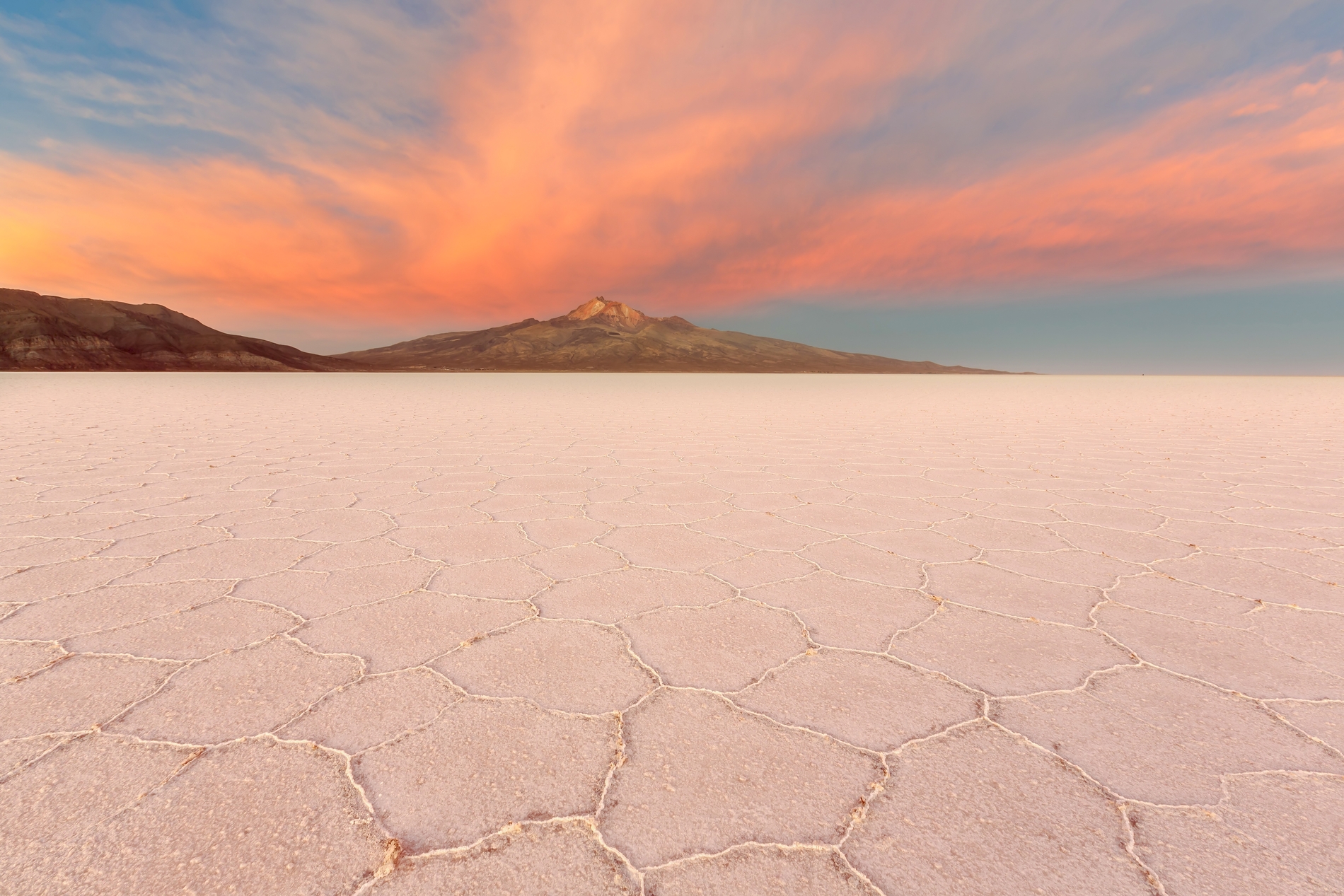
At 11,900 feet above sea level, the first breath in the Salar de Uyuni feels like swallowing pure, crystalline cold. The air is so thin and dry that every inhalation vibrates down the windpipe, sharp and clinical. Beneath your boots, six-sided geometric crusts of bleached salt crunch softly before giving way to absolute, heavy silence. In every direction, white terra firma stretches uninterrupted until it dissolves into a horizon where liquid blue sky and salt become indistinguishable. There are no trees to rustle, no coastlines to churn, and no urban hum—just the steady, magnified sound of your own pulse inside your ears.
The Geometry of Sensory Deprivation
The Salar de Uyuni is not merely a geographic spectacle; it is a giant sensory reset. Spanning more than 4,000 square miles across the southwestern Altiplano of Bolivia, this ancient dried-up prehistoric lake strips away the clutter of modern existence. Without visual landmarks or scale, distance becomes impossible to gauge. A boulder a mile away looks identical to a pebble at your toe.
This radical absence of noise forces an immediate, inescapable inward turn. Practitioners of high-altitude breathwork find that the environment acts as an unyielding mirror. When you sit cross-legged on the hexagonal salt patterns, focusing on deliberate, rhythmic breathing, the low oxygen forces complete presence. You cannot rush your lungs in the Altiplano. Each inhale must be measured and deep; each exhale releases the residual noise of daily life into the vast, bright void.
The Rhythm of the Altiplano
Living and meditating on the salt flat requires adapting to extreme, almost primordial shifts. Midday brings blinding sunlight that bounces off the white floor with solar intensity, bathing everything in an otherworldly illumination. As the sun dips toward the horizon, the temperature drops rapidly from comfortable heat to sub-zero chill within minutes.
Dusk transforms the crust into an expanse of deep indigo, mauve, and violet shadows. At night, far from light pollution, the salt flats turn into a cosmic amphitheater. Stars do not just twinkle above; they envelop you, appearing closer and brighter than almost anywhere else on Earth. Standing wrapped in alpaca wool under the Milky Way, breathing slowly against the freezing mountain air, the boundary between body and environment begins to blur.
Navigating the Expanse
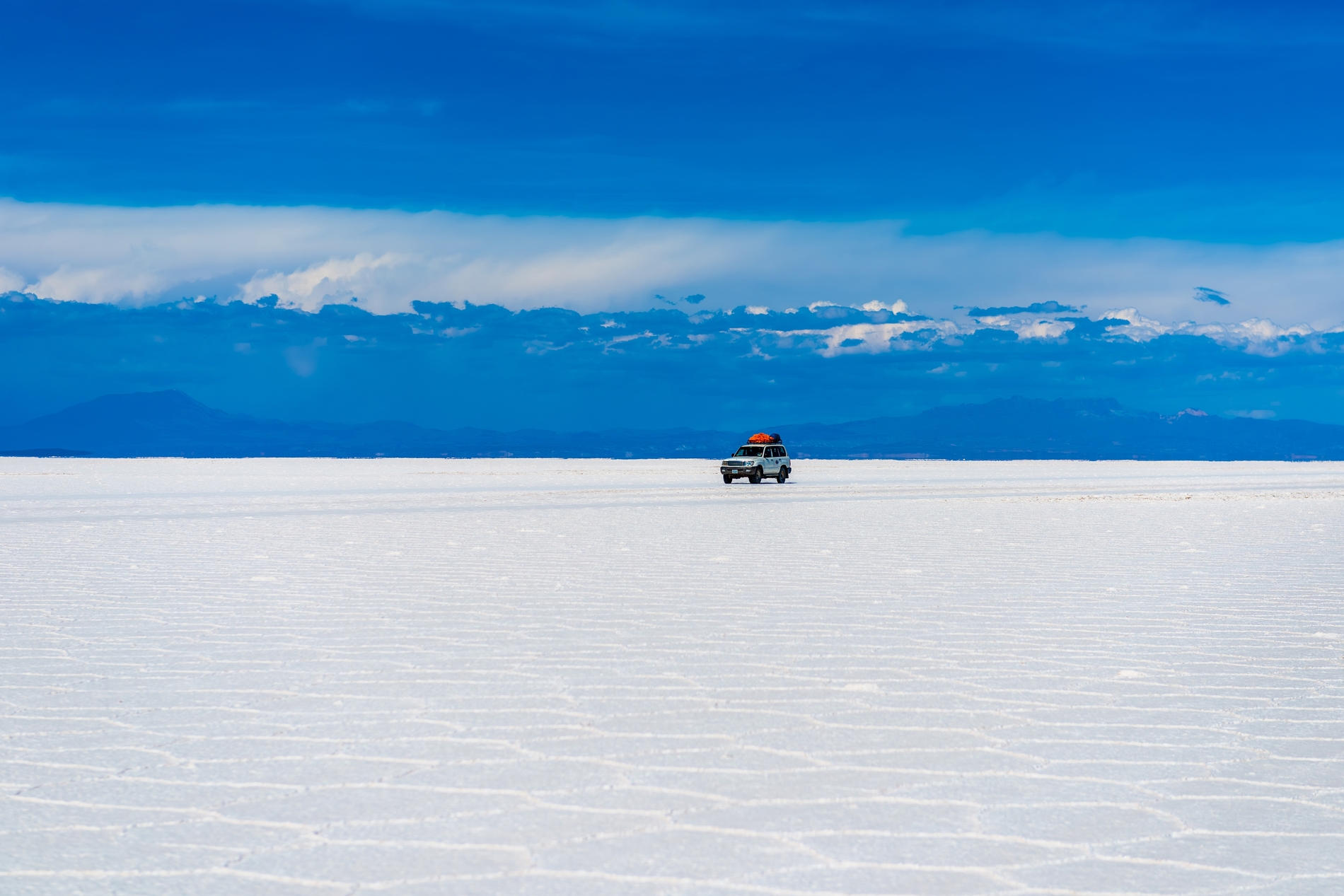
To truly experience the contemplative spirit of the Salar rather than traversing it on a hurried jeep tour, approach the trip with patience. Give your body at least two full days in La Paz or Sucre beforehand to acclimatize to the elevation before venturing onto the flats. Rushing into high-altitude meditation without proper adjustment turns quiet contemplation into altitude sickness.
Timing shapes the nature of your solitude. The dry season between May and October guarantees the classic, cracked-earth wilderness—a dry, blinding desert perfect for deep stillness and undisturbed movement. Visiting during the shoulder months, or choosing secluded eco-camps along the southern rim away from standard day-trip corridors, ensures you share the space only with the wind and the horizon. The key lies in staying static long enough for the salt to strip away your momentum, leaving behind nothing but air, space, and breath.