

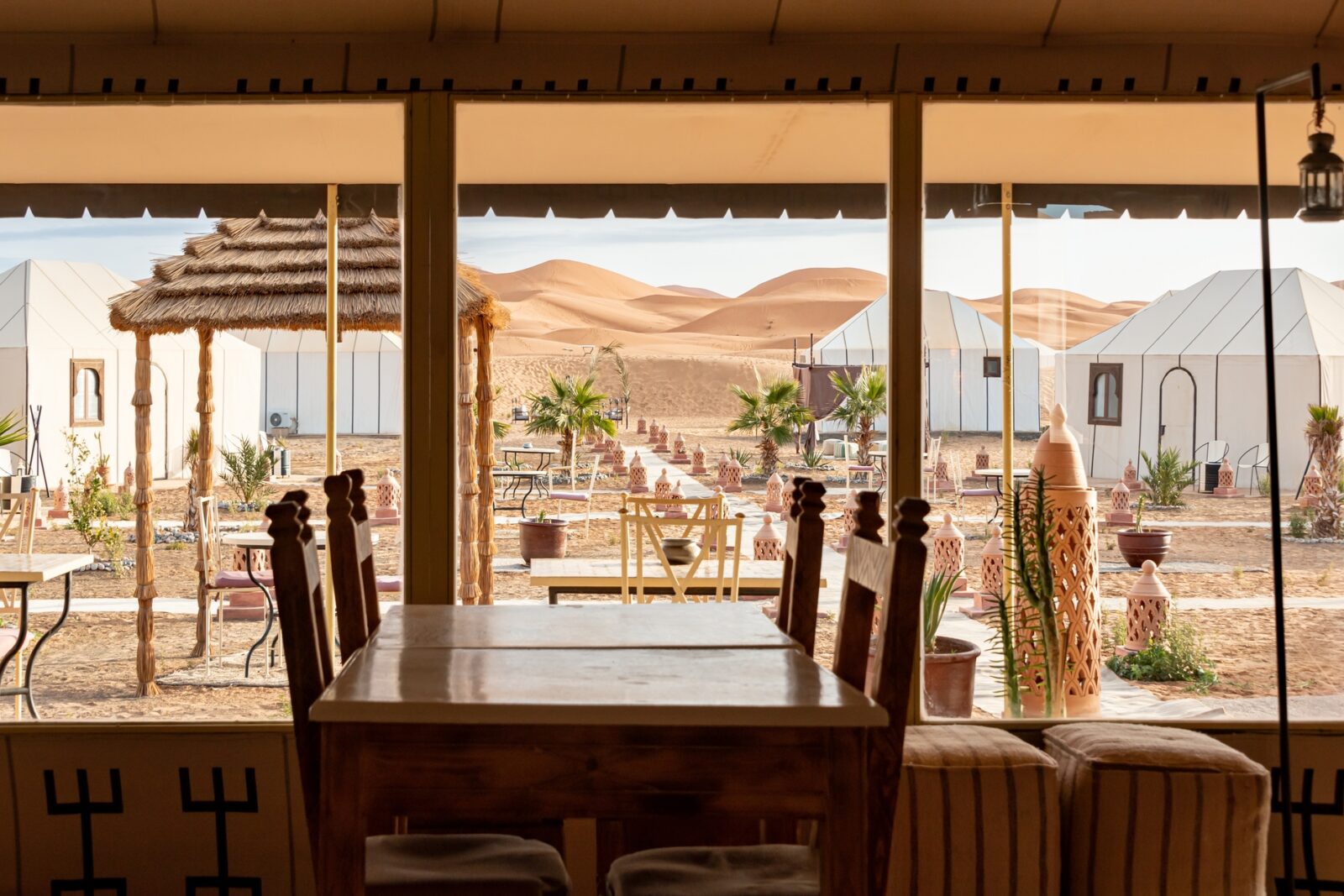
The desert greets you first with silence—vast, resonant, almost physical. You step out of the 4×4 just as the sun begins its slow descent, turning the dunes into molten gold. Heat rises in soft waves from the sand, carrying the faint scent of cedar from the camp’s lanterns. In the distance, a single falcon circles against a sky so wide it feels borderless. Then you see it: your camp, a cluster of canvas suites glowing like embers at the edge of the horizon. The moment you arrive, the world narrows to essentials—light, wind, sand, and the quiet promise of solitude shaped into luxury.
Architecture Carved From Emptiness
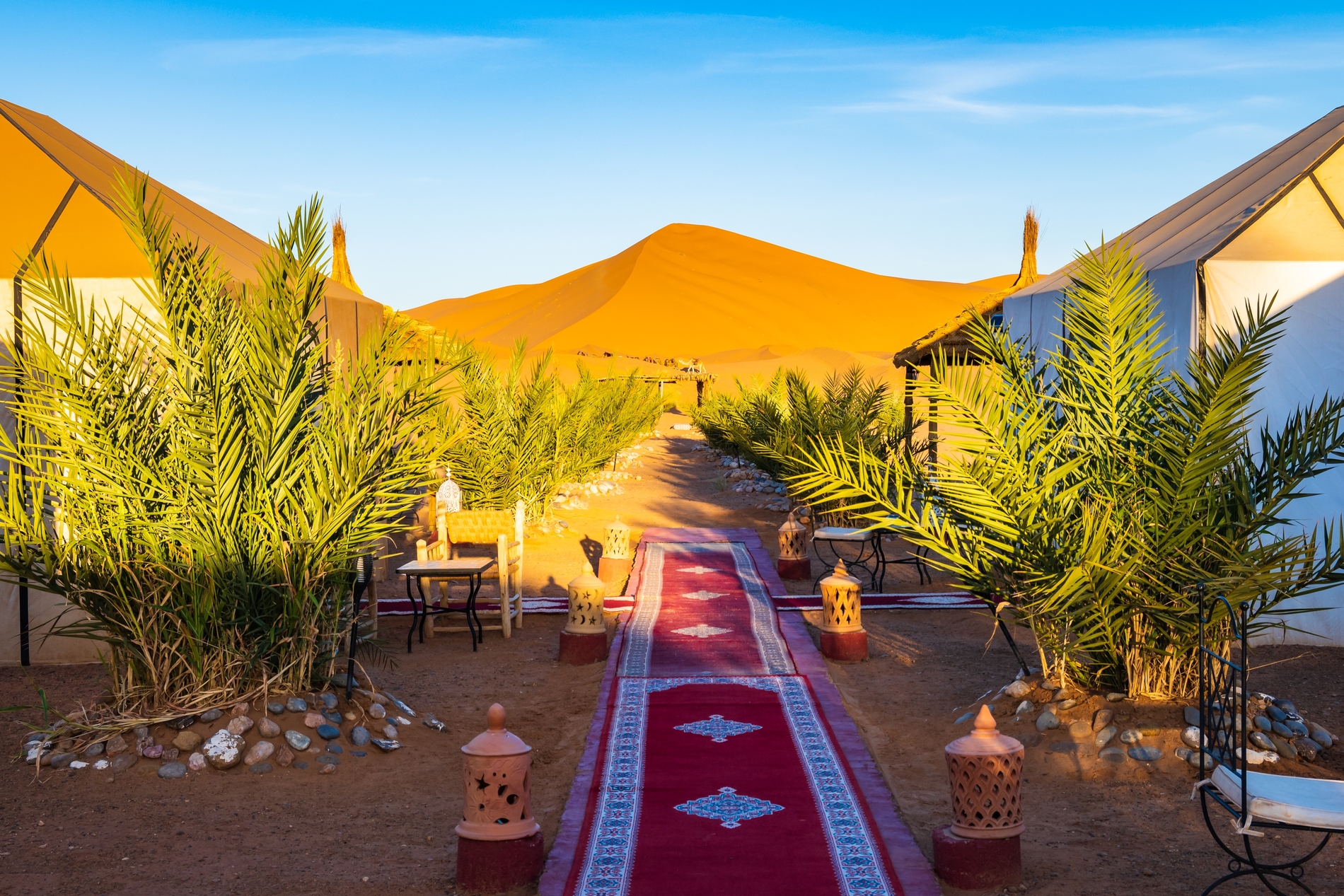
Remote desert camps understand that the landscape is the star. Their architecture leans into restraint: canvas stretched over sculptural frames, stone floors that stay cool beneath bare feet, open‑air lounges positioned to capture the breeze. Interiors echo the tones of the dunes—saffron, sand, charcoal—creating a palette that feels both ancient and modern.
Every detail is intentional. Hand‑woven textiles soften the austerity of the desert. Lanterns cast warm, honeyed light across polished wood. Private plunge pools appear like mirages, their surfaces reflecting the sky’s shifting colors. The design doesn’t tame the desert; it honors it.
The Luxury of Isolation
What sets these camps apart isn’t extravagance—it’s remoteness. You’re miles from the nearest road, deeper still from the nearest town. Nights unfold without interruption, the silence broken only by wind brushing across the dunes or the distant call of a desert fox.
This isolation becomes its own form of indulgence. You dine beneath a canopy of stars so bright they cast faint shadows. You wake to the soft glow of dawn filtering through canvas walls. You move through the day at a pace dictated not by schedules but by the shifting light.
Meals are crafted with surprising finesse: slow‑braised lamb infused with saffron, flatbreads baked in sand ovens, citrus salads bright enough to cut through the heat. Everything tastes sharper, more elemental, shaped by the environment itself.
Days That Follow the Sun
Life in the desert is a choreography of temperature and light. Mornings are cool and gentle, perfect for camel treks across rippled dunes or guided walks through canyons carved by centuries of wind. By midday, the heat settles in, encouraging stillness—lounging in the shade, reading on a terrace, slipping into a private pool as the horizon shimmers.
As the sun lowers, the desert transforms again. Shadows lengthen. Colors deepen. The air cools just enough to invite exploration. Sunset drives reveal wildlife emerging from the heat: oryx moving in elegant lines, sand cats darting between rocks, owls perched on acacia branches.
Evenings Wrapped in Firelight
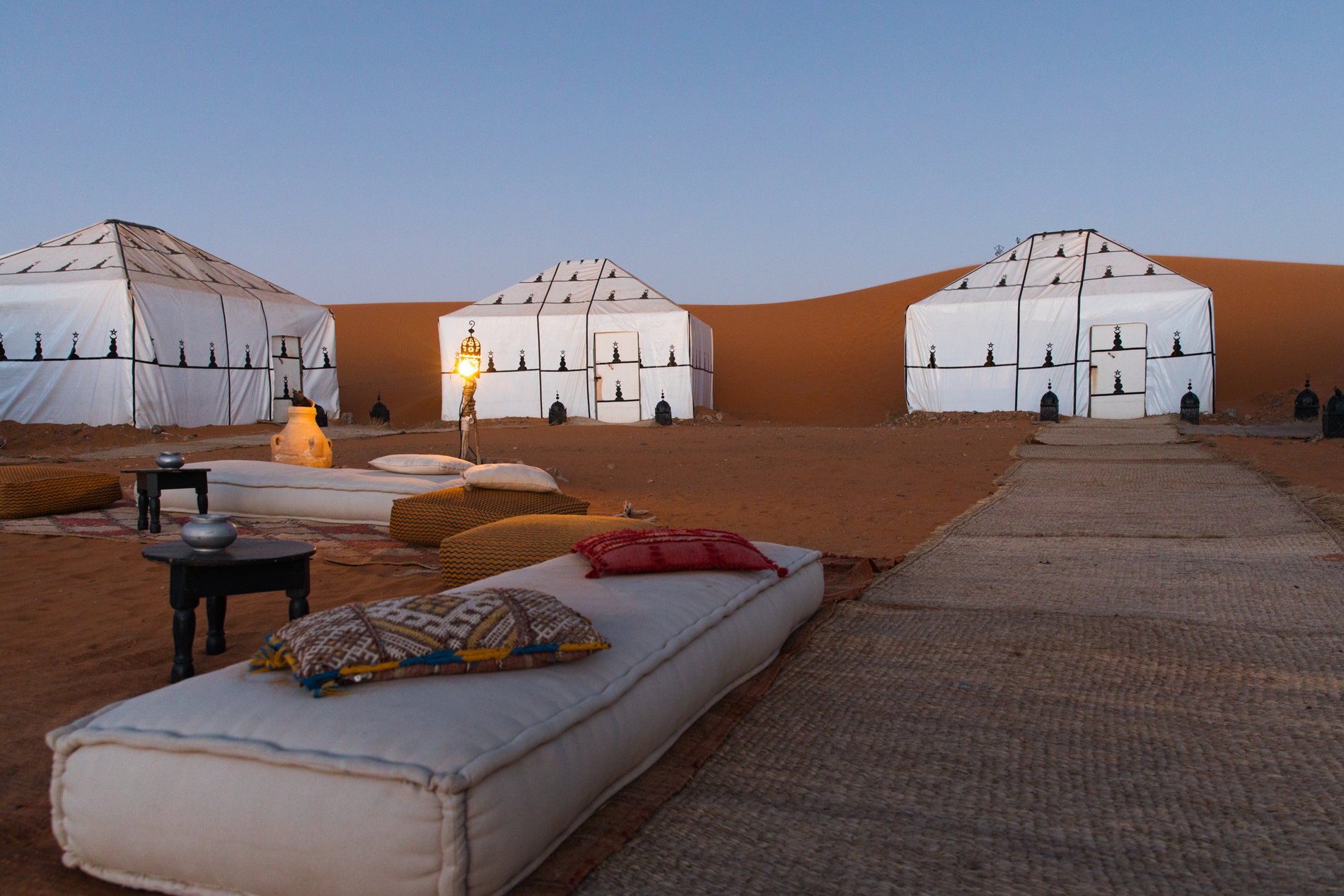
Night in the desert is a spectacle of its own. Camps glow with lanterns and low fire pits, their light flickering against the surrounding dunes. You settle into cushions arranged around the flames, sipping mint tea or something stronger as the sky shifts from indigo to black.
The stars appear in layers—sharp, bright, infinite. Guides share stories of nomadic traditions, celestial navigation, and the desert’s quiet resilience. The fire crackles. The wind cools. Time stretches.
A Season for Every Mood
Deserts are not static. Some months bring crisp mornings and long, golden afternoons. Others offer warm nights perfect for sleeping with the tent flaps open. Occasional storms sweep across the dunes, leaving behind patterns etched by rain and wind. The experience changes with the season, but the essence remains: solitude, silence, and a sense of scale that humbles and steadies.
What the Desert Leaves Behind
A stay in a remote five‑star desert camp lingers long after you’ve returned to the noise of everyday life. It’s the memory of walking barefoot across cool sand at dawn. The taste of cardamom carried on the wind. The way the stars felt impossibly close. The sense that, for a brief moment, you lived inside a landscape that asked nothing and offered everything.
Luxury here isn’t loud. It’s elemental—shaped by light, space, and the quiet privilege of being alone with the earth.