

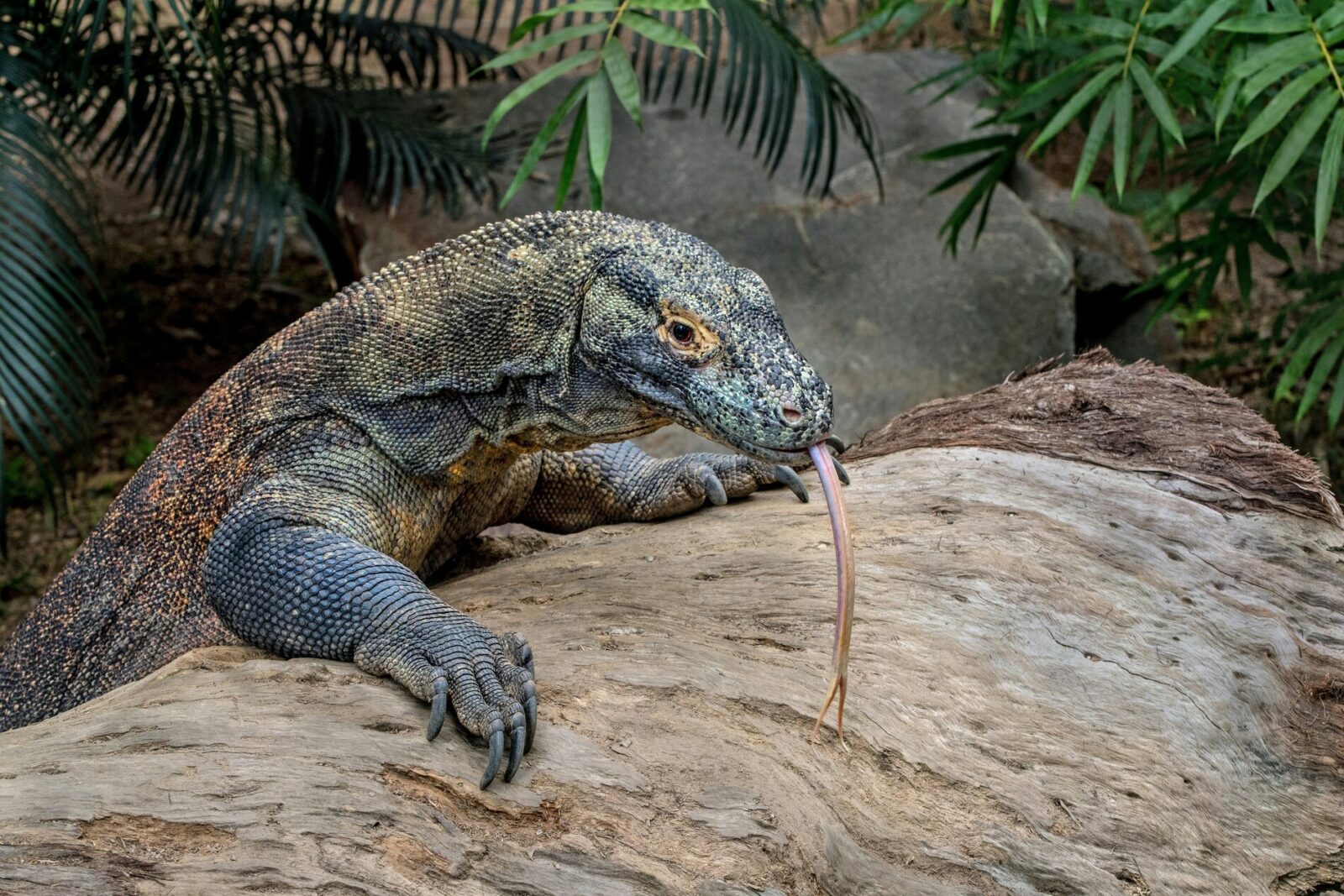
Heat rises early on Komodo Island—dense, mineral, almost metallic. By mid‑morning, the savanna grass glows a muted gold, and the air hums with cicadas. You follow your ranger along a narrow trail carved into sun‑baked earth, the scent of salt drifting in from the sea. Then he stops, lifts a hand, and points toward a patch of shade beneath a tamarind tree. A Komodo dragon lies there—massive, prehistoric, its scales catching the light like hammered bronze. It lifts its head, tongue flicking in slow, deliberate arcs. The world tightens into a single moment. You’re close enough to hear it breathe.
Tracking dragons on foot is an exercise in presence. The islands of Komodo National Park feel raw and cinematic—hills rising like the spines of sleeping beasts, beaches edged with pink sand, forests that shift from dense green to open savanna in a matter of steps. The sun hits hard. The wind carries the scent of dry grass and volcanic soil. Every sound feels amplified: the rustle of lizards in the brush, the distant call of a cockatoo, the steady footfall of your guide.
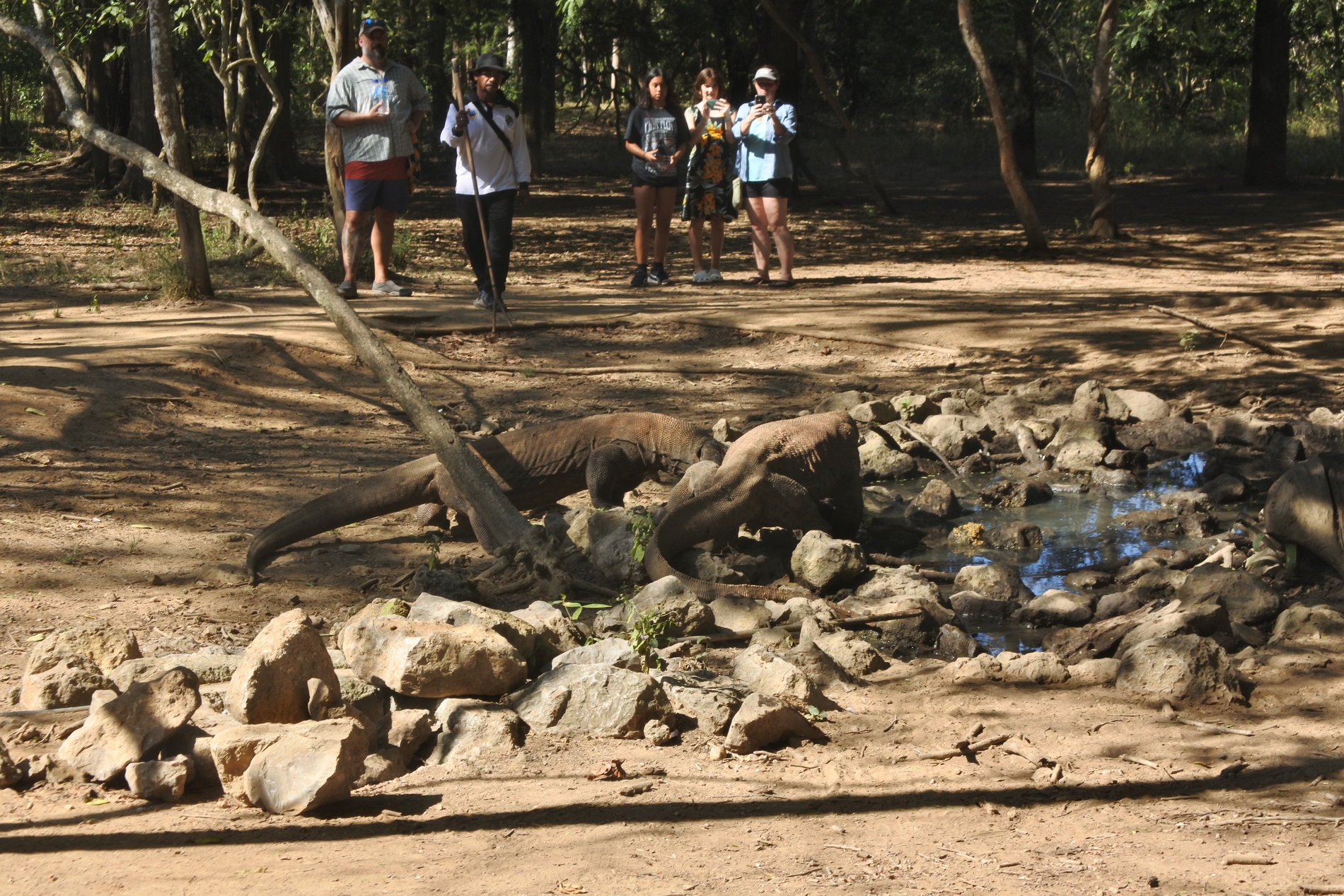
There’s a quiet tension to being here—not fear, but awareness. You’re sharing the terrain with an apex predator that has no interest in performing for visitors. The dragons move with a slow, unsettling confidence, their bodies heavy but purposeful. You feel your pulse quicken, not from danger, but from the realization that you’ve stepped into a world that doesn’t bend for humans.
Following the Prehistoric Relic
Komodo dragons are not just oversized lizards. They’re relics—living reminders of a prehistoric world. Watching one walk is like watching a myth unfold: muscles rippling beneath thick scales, claws digging into the earth, tail sweeping behind like a counterweight. They patrol the island with a patience that borders on regal.
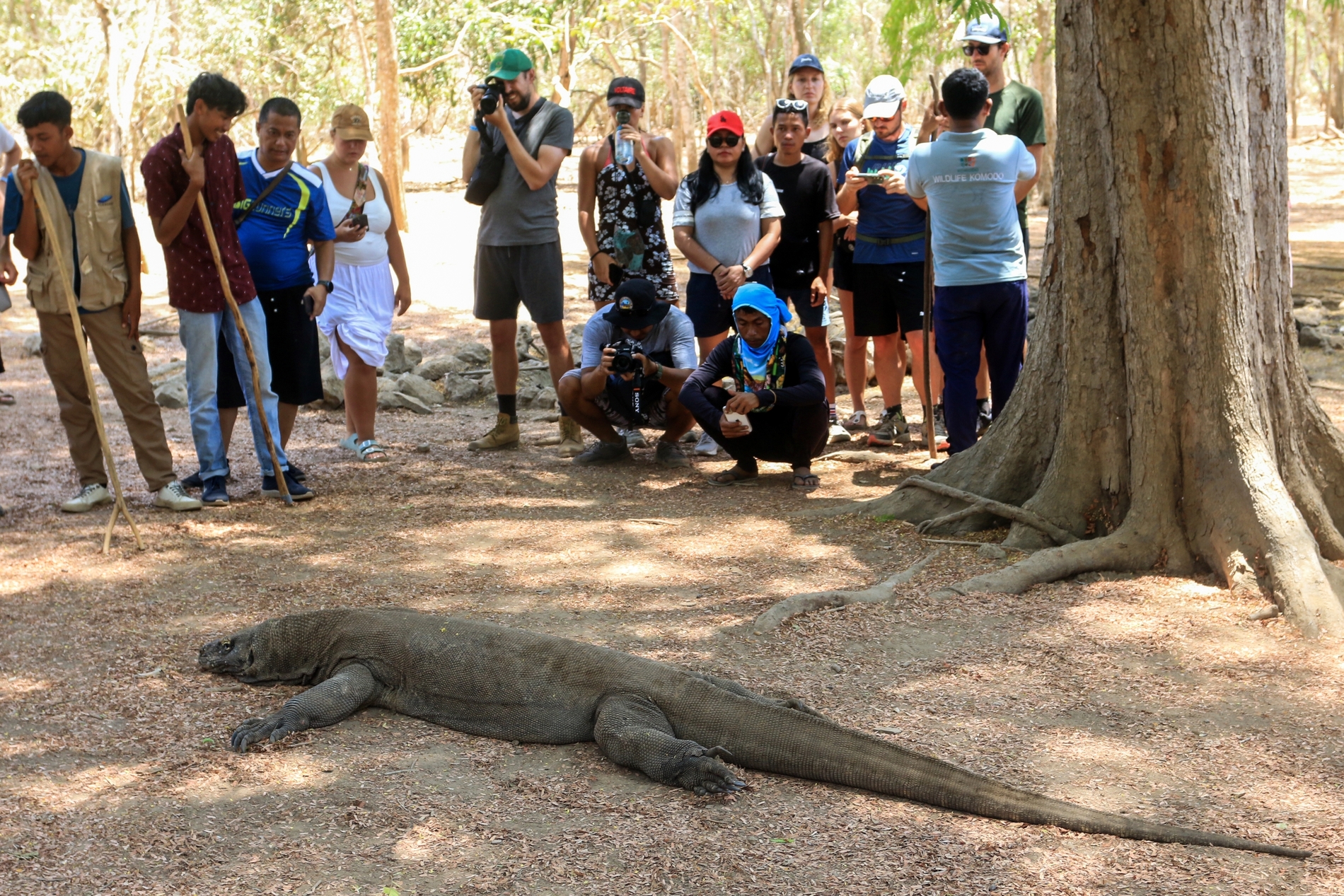
Your ranger reads the landscape with practiced ease. A set of tracks in the dust. A half‑eaten deer hidden in the brush. A patch of disturbed soil where a female has buried her eggs. You follow quietly, stopping often to scan the terrain. Sometimes the dragons appear suddenly—emerging from behind a rock, crossing the trail with slow, deliberate steps, or lounging near a watering hole like sun‑drunk monarchs.
Between sightings, the landscape offers its own kind of drama. Hills roll into one another in soft, sweeping curves. Mangroves fringe the coastline. The sea glitters in impossible shades of blue. You stop for water beneath a lone tree, the shade thin but welcome, and listen to the wind move through the grass.
Tracking dragons isn’t about adrenaline. It’s about humility—moving through a place where the wild still feels unedited.
Riding the Island Rhythms
Komodo is best explored in the dry season, when trails are firm and visibility is clear. Early mornings offer cooler air and more active dragons. Afternoons slow into a heat‑hazed stillness that makes the island feel almost dreamlike. The key is to move lightly—good boots, plenty of water, and a willingness to let the ranger lead. This is their terrain, and they understand its moods.
Boat trips between islands are part of the rhythm. The sea breeze cools your skin, and the volcanic silhouettes of Rinca and Padar rise from the water like ancient guardians. Each island has its own personality, its own dragon territories, its own quiet corners where the wild still feels intact.
What You Carry Home
Komodo lingers in the mind long after you’ve left. You remember the heavy footfall of a dragon crossing the trail, the shimmer of heat rising from the savanna, the way the islands glowed at sunset as your boat cut across the water. You remember the tension of those first sightings, the calm that followed, the sense of stepping into a world that predates stories.
But the deeper imprint is the humility. Komodo teaches you that adventure isn’t always about speed or spectacle. Sometimes it’s about standing still, watching a creature older than myth move through its home, and realizing you’re the visitor.