

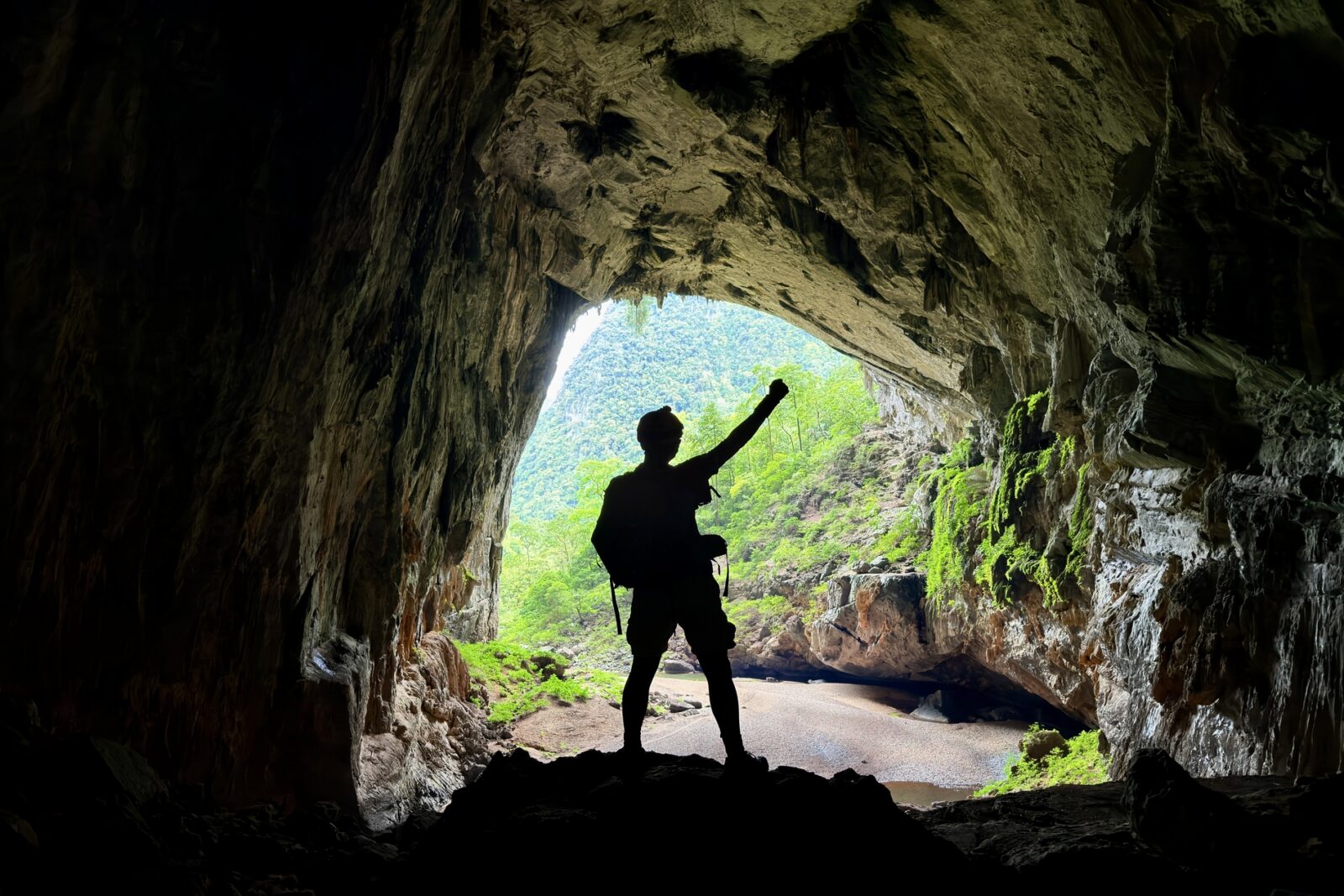
The jungle is still waking when you begin the descent. Mist clings to the trees, thick enough to bead on your eyelashes, and the air carries that deep, green scent only found in places untouched by hurry. Then the ground opens. A vast, gaping entrance yawns beneath you—dark, silent, impossibly wide. You clip into the rope, lean back, and lower yourself into the unknown. Halfway down, the light shifts. The cave reveals itself in fragments: a wall of limestone the size of a skyscraper, a river disappearing into shadow, a ceiling so high it dissolves into darkness. Your boots touch the cavern floor, and the world above feels like a rumor.
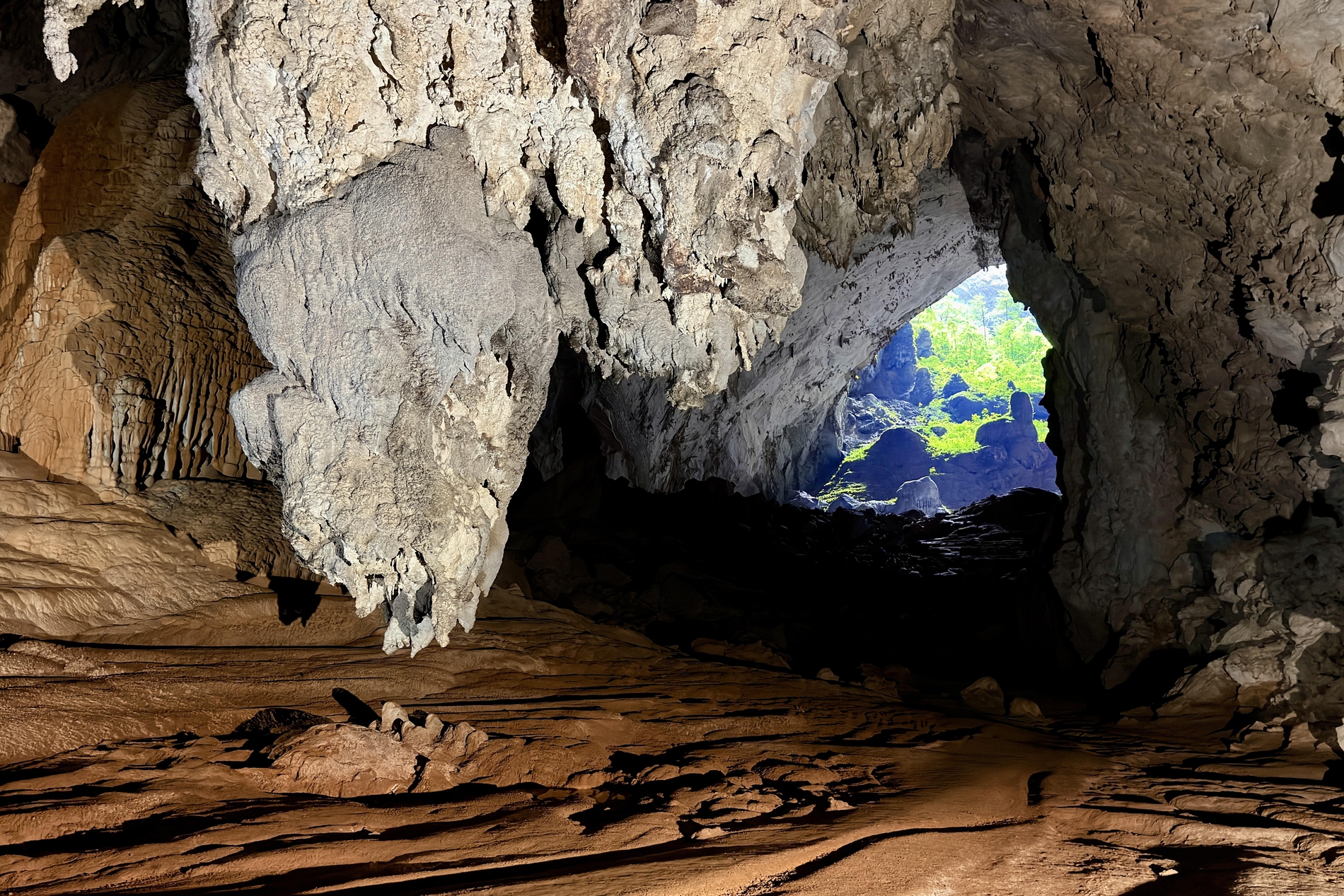
Son Doong doesn’t feel like a cave. It feels like a continent hidden underground. The scale is disorienting—chambers large enough to hold entire city blocks, stalagmites rising like ancient monuments, clouds forming inside the cavern where warm jungle air meets the cool subterranean world. Sound behaves differently here. Your footsteps echo in long, rolling waves. Water drips from somewhere far above, each drop amplified by the vastness around you. The darkness isn’t oppressive; it’s soft, almost velvety, broken only by the glow of your headlamp and the faint shimmer of minerals embedded in the walls.
Walking through Son Doong feels like trespassing into the planet’s private architecture.
Where the Sun Meets Private Architecture
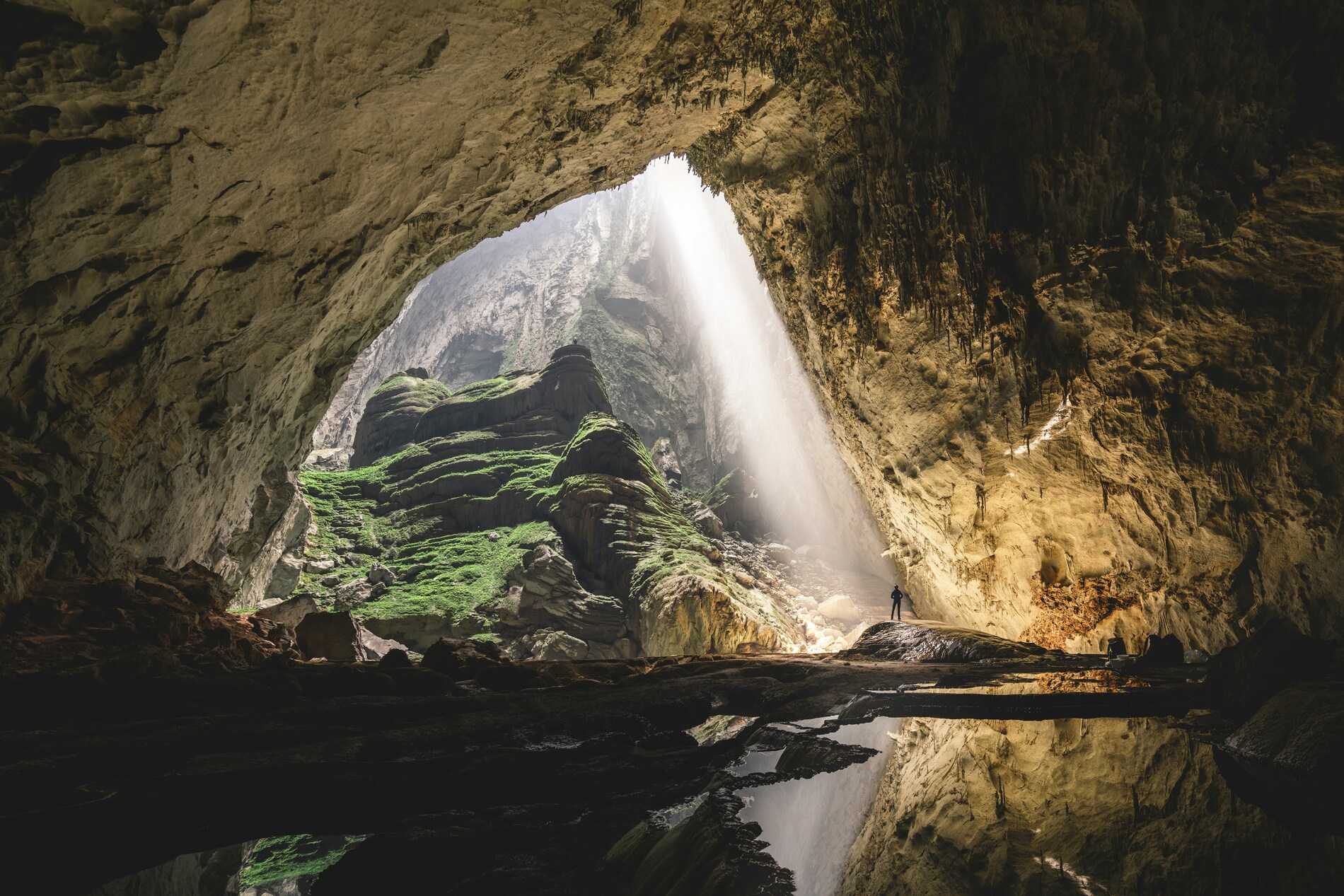
The cave’s interior unfolds in stages, each one stranger and more beautiful than the last. You cross a river that runs cold and fast, its current shaped by centuries of underground flow. You climb over boulders the size of houses, their surfaces smoothed by time. Then you reach the first doline—a collapsed ceiling that lets sunlight pour into the cavern like a spotlight from another world.
Here, a jungle grows. Real trees. Real vines. Real birdsong echoing off stone. It’s a forest inside a cave, thriving in a pocket of light that feels almost sacred. You walk through it slowly, touching leaves that glisten with condensation, listening to the wind that somehow finds its way underground.
Farther in, the cave narrows, then opens again into a chamber so vast your headlamp can’t find the ceiling. Mist drifts across the floor. Your guide’s voice becomes a whisper swallowed by the space. You feel small, but not insignificant—more like a witness to something ancient and ongoing.
Camping inside Son Doong is its own kind of surreal. Your tent glows softly in the darkness, a tiny island of warmth in a sea of shadow. Dinner tastes better after hours of climbing and wading. The night is quiet except for the river’s steady murmur and the occasional flutter of bats overhead. You fall asleep knowing that millions of tons of rock rest above you, and somehow that weight feels comforting.
Slowing Down Beneath the Weight of the World
Son Doong is best experienced during the dry months, when river levels are manageable and the jungle trails leading to the entrance are less treacherous. But the cave’s atmosphere is timeless—cool, steady, untouched by weather or season. The key is to move slowly. Let your eyes adjust. Let the silence settle. Trust your guides; they know the cave’s moods better than anyone.
This isn’t a place for rushing. It’s a place for absorbing.
What You Carry Home
Son Doong lingers in the mind long after you’ve climbed back into daylight. You remember the way sunlight filtered through the dolines, the echo of your footsteps in the vast chambers, the cool breath of the cave on your skin. You remember the feeling of standing in a place that has existed for millions of years, hidden from the world, waiting for someone willing to walk into the dark.
The adventure isn’t just the descent. It’s the shift in perspective—the realization that the planet still holds secrets big enough to humble you.