

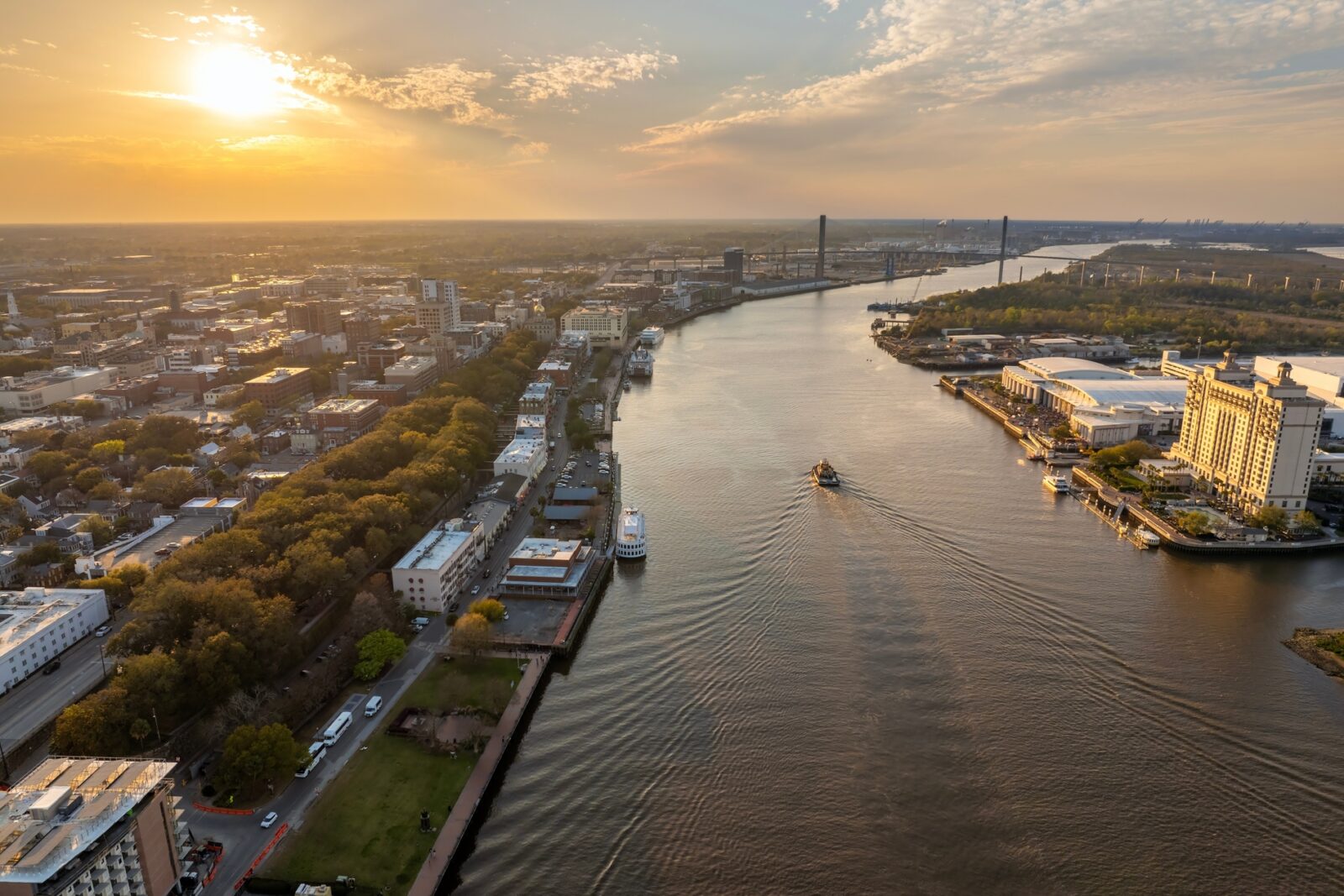
The air in Savannah doesn’t just hang; it clings. It carries the velvet weight of a hundred years of humidity, scented faintly with river silt, salt marsh, and the overripe sweetness of blooming confederate jasmine. As you step onto the uneven cobblestones of Factors Walk, the modern world seems to muffle, replaced by the flickering orange pulse of gas lanterns and the distant, rhythmic clip-clop of a horse’s hooves on pavement. This is a city that understands the beauty of a slow decay, where the vibe is not one of polished perfection, but of a hushed, heavy elegance that invites you to lower your voice and lean in closer.
A City of Outdoor Ballrooms
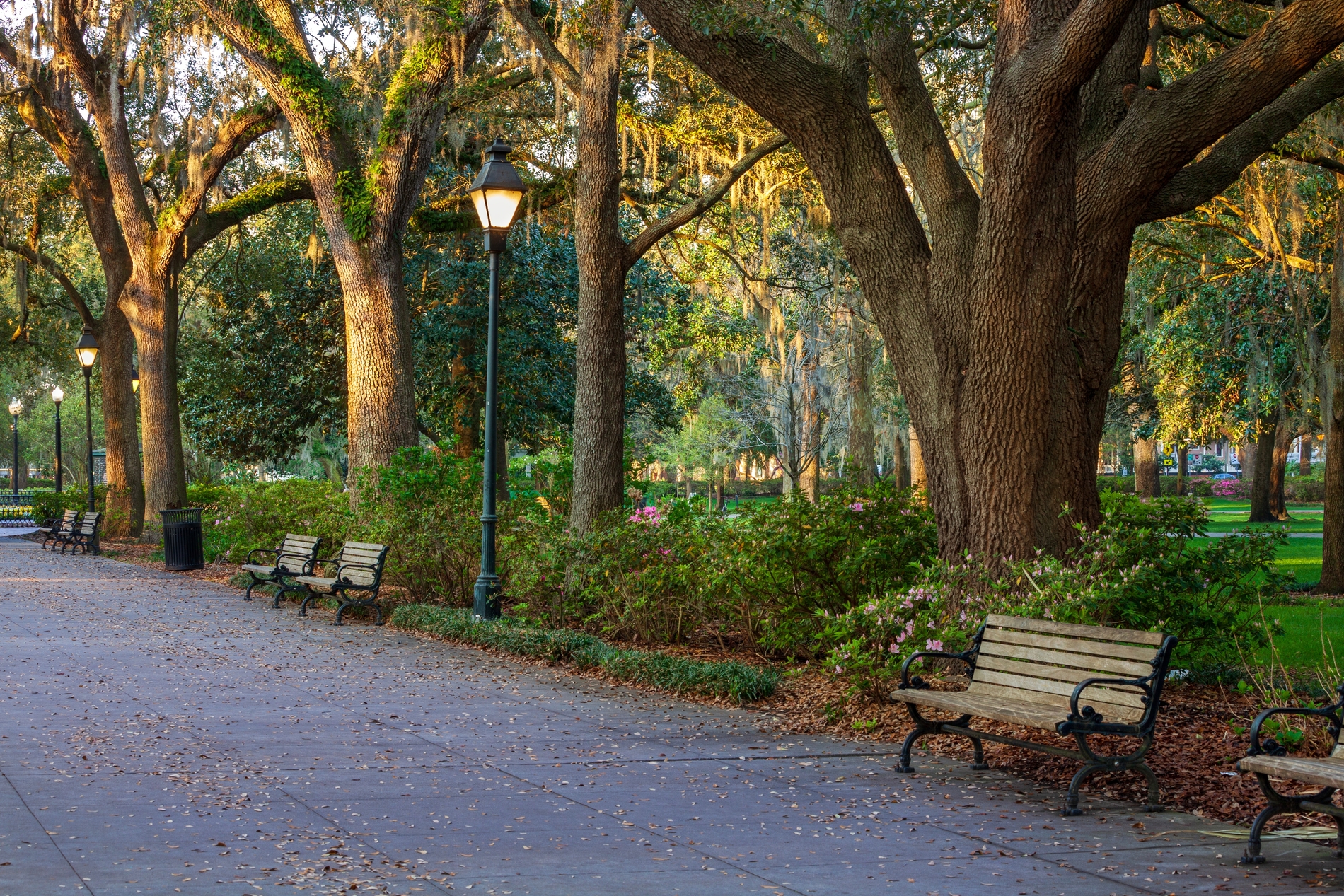
Savannah is architecturally designed for intimacy. Its twenty-two historic squares act as a series of outdoor ballrooms, each anchored by ancient live oaks that have spent centuries stretching their limbs toward one another. The Spanish moss—that iconic, silvery-grey epiphyte—drapes from these branches like tattered lace, creating a natural canopy that filters the harsh Georgia sun into a soft, dappled chartreuse.
To walk through these squares at dusk is to experience a specific kind of Southern Gothic romance. It is found in the way the shadows stretch across the “Savannah Grey” bricks of the mansions, and in the wrought-iron fences that seem to groan under the weight of climbing wisteria. The atmosphere is thick with a sense of enclosure; the moss creates private alcoves out of public spaces, making a simple walk feel like a clandestine meeting. You aren’t just visiting a city; you are moving through a living, breathing set piece where every crumbling fountain and overgrown garden gate feels like the start of a secret.
The Geography of the Secret Garden
The deep dive into Savannah’s romantic soul takes you to Jones Street, often cited as the most beautiful in North America, though its beauty is best felt rather than photographed. Here, the canopy of oaks is so dense it creates a perpetual twilight. The emotional resonance of the city lies in this interplay between the grand and the hidden. While the Greek Revival facades are imposing, the true romance is found in the “peeking” through garden walls into private courtyards where stone cherubs stand guard over trickling pools.
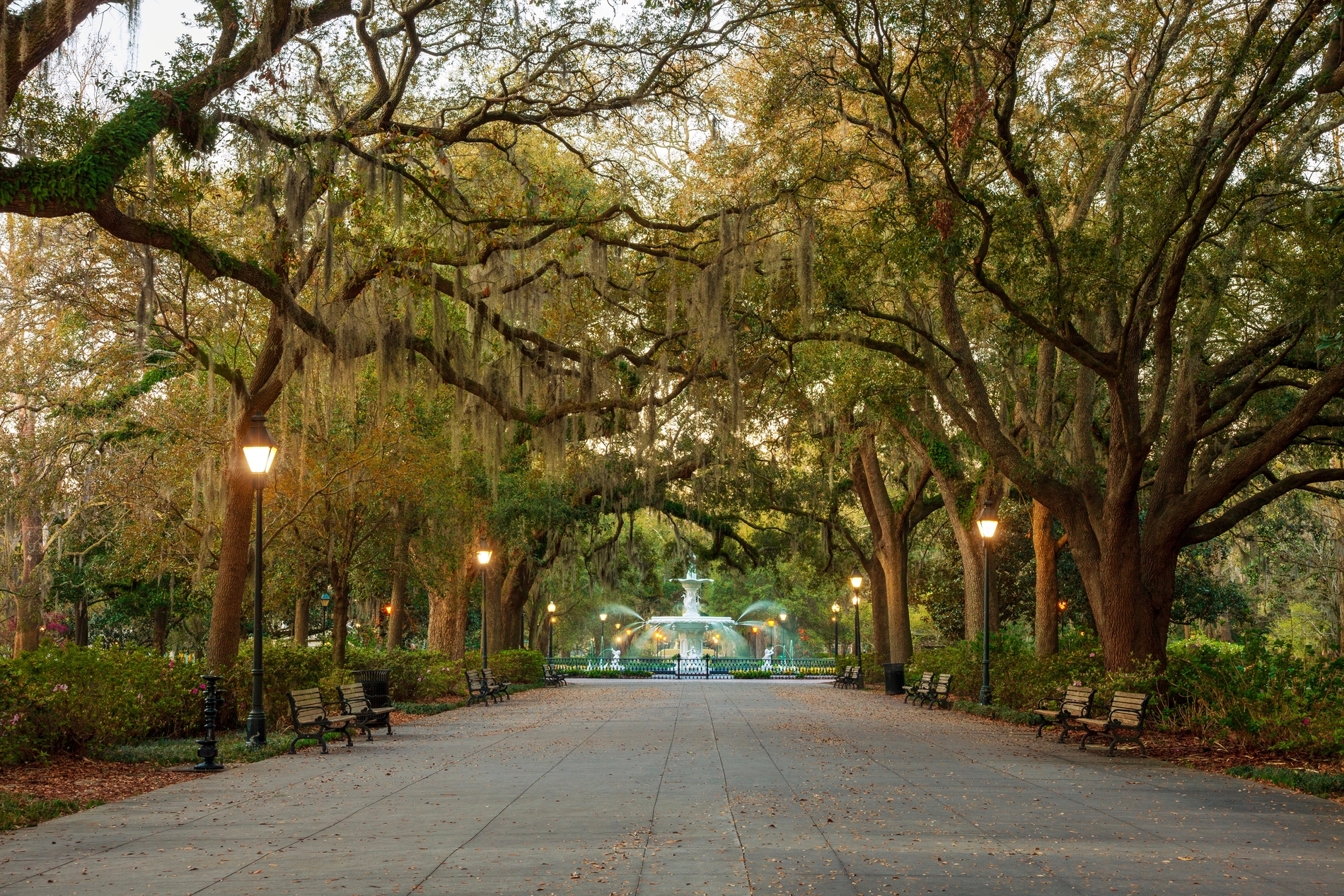
For a couple, the intimacy is built into the city’s deliberate pace. Savannah is a place that rejects the frantic energy of the 21st century. It demands that you linger. There is a visceral thrill in the “golden hour” here, when the light hits the moss at a low angle, turning the grey lace into threads of spun sugar. It is the perfect time to find a bench in Forsyth Park, near the great white fountain, and watch the shadows of the oaks play across the grass. The vibe is unapologetically moody—a mixture of decadence, history, and a touch of the supernatural that makes the present moment feel remarkably precious.
Mastering the Slow Walk
To truly capture the spirit of the Lowcountry, you must avoid the midday heat that can turn the city’s charm into a sweltering chore. The most evocative times to visit are the “shoulder” months of April, when the azaleas explode in a riot of magenta, or October, when the air finally thins and the river breeze carries a crisp, haunting chill.
The secret to a sophisticated experience is to favor the historic inns over the riverfront hotels. These smaller dwellings, often converted from 19th-century merchant homes, offer a more direct connection to the city’s past. When evening falls, skip the crowded tours and simply walk. Start at the river and work your way south toward the squares, allowing the flickering lanterns to be your guide. In Savannah, the best way to find the heart of the city is to get lost under its canopy, realizing that the most romantic stories are the ones whispered beneath the moss.