

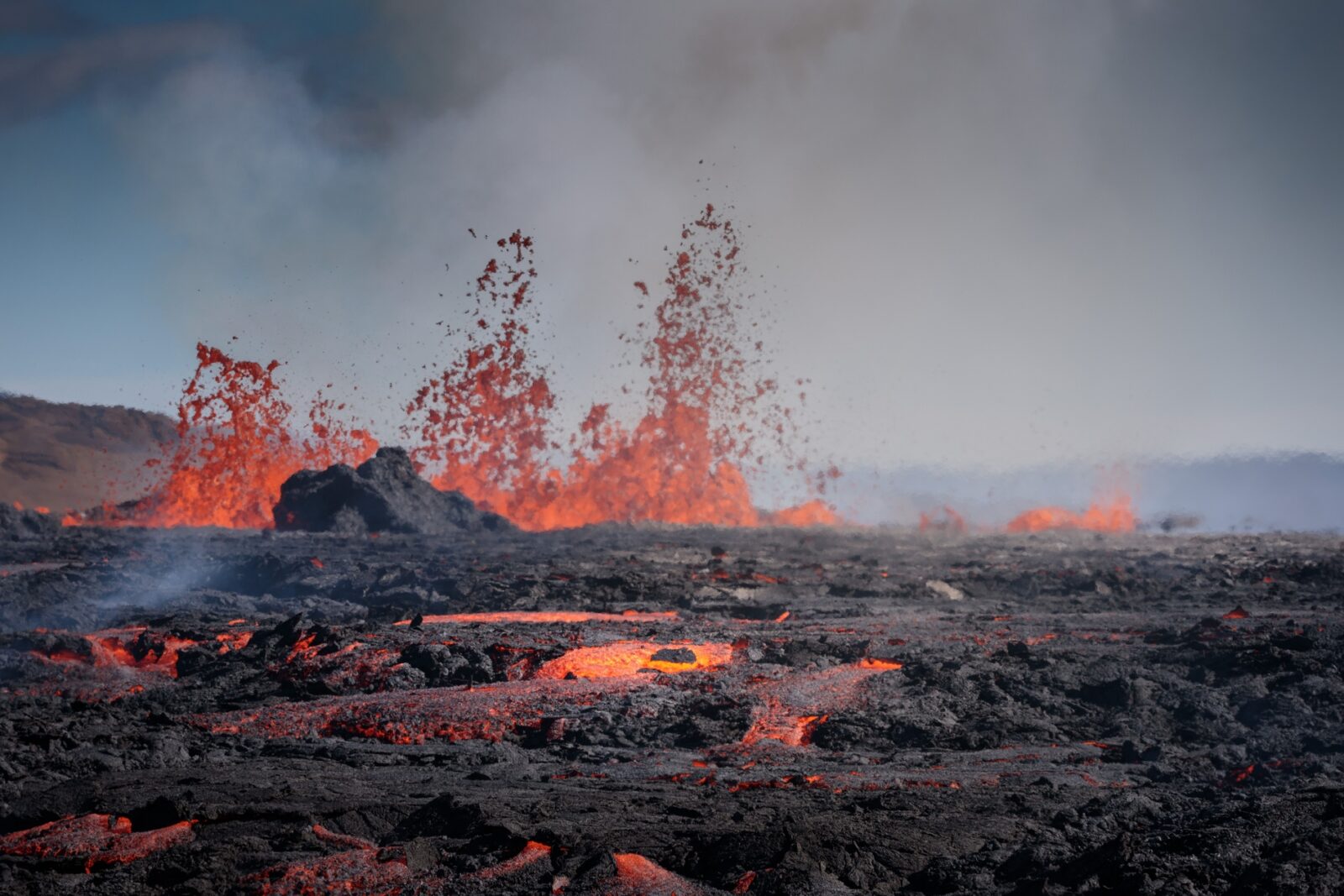
Just before sunrise, the Reykjanes Peninsula feels otherworldly. The air is sharp, carrying the scent of sulfur and cold stone. The sky glows faintly—lavender at the edges, charcoal above—and the only sound is the crunch of volcanic gravel beneath your boots. Then the horizon brightens, just enough, and a thin red pulse appears in the distance. Lava. Alive, moving, reshaping the land in real time. You and your guide stand on a ridge, watching molten rock spill and fold like liquid metal. It’s a moment that feels impossible—ancient and immediate, violent and strangely beautiful.
A Landscape Built on Fire
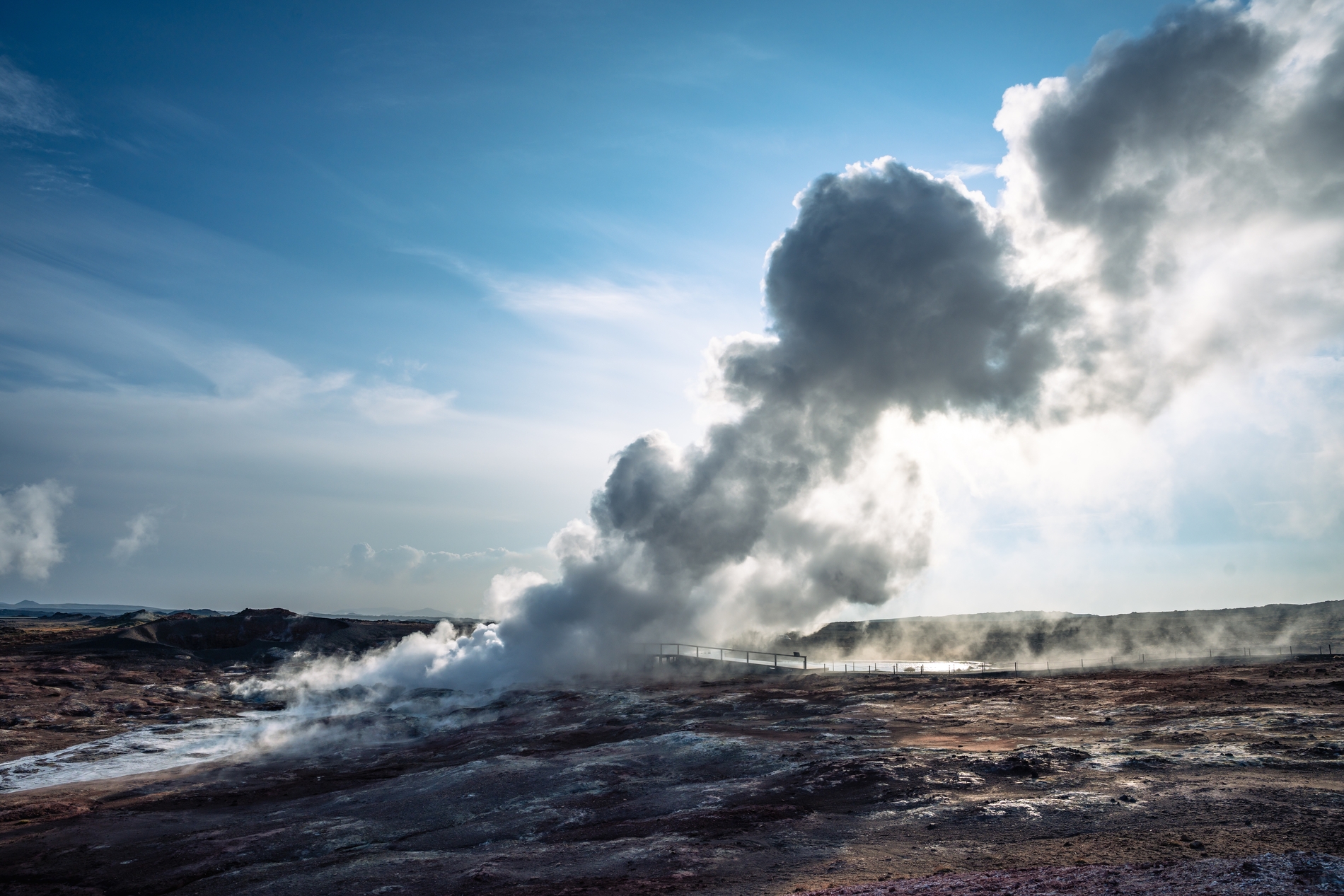
Iceland doesn’t hide its origins. It leans into its geology with a kind of raw confidence—lava fields stretching to the sea, steam rising from fissures, mountains split open by centuries of eruptions. The rhythm of the land is slow but powerful, shaped by tectonic plates that never stop shifting.
Walking across the cooled lava, you feel it instantly: the warmth still rising from cracks, the brittle crunch of obsidian shards, the way the air vibrates with geothermal energy. The adventure here isn’t theatrical. It’s elemental—born from the earth’s own heartbeat.
The drama isn’t added. It’s inherent.
The Lava Fields and Their Spell
Reaching an active flow is one of those rare experiences that feels both cinematic and deeply personal. The ground radiates heat. The air shimmers. The lava glows in shades of orange, gold, and deep crimson, moving with a slow, hypnotic grace. You watch it crust over, crack, and spill forward again—an endless cycle of creation.
The landscape around you is silent except for the faint hiss of cooling rock. The world narrows to heat, color, and movement. You stand close enough to feel the warmth on your face, far enough to respect the unpredictability of the earth beneath your feet.
It feels like witnessing the planet breathe.
Adventure in the Details
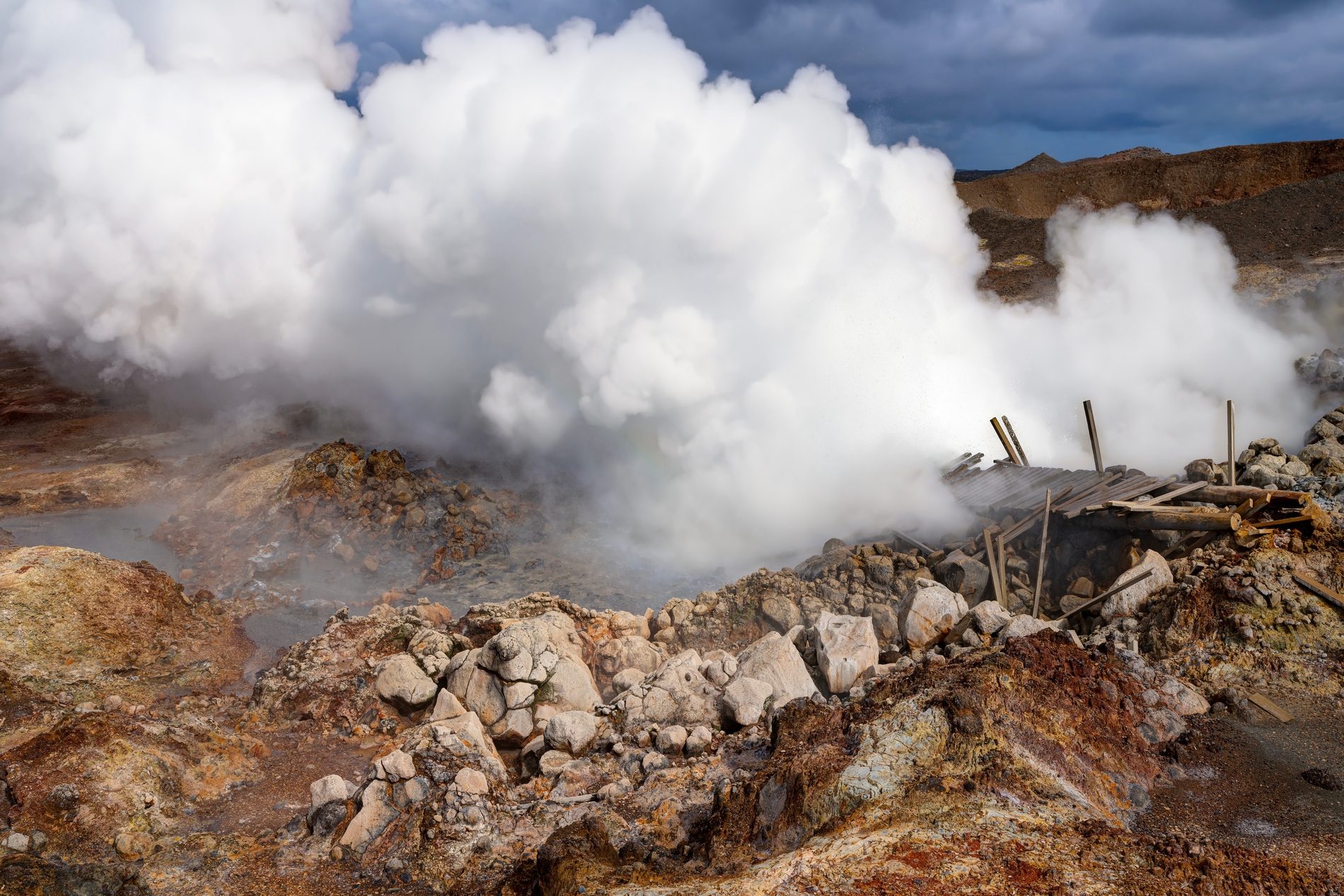
Iceland’s magic lies in the contrasts. A plume of steam rising from a fissure. Moss glowing neon green against black basalt. The sudden flight of a raven across a sky streaked with volcanic ash. The scent of minerals carried on the wind.
A hike becomes a ritual. You follow trails across jagged lava fields, climb ridges carved by ancient eruptions, and pause to feel the ground’s subtle warmth beneath your palms. The peninsula stretches around you—raw, vast, alive.
Even simple moments feel charged. A thermos of hot chocolate shared on a windswept ridge. The sound of distant bubbling from a geothermal vent. The way the light shifts as clouds race overhead.
When Iceland Feels Most Alive
The volcanic zones are compelling year‑round, but there’s something especially electric about the cooler months, when the air is crisp and the lava glows brighter against the dark. Early mornings are perfect for quiet hikes before the crowds arrive. Late afternoons invite long walks across the lava fields as the sky turns copper. Evenings belong to the ridgelines—lava glowing, steam rising, the peninsula illuminated from within.
What You Carry Home
Iceland stays with you in fragments: the glow of molten rock in the half‑light, the warmth rising from fissures beneath your boots, the silence of a landscape still being born. It’s a place that doesn’t just offer adventure—it heightens it, sharpens it, turns it into something mythic.
Long after you’ve left, you’ll remember the feeling of standing on that ridge, watching the earth remake itself in real time, and realizing that some places don’t just host adventure—they create it.