

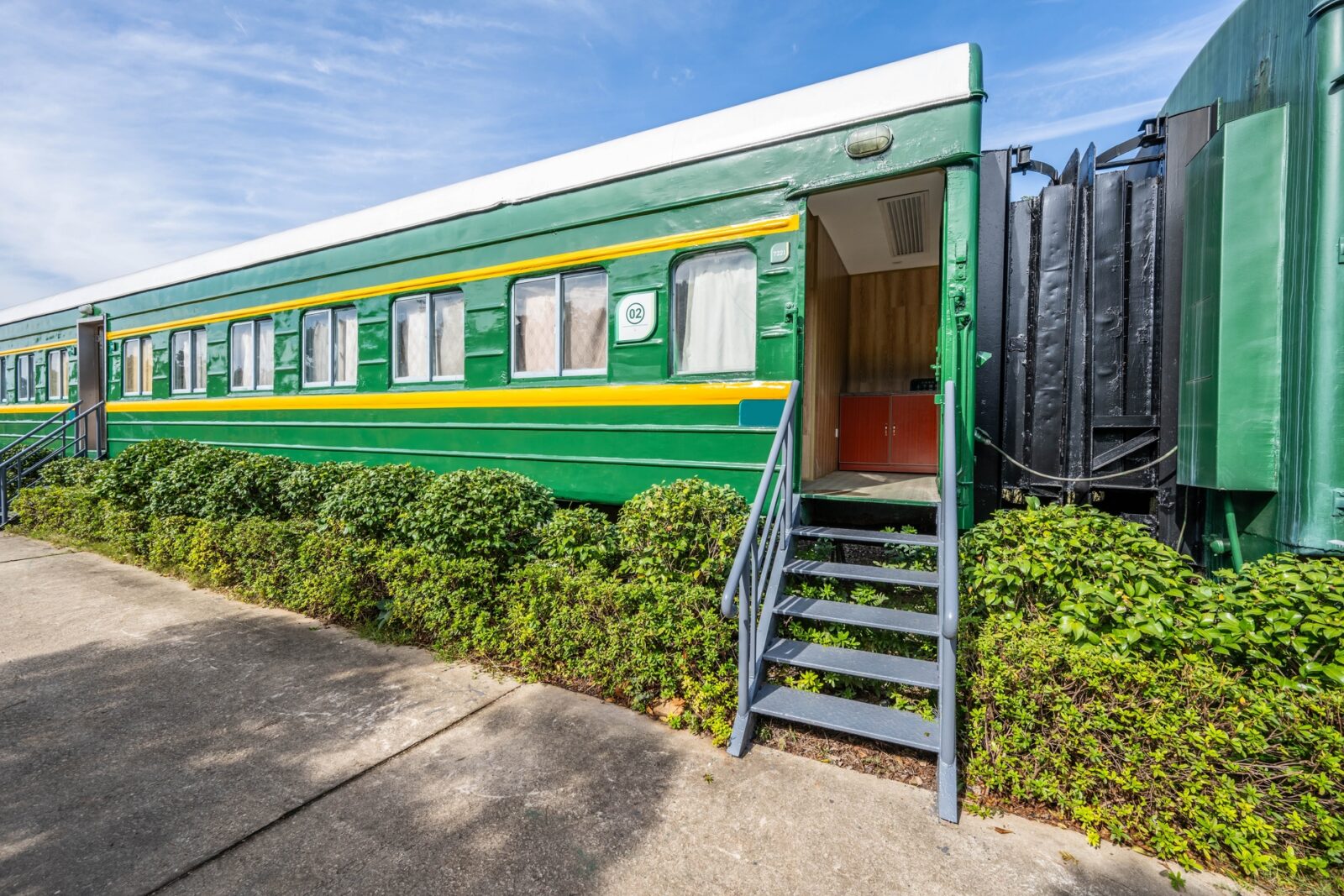
Just before the sun lifts over the Kazakh steppe, the world outside your window glows in muted gold. The train hums softly beneath you—steady, unhurried—its polished brass fixtures catching the first light. A steward passes through the corridor with a quiet nod, the scent of strong tea trailing behind him. You pull back the velvet curtain and the landscape unfurls: endless grasslands, distant mountains rising like pale silhouettes, a single rider on horseback cutting across the horizon. In this suspended moment, wrapped in the gentle sway of a vintage carriage, the Silk Road feels less like history and more like a living thread you’ve stepped into.
A Journey Stitched With Time
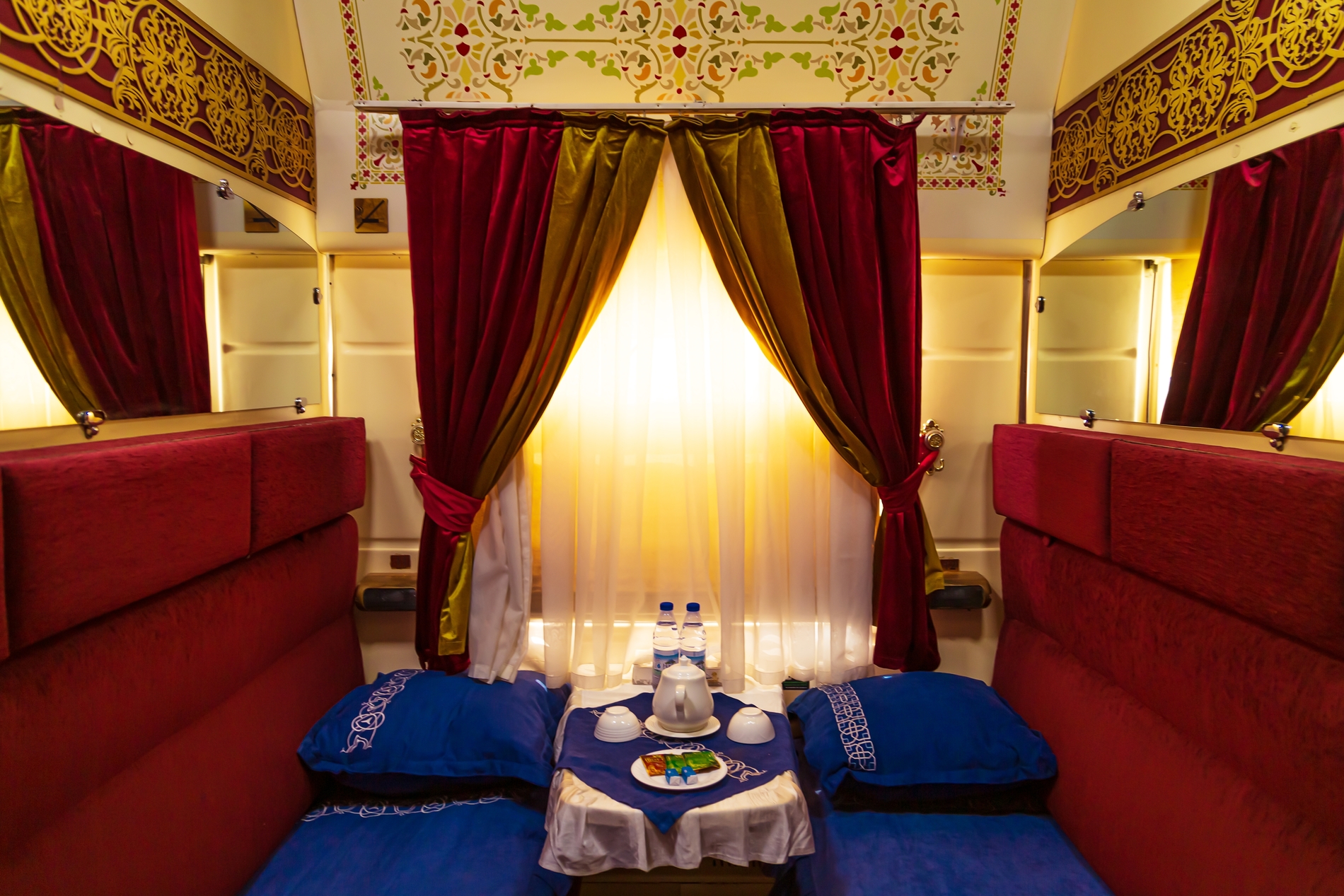
Traveling Central Asia by private vintage train is an immersion into movement itself. The carriages carry the elegance of another era—lacquered wood, etched glass, soft lamplight that warms the room even as the world outside remains vast and cool. There’s a sense of ceremony to the experience: the slow turn of a brass handle, the weight of a wool blanket, the quiet click of wheels meeting track.
The train becomes a sanctuary between worlds. One moment you’re gliding past open plains where wild horses graze; the next, the landscape shifts into desert, its dunes sculpted by wind and shadow. The rhythm of the journey is hypnotic, a reminder that luxury can be found in slowness, in the deliberate unfolding of distance.
Cities That Rise Like Mirages
The Silk Road’s great cities appear gradually, as if conjured from the dust. Samarkand’s turquoise domes shimmer in the heat, their mosaics catching the sun in fractured blues and golds. Bukhara’s minarets rise above labyrinthine streets scented with spices and warm stone. Khiva glows at dusk, its mud‑brick walls turning amber as lanterns flicker to life.
Stepping off the train feels like stepping into a story. You wander through ancient courtyards where the air holds centuries of whispered trade. Silk merchants still unfurl bolts of fabric with practiced grace. Artisans carve wood with patterns passed down through generations. The cities are alive, but they carry their history with a kind of quiet pride.
The Luxury of the In‑Between
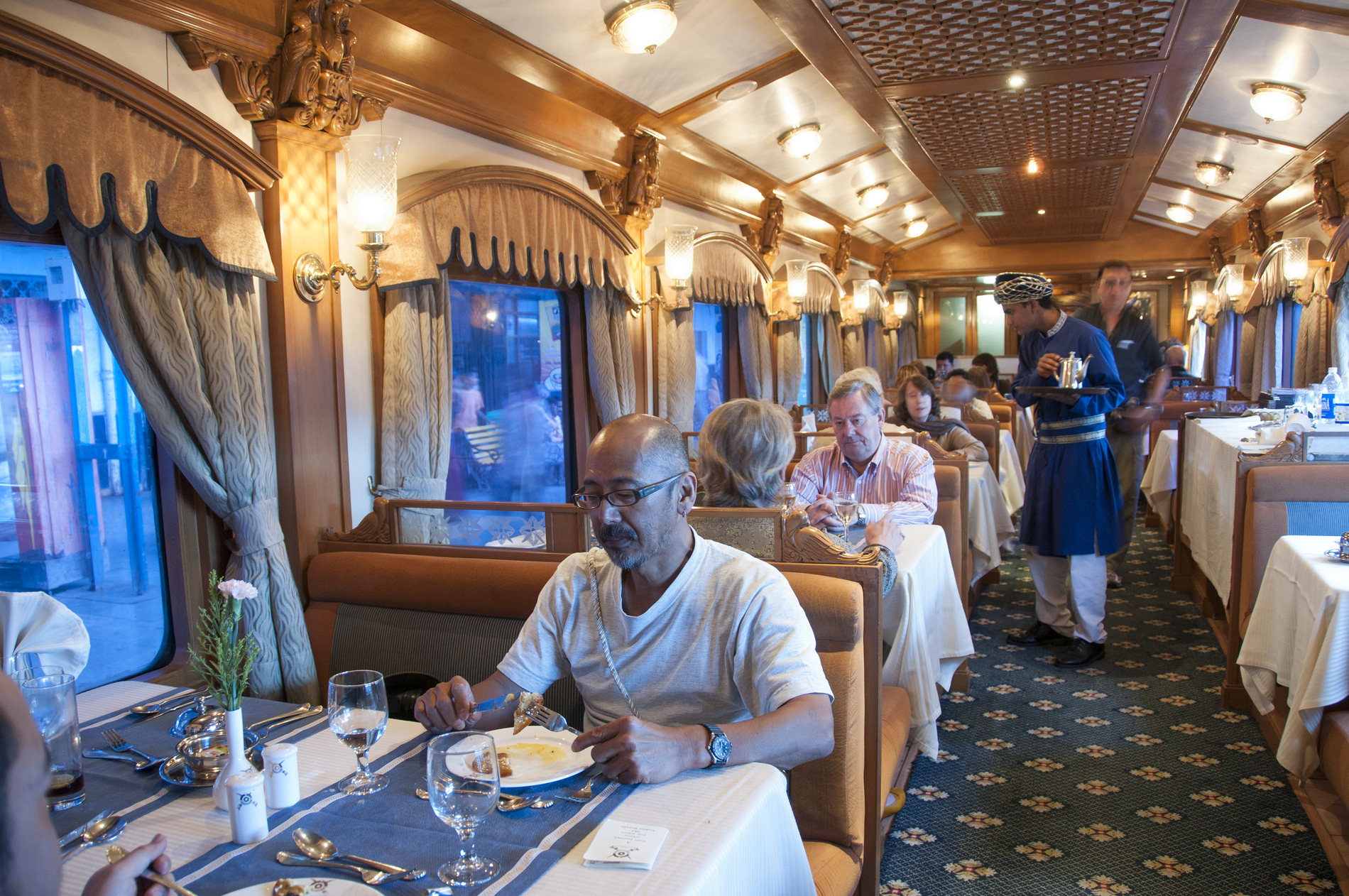
Onboard, the world slows. Meals are served on crisp linen—delicate dumplings, fragrant pilaf, grilled lamb seasoned with cumin and coriander. The flavors reflect the land you’re crossing: earthy, bright, shaped by nomadic traditions and caravan routes. Between courses, you watch the scenery shift through the window, each landscape a reminder of how vast Central Asia truly is.
Evenings settle gently. The train glides through darkness, its lamps glowing like embers. You might sit in the lounge car with a glass of wine, listening to the soft murmur of conversation, or retreat to your cabin where the bed has been turned down and the night air carries the faint scent of desert wind. The movement becomes a lullaby.
A Route That Changes With the Light
There’s no single “best” time to travel this route; each season shapes the journey differently. Spring brings wildflowers across the steppe. Summer sharpens the colors of the cities, their tiles blazing under the sun. Autumn cools the air and deepens the shadows in the desert. Winter wraps the landscape in a stark, quiet beauty. The train adapts, offering warmth, shade, or stillness as needed.
What the Silk Road Leaves Behind
A private vintage train journey through Central Asia isn’t about nostalgia. It’s about connection—to land, to history, to the rare luxury of moving slowly through a world that rarely pauses. It’s the feel of polished wood beneath your hand, the sight of a caravanserai glowing in late afternoon light, the sound of distant hooves echoing across the steppe.
Long after the journey ends, you’ll remember the rhythm of the tracks, the vastness of the landscapes, and the quiet privilege of tracing an ancient route in a way that feels both timeless and deeply personal. The Silk Road doesn’t just invite exploration. It invites reflection—one mile, one sunrise, one shimmering horizon at a time.