

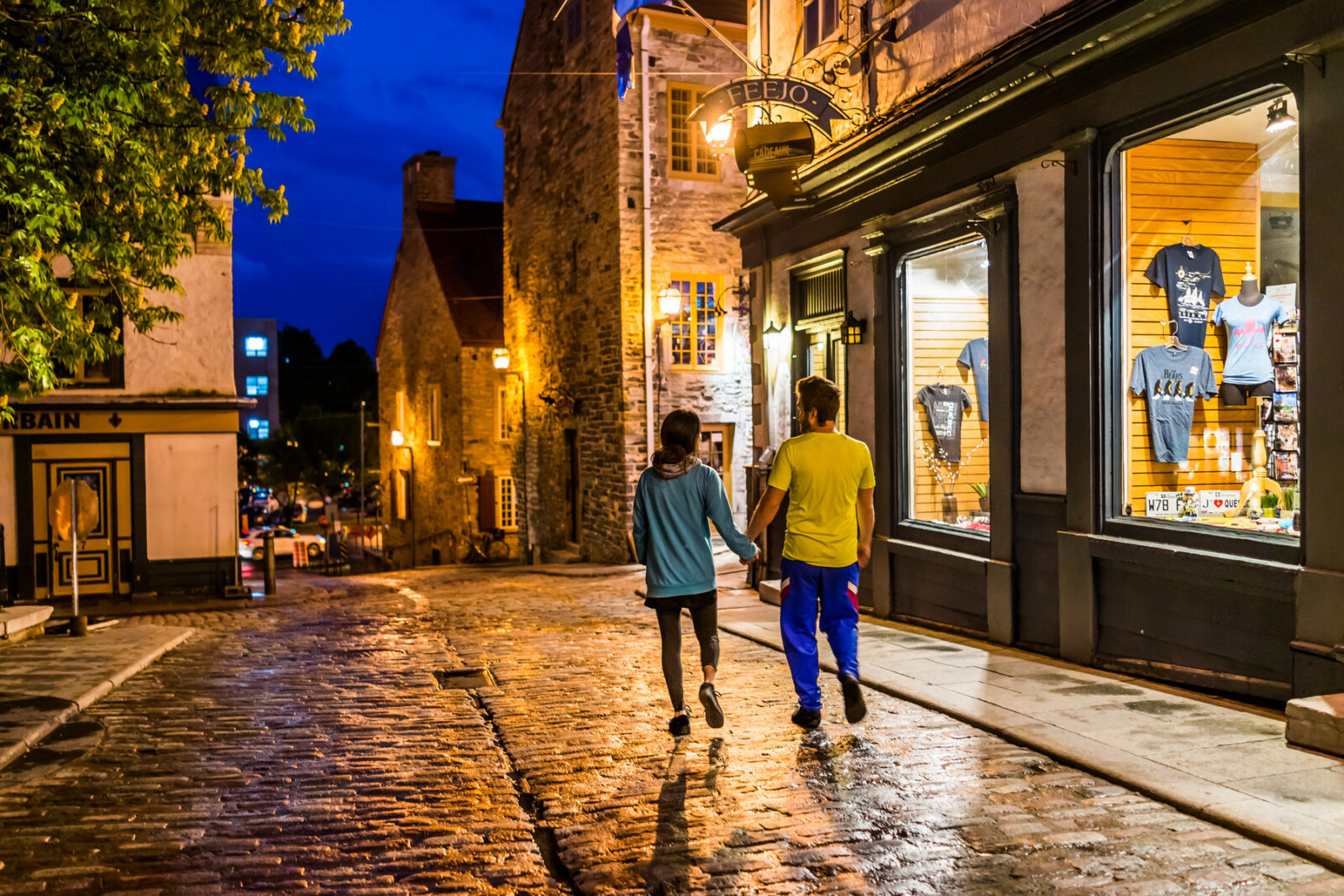
The sound of a winter night in Old Québec is defined by the sharp, rhythmic crunch of boots on frozen stone. It is a dry, crystalline sound that seems to hang in the frigid air long after you’ve stopped moving. As you stand atop the Dufferin Terrace, the massive, copper-roofed silhouette of the Château Frontenac looming behind you, the St. Lawrence River moves silently below, choked with shifting plates of ice that groan like a living thing. The cold here isn’t an inconvenience; it is a clarifying force. It strips away the noise of the modern world, leaving only the amber glow of streetlamps and the fog of your own breath.
The European Soul of the North
Québec City is a geographical anomaly—a fortified French soul preserved within the rugged landscape of North America. Passing through the stone gates of the Vieux-Québec feels like a physical shift in time. The “vibe” is one of deep, historic permanence. While the rest of the continent often feels built for speed, these narrow, winding streets were built for the scale of a horse and carriage.
The architecture—steep-pitched tin roofs, stone chimneys, and colorful wooden shutters—echoes the villages of Normandy, but the spirit is entirely Québécois. In winter, the city achieves its most authentic form. The heavy snowfall softens the jagged edges of the fortifications, and the “blue hour”—that fleeting moment between sunset and night—turns the snow-covered rooftops into a landscape of velvet and silver. It is a place that invites you to tuck your chin into your scarf and lean into the person beside you.
The Geography of Shared Warmth
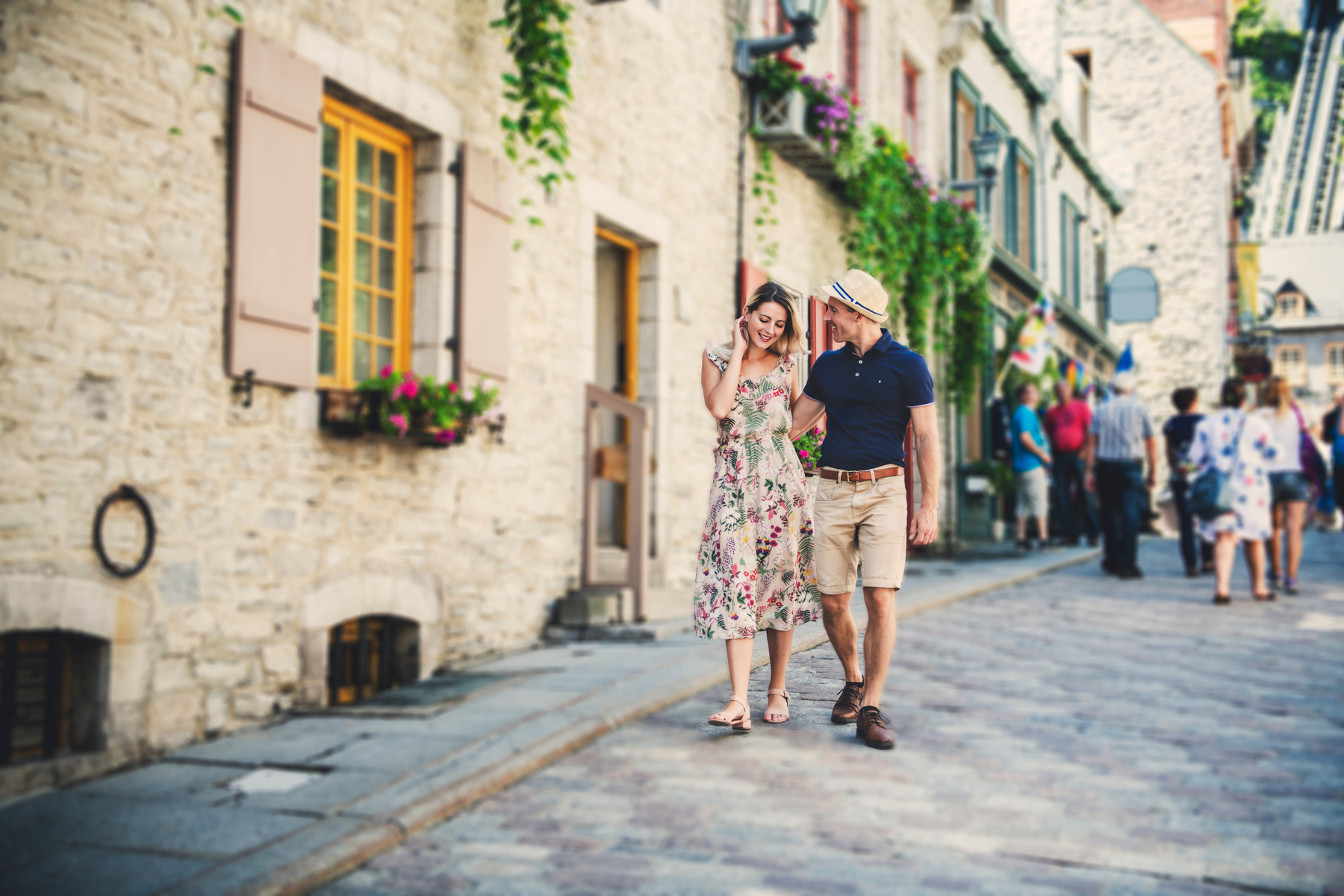
Romance in Old Québec is found in the deliberate pursuit of warmth. It is built into the geography of the Petit-Champlain district, arguably the most beautiful street in North America. At night, when the day-trippers have retreated, the street becomes a private corridor of light. Thousands of tiny white bulbs reflect off the snow-dusted cobblestones, creating a theater of intimacy that feels entirely unscripted.
For a couple, the romance is found in the transition from the biting cold to the sudden, radiant heat of a wood-burning fireplace. There is a visceral emotional resonance in sharing a meal in a basement bistro with stone walls four feet thick, the scent of slow-cooked ragout and maple woodsmoke filling the room. It is the “truce” of winter—the agreement that as long as the fire is lit and the wine is poured, the storm outside doesn’t matter. Walking hand-in-hand through the Place Royale, the site of the first French settlement, you realize that the city’s beauty comes from its survival. It has endured centuries of winters exactly like this one, and that resilience makes the current moment feel remarkably secure.
Mastering the Romantic Experience
To experience the true heart of the city, you must embrace the elements rather than hide from them. The most evocative time to visit is late January, when winter is at its most profound, and the city is fully decorated in its seasonal finery.
The secret to a sophisticated stay is to favor the small, historic inns—auberges—hidden within the city walls. These often offer a more direct connection to the city’s heritage than the larger hotels. When the sun begins to set, take the funicular from the upper town to the lower town. The short, steep descent offers a panoramic view of the frozen river that is breathtaking in its scale. Most importantly, don’t rush. The beauty of Old Québec is best absorbed at the pace of a slow walk. Allow yourself to get lost in the labyrinth of stone; in a city this old, every wrong turn usually leads to exactly where you were meant to be.