

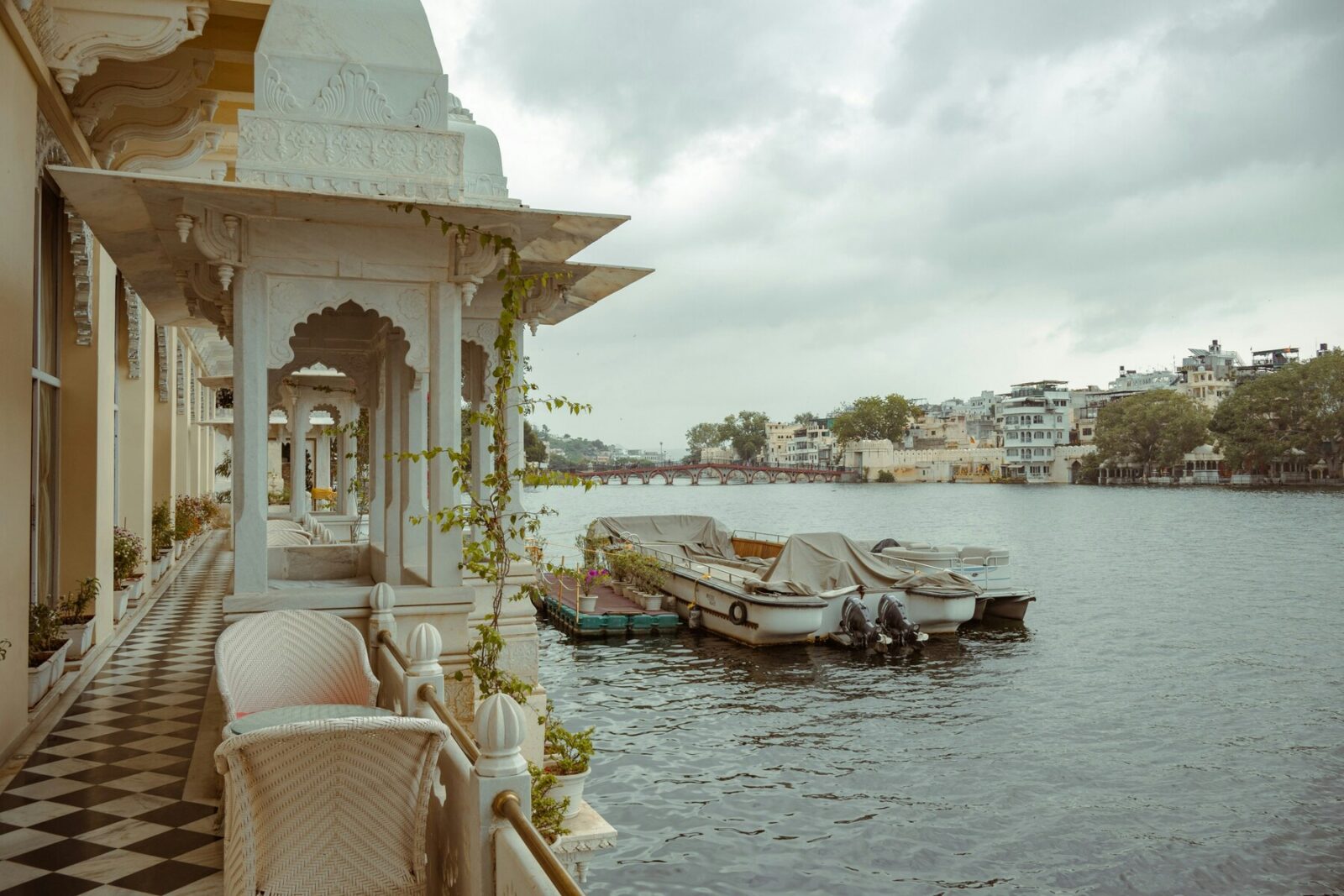
The city of Udaipur is a riot of color, incense, and engine noise, but the moment the wooden boat pushes off from the jetty, the volume of India begins to fade. As you glide across Lake Pichola, the water—dark and glassy—mirrors the rugged Aravalli hills, and ahead lies a marble mirage that seems to float just above the surface. This is the Taj Lake Palace, an 18th-century royal summer retreat that remains, perhaps, the most focused expression of romantic architecture in the world. To arrive here is to leave the mainland behind, both physically and emotionally.
A Marble Mirage in the Desert
To step onto the island is to enter a state of curated isolation. Unlike the grand, sprawling palaces of Jaipur or Jodhpur that command the land, the Lake Palace is a jewel box of white marble, lily ponds, and scalloped arches surrounded entirely by water. The “vibe” isn’t one of traditional hotel luxury; it feels like staying in a private, floating memory. There is a weight to the silence here that is rare in the region. It is the sound of the lake lapping gently against the foundation—a constant, rhythmic reminder that you are disconnected from the chaos of the world.
The architecture itself performs a dance with the light. In the heat of the afternoon, the white stone is blinding and crisp. As the sun moves, the air begins to carry the scent of rosewater and damp stone, and the intricate jali screens filter the harsh Rajasthani sun into soft, geometric shadows across the floors. You feel the history of the place in your bones—not as a museum, but as a living, breathing sanctuary.
The Geography of the Heart
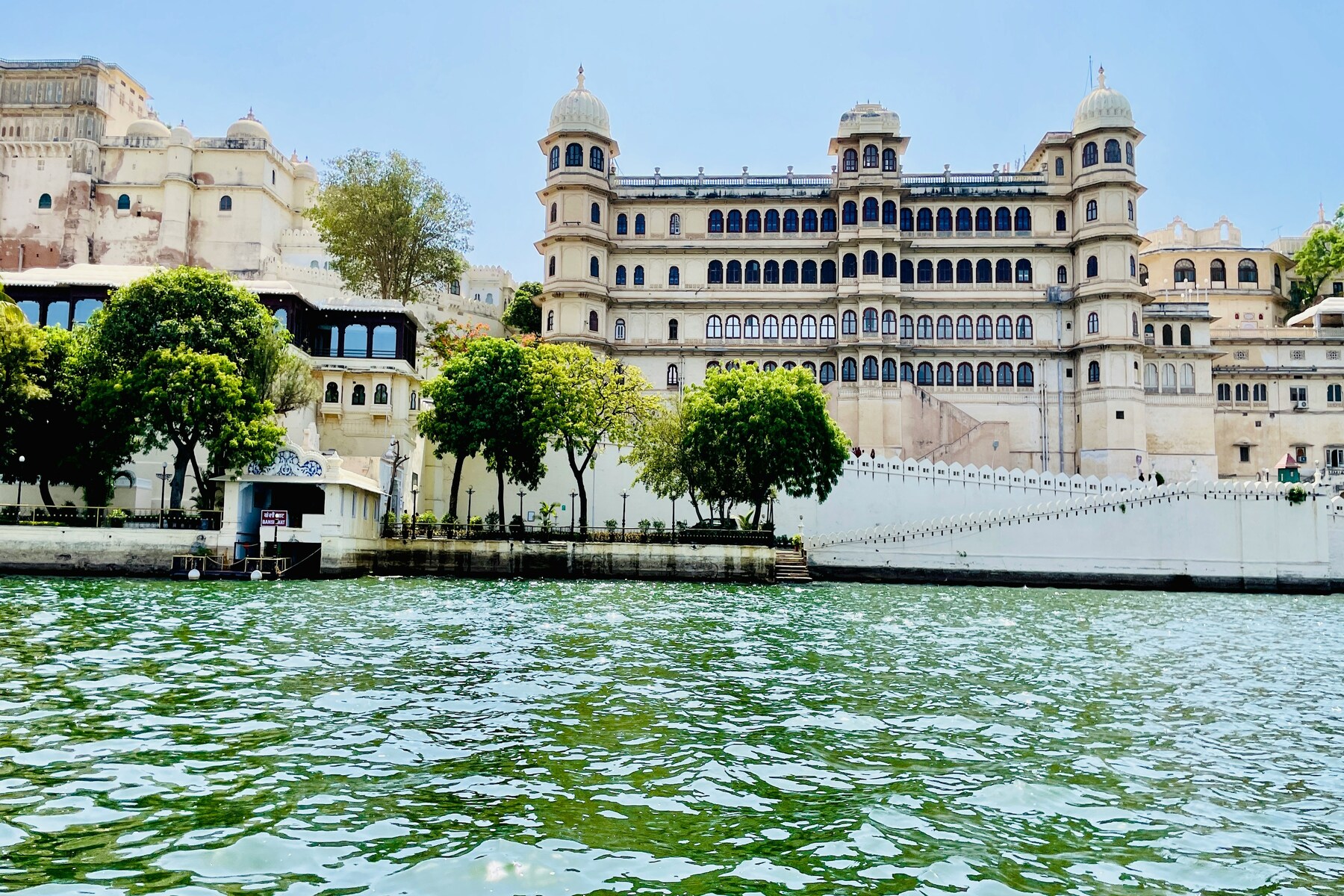
Romance at the Lake Palace is found in the stillness of the courtyards. In the evening, the Lily Pond Courtyard becomes the emotional heart of the island. As traditional musicians begin to play, the sound of the sitar drifts over the water, mixing with the gentle splashing of the fountains. For a couple, the intimacy is built into the very bones of the palace. You can find a quiet alcove on the Mewar Terrace and watch the lights of the City Palace twinkle across the lake like fallen stars.
The emotional resonance lies in the intention of the space. Built as a “pleasure palace” for a prince, every frescoed ceiling and silk tapestry whispers of a time when life was lived more slowly and with greater purpose. There is a profound sense of privacy in being on an island where the only way in or out is by boat. It fosters an “us against the world” sentiment that is both grounding and liberating. Walking through the corridors at night, with the moonlight reflecting off the marble, you feel the direct, emotional pull of a bygone era that refuses to fade.
The secret to experiencing the “City of Lakes” is to embrace the slow pace of the water. The ideal time to visit is between October and March, when the desert heat relents and the evenings are crisp enough to require a light wrap.
While the palace is a sanctuary, the most evocative way to experience its majesty is from the water at dusk. Arrange for a private boat ride as the sun begins its descent; the marble walls of the palace turn from stark white to a warm, glowing amber, reflecting the transition of the day itself. Avoid the temptation to over-schedule your time in the city. The true luxury of Udaipur isn’t found in the markets or the monuments, but in the hours spent on a marble balcony, watching the ripples on the lake and realizing that some mirages are actually real.