

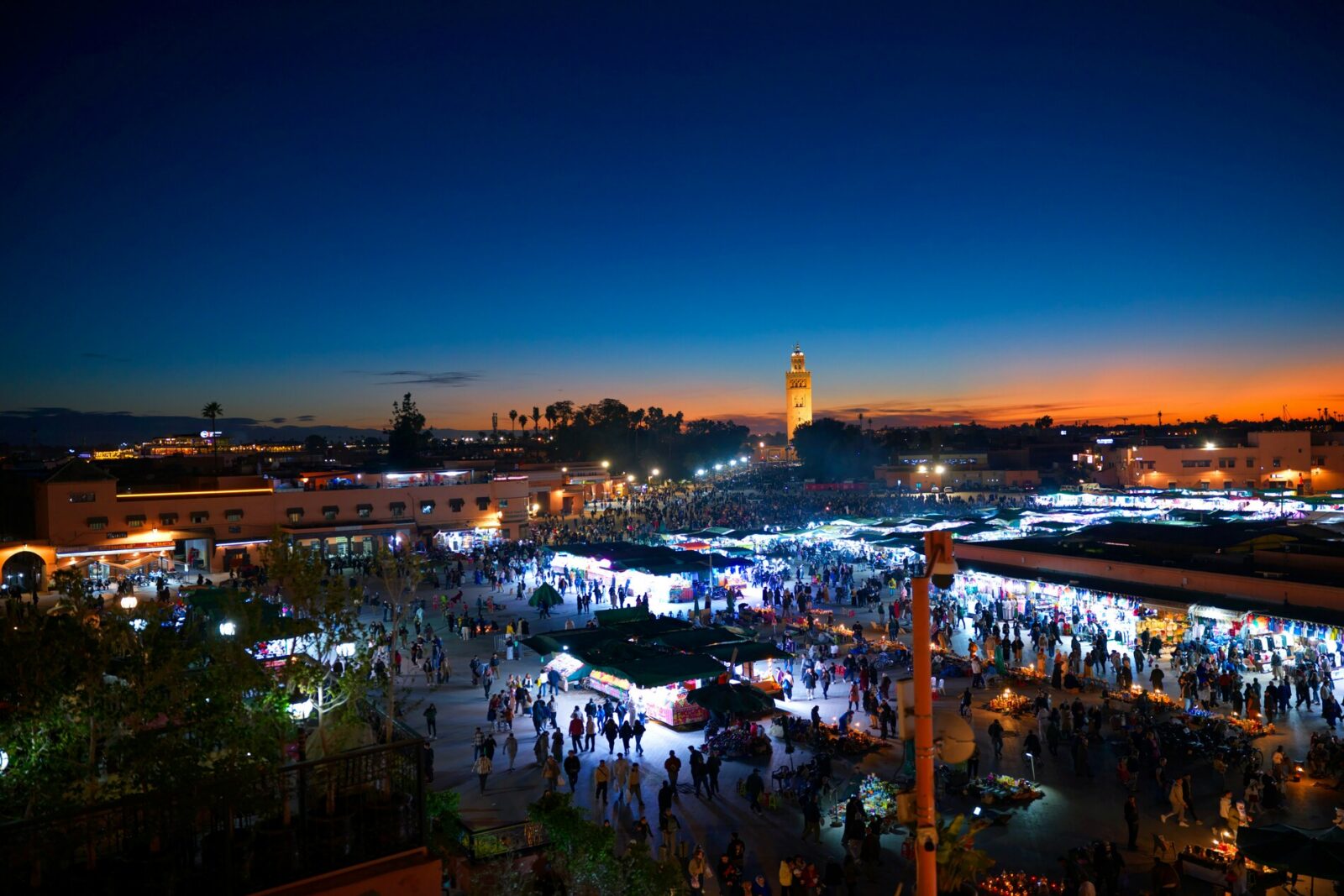
Night falls over Marrakesh like a velvet curtain—slow, warm, and fragrant with orange blossom. The medina shifts from the chaos of day into something more mysterious. Lanterns flicker in narrow alleys. The call to prayer fades into the hum of distant music. You follow an unmarked door, guided only by a whispered invitation and the soft glow of candlelight behind carved cedar panels. A knock. A pause. Then the door opens, revealing a courtyard bathed in moonlight, fountains murmuring beneath palm fronds, and a DJ spinning deep desert house from a balcony draped in silk. In this moment—hidden, hypnotic, impossibly intimate—you understand why Marrakesh’s secret riad parties have become the most coveted nights in North Africa. They aren’t events. They’re enchantments.
Behind the Medina’s Closed Doors
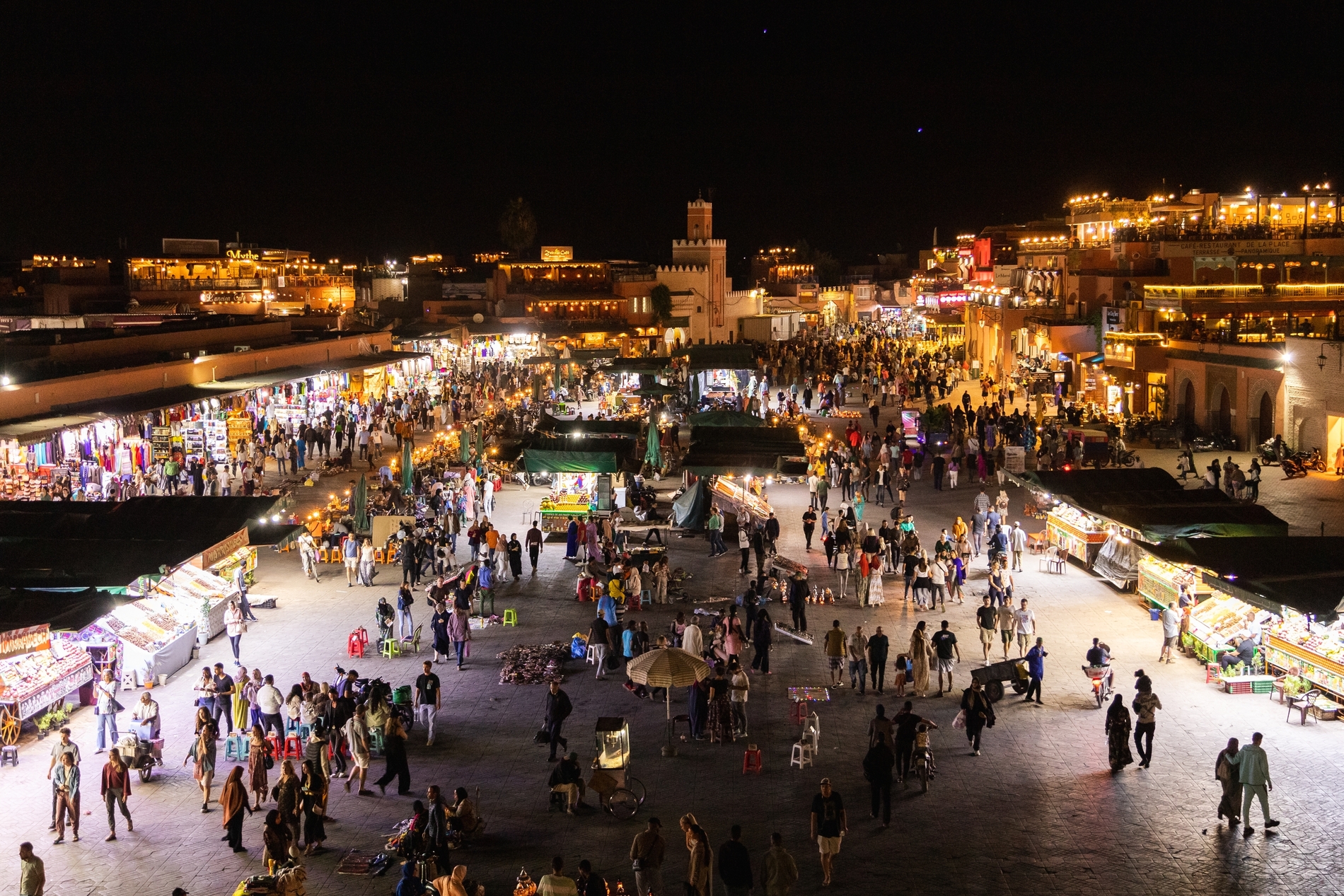
By day, the historic medina operates as a bustling labyrinth of spice stalls, brass artisans, and sun-drenched rooftops. By night, its ancient walls shield a network of private worlds. Traditional Moroccan riads—historic courtyard mansions built inward around lush gardens and central fountains—transform into after-dark sanctuaries accessible only to those in the know. These gatherings are rarely advertised on public channels. Instead, word travels through boutique hotel concierges, local creative collectives, and the international network of artists, designers, and electronic musicians who treat the Red City as their seasonal sanctuary.
Inside, the centuries-old architecture shapes the evening’s lure: intricate zellij tilework catching soft candlelight, hand-carved stucco casting geometric shadows, and marble water basins mirroring the silhouettes of dancers.
The Sound of the Desert at Night
The music at these secluded medina gatherings relies on a distinct, location-driven fusion. Resident and visiting DJs seamlessly blend deep house, tech house, and Afro-house with authentic Moroccan sounds. Hypnotic baselines merge with the rhythmic metallic pulse of qraqeb (iron castanets), the low spiritual hum of the guembri (a three-stringed lute), and traditional Gnawa polyrhythms originating from Sub-Saharan roots. The enclosed riad courtyard functions as a natural acoustic amplifier, bouncing warm low-end frequencies off centuries-old clay brick. Guests dance on cool mosaic tiles as the air fills with burning frankincense and fresh mint tea.
It is not a chaotic club night. It operates as an immersive acoustic ritual.
A Guest List Written in Smoke
The crowd at a private riad party reflects the city’s unique position as a cultural crossroads. The room brings together Paris fashion editors, Casablanca electronic producers, digital nomads, visual artists, and local Marrakshi insiders who hold the keys to the medina’s best-kept secrets. Multilingual conversations mix French, Moroccan Darija, English, and Spanish seamlessly. The atmosphere remains distinctly cosmopolitan yet rooted in local hospitality—glamorous without the industrial flash or heavy security barriers of European mega-clubs.
Everyone enters for the same purpose: to lose themselves within the walls of the old city.
Midnight Feasts in Hidden Courtyards
Gastronomy remains central to the flow of the night. Rather than formal sit-down service, long communal tables and circulating brass platters offer authentic Moroccan culinary staples late into the evening. Guests sample slow-cooked tangia (a rich, spiced meat stew unique to Marrakesh baked in clay urns), savory tagines, saffron-infused couscous, and roasted mechoui alongside fresh khobz flatbread. Platters of local olives, figs, and toasted almonds stay replenished.
Later in the night, trays of honey-drenched chebakia and powdered sugar pastries circulate alongside hot mint tea and signature cocktails infused with orange blossom, rose water, and local spices.
The Rooftop Interlude
As the indoor courtyard warms, guests slip up narrow, tiled staircases to the riad’s open terrace. Above the high walls, the medina opens up into a dark skyline dotted with lit minarets—including the grand silhouette of the nearby Koutoubia Mosque. Up here, the cool desert air settles in while the deep bass lines from the courtyard rumble softly through the flooring. Groups gather across plush Berber rugs and floor cushions wrapped in handwoven wool blankets, taking in the night sky over cocktails.
Dawn in the Medina
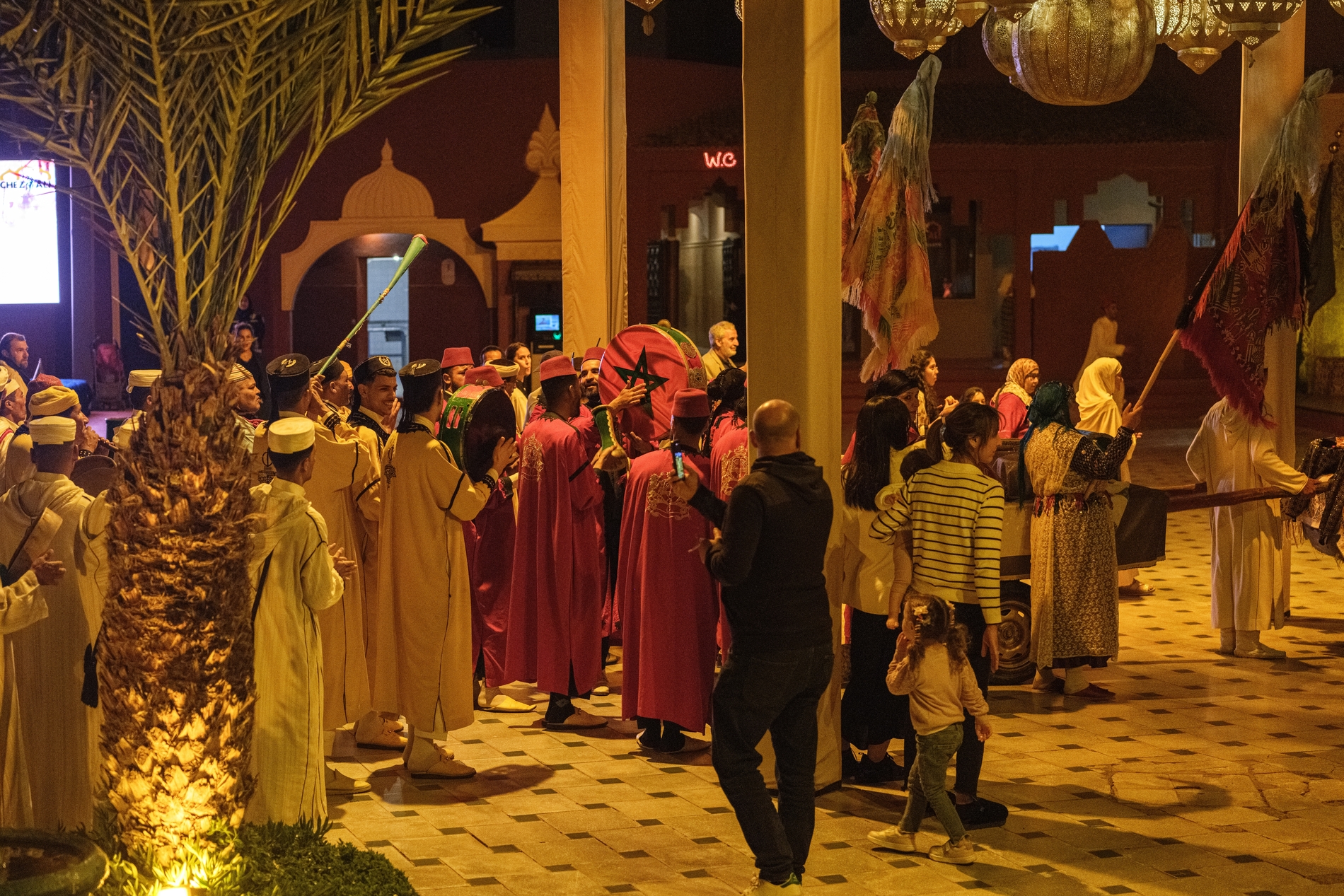
As dawn approaches, the rhythmic pulse of the music begins to soften. The DJ lowers the tempo, transitioning into ambient desert soundscapes. The first call to prayer (Adhan) resonates from neighboring minarets, floating across the awakening city. Guests step back into the courtyard, gather their things, and head toward the heavy timber front doors. Out in the alleys, local bakers heat street ovens, shopkeepers unbolt wooden shutters, and stray cats move across the cobblestones.
You walk back through the waking labyrinth carrying the scent of sandalwood, cedar, and lingering music.
What Marrakesh Leaves Behind
An authentic medina night leaves an indelible mark long after the music stops. It is defined not by massive laser shows or commercial production, but by the tangible magic of historic space, authentic North African rhythm, and unscripted human connection. Marrakesh doesn’t just host nightlife—it crafts an unforgettable, fleeting sanctuary within its ancient walls.