

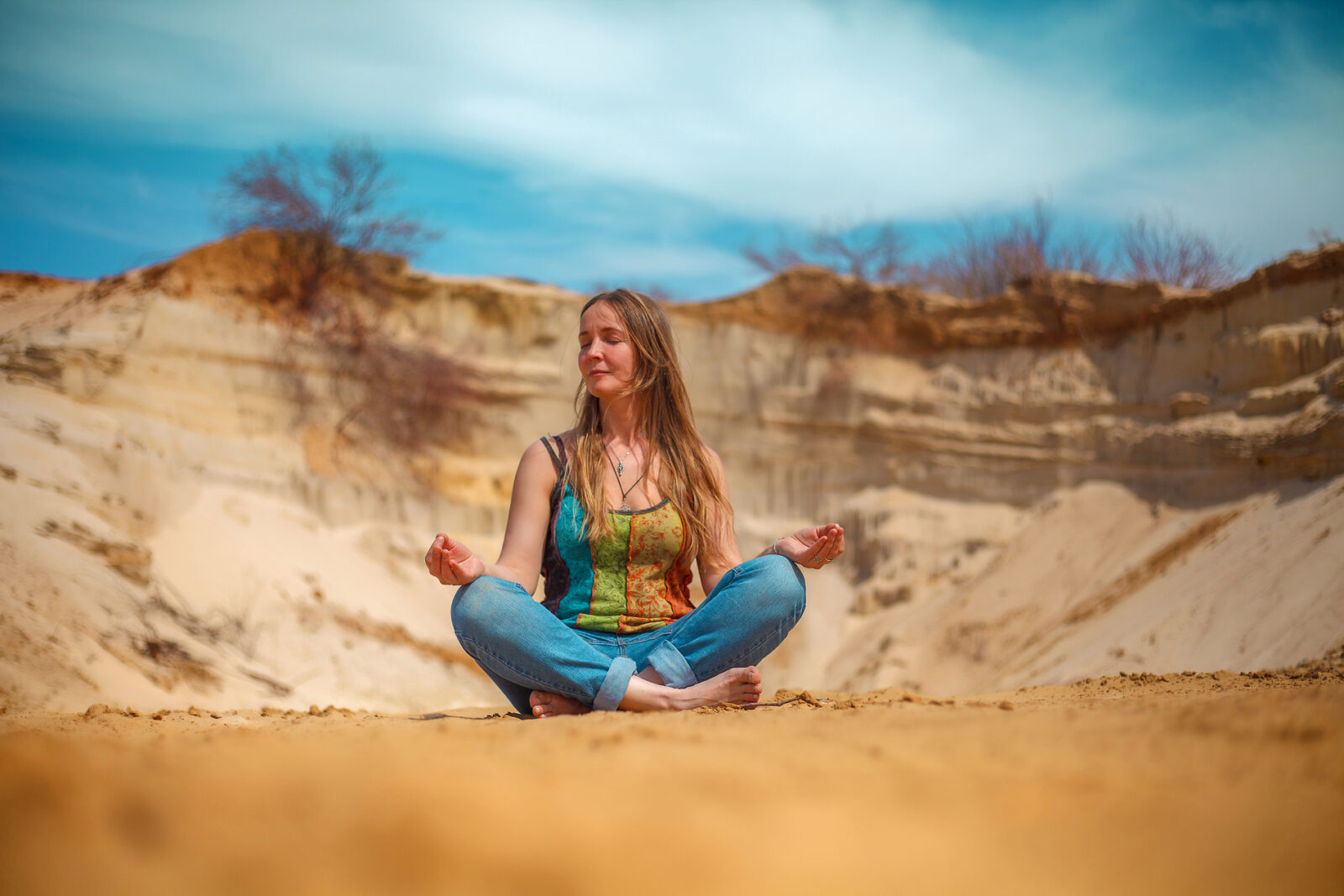
At 2,400 meters above sea level, the cold is not a climate; it is a presence. It arrives the moment the sun slips behind the serrated spine of the Andes, settling on your skin with a dry, crystalline insistence. When you unroll your mat onto the ancient, iron‑rich soil of the Atacama Desert, the silence doesn’t simply surround you—it presses inward. This is not the hush of a sleeping city but a prehistoric stillness, a vacuum carved by millennia of wind and absence. In the driest non‑polar desert on Earth, the horizon doesn’t end; it dissolves into an indigo void preparing to unveil the most extravagant night sky on the planet.
The Weight of the Infinite
To practice yoga here, under a moonless Atacama sky, is to feel yourself recalibrated against a cosmic scale. The sensation is not mystical in the soft, spa‑retreat sense—it is existential. On the outskirts of San Pedro de Atacama, far from adobe courtyards and firelit plazas, the air is so thin and so devoid of moisture that the stars appear unfiltered. The Milky Way is not a pale smear; it is a luminous river, textured and dimensional, a celestial architecture that feels almost within reach.
In this environment, the ego doesn’t just quiet—it evaporates. The desert’s emptiness becomes a kind of internal amplifier. With no trees, no buildings, no ambient hum, your own heartbeat becomes the loudest thing for kilometers. You are not practicing in a landscape; you are practicing inside a void. The desert becomes a mirror, stripping away distraction until only breath, bone, and intention remain. It is a sensory deprivation chamber with a roof of fire.
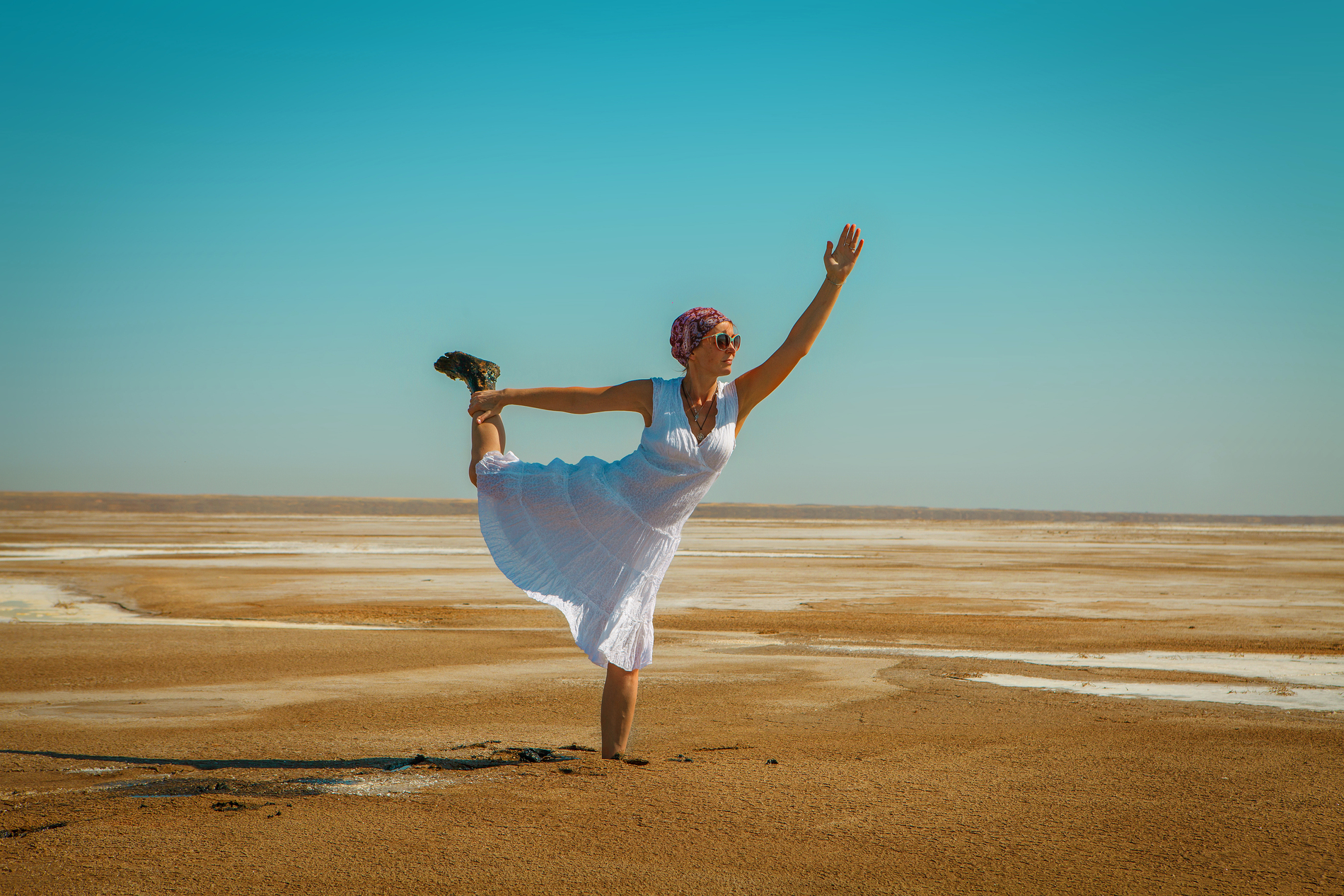
Movement here becomes magnified. A slow vinyasa feels like a negotiation with the elements. Your exhale forms a pale plume in the beam of your headlamp, a visible metronome marking your presence in the cold. In Vrksasana (Tree Pose), your drishti is not a stable wall or a branch—it is Jupiter, shimmering with a faint, electric pulse. In Virabhadrasana II, the line of your gaze extends toward the Southern Cross, anchoring your warrior stance in a constellation older than human memory.
The desert floor adds its own texture to the practice. Transitioning from Bhujangasana (Cobra) into Adho Mukha Svanasana (Downward Dog), the grit beneath your palms reminds you of the tectonic patience that shaped this plateau. The air is so dry that each inhale feels like a small act of discipline, a conscious drawing‑in of life.
But it is in Savasana that the Atacama reveals its full vocabulary. Lying flat on your back, the boundary between your body and the earth dissolves. The sky rotates slowly overhead, and the usual orientation of “up” and “down” becomes irrelevant. You are suspended—weightless, grounded, and infinitesimal at once. The faint scent of sun‑baked minerals and distant sagebrush keeps the experience tethered to the physical world, preventing the spiritual from drifting into abstraction.
The Practical Elegance of Desert Practice
To capture the true soul of an Atacama night, timing is the only luxury that matters. The new moon is the apex: the sky at its darkest, the stars at their most assertive.
The desert demands a kind of sartorial choreography. Layering is not optional; it is survival. A thermal base layer, a windproof shell, and warm socks become as essential as your mat. Choose guides or retreats that favor the quieter, more intimate valleys—places like the Valle de la Luna—after the sunset crowds have vanished.
And then: stillness. Allow at least twenty minutes before beginning your practice. Your eyes need time to adjust to the dark; your nervous system needs time to adjust to the silence. In the Atacama, the stars do not simply appear—they reveal themselves only when you have become quiet enough to receive them.