

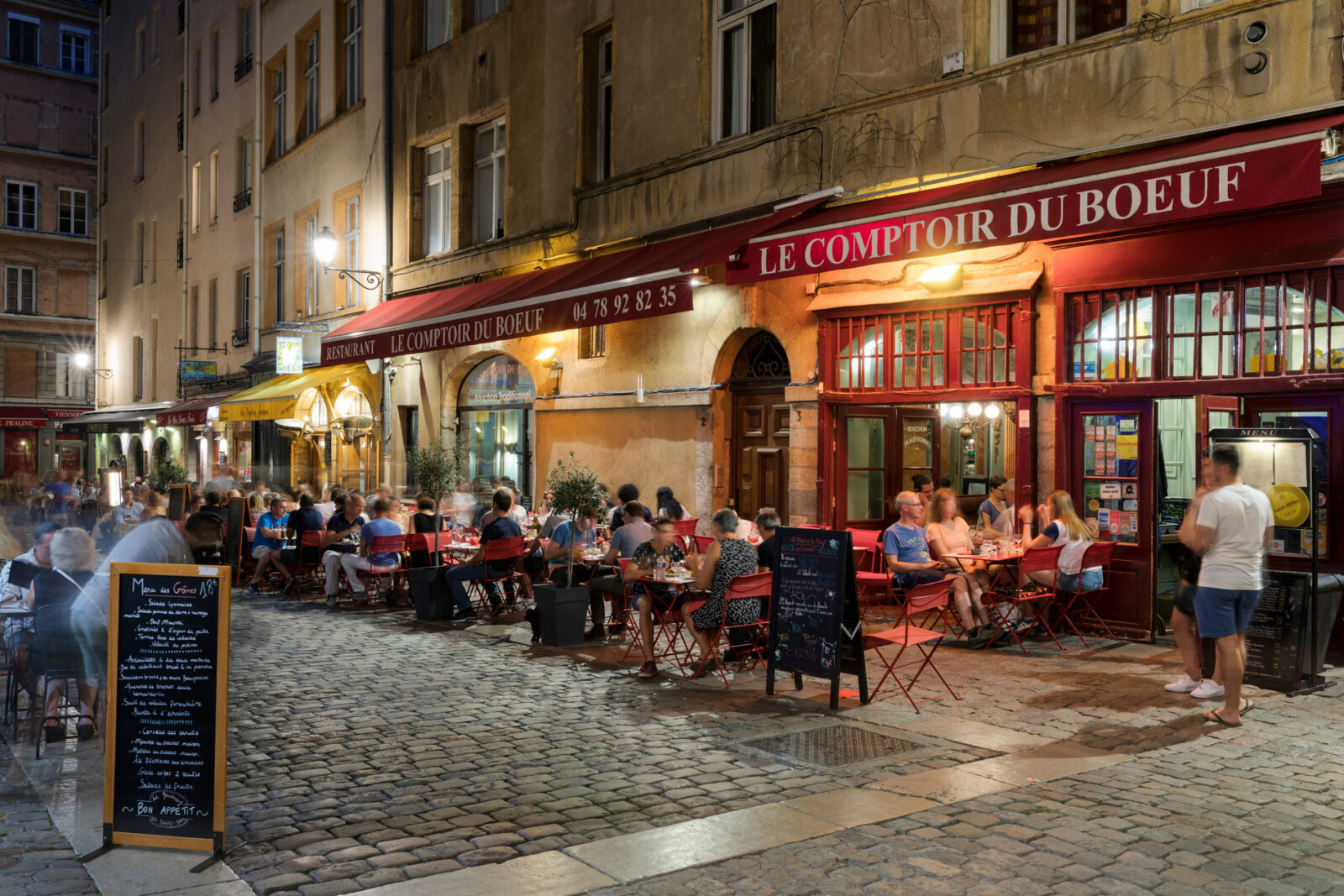
Lyon greets you with the aroma of butter, wine, and something slow‑cooked and irresistible drifting from behind a half‑open door. You and your partner wander into the old town, where narrow traboules twist between Renaissance façades and the glow of warm lamps spills onto cobblestones. A chalkboard outside a tiny bouchon lists dishes you can’t quite pronounce but instantly want—quenelles, tablier de sapeur, cervelle de canut. Inside, wooden tables sit close enough to spark conversation, red‑and‑white checkered cloths soften the room, and copper pots hang like relics of a culinary religion. The owner nods you in with a smile. Lyon doesn’t just feed you—it folds you into its appetite.
Where Comfort Food Becomes High Art
A bouchon is not a restaurant; it’s a feeling. The room hums with warmth, laughter, and the clatter of plates carrying dishes born from tradition and perfected through generations. Tourists lean close over steaming bowls, sharing bites of dishes that feel both rustic and refined. The atmosphere is intimate without trying, shaped by low ceilings, wooden beams, and the unmistakable perfume of butter melting into shallots. Lyon’s gastronomic soul lives in these spaces—unpretentious, deeply flavorful, and anchored in the belief that food tastes better when shared.
Inside the Heart of a Bouchon Kitchen
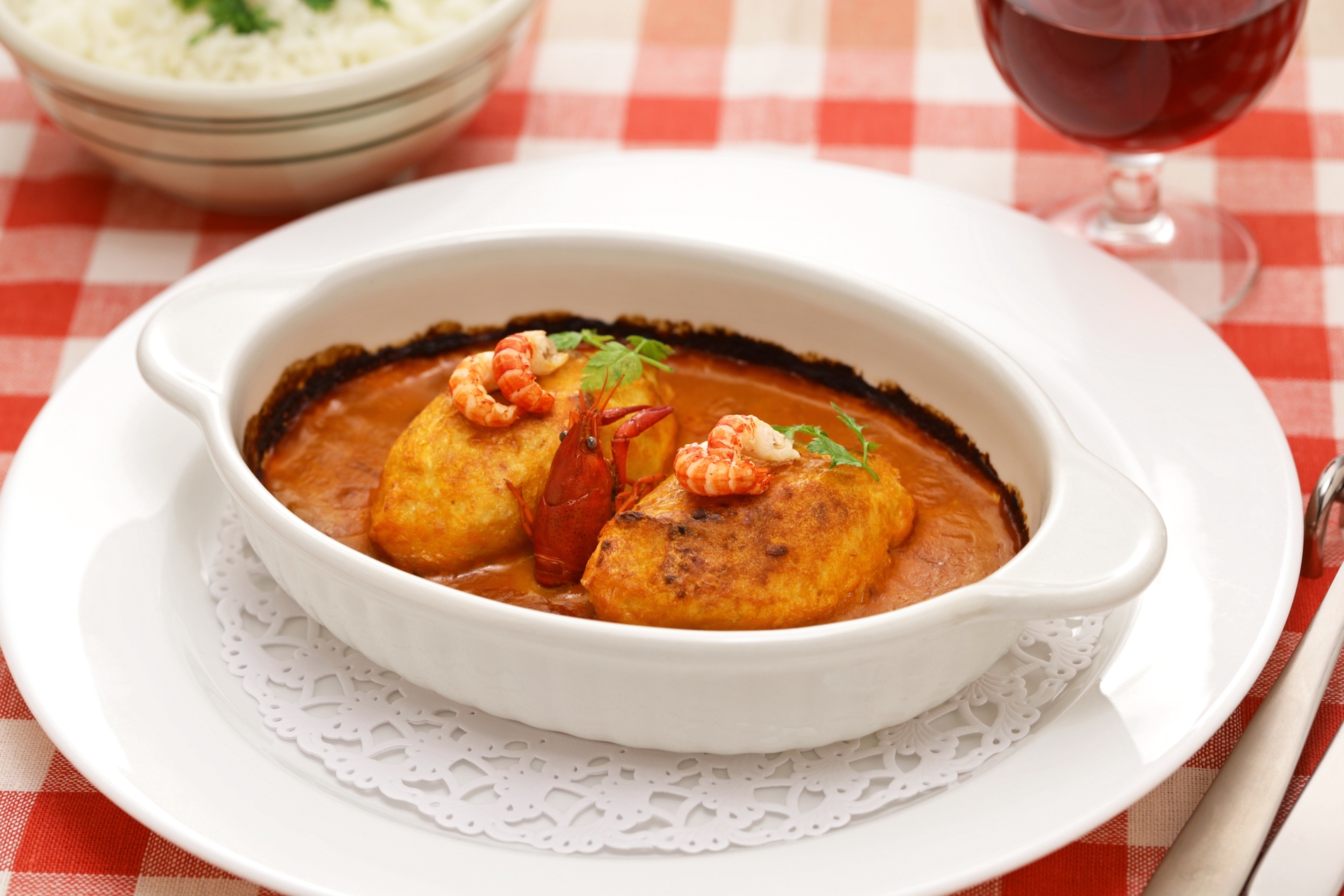
Your meal begins with a pot of cervelle de canut, a whipped cheese flavored with herbs, vinegar, and shallots. It’s light, tangy, and spread generously over slices of warm bread. Then comes the quenelle, Lyon’s signature cloud of pike mousse baked in a rich Nantua sauce that tastes like the river and the forest had a love affair. You share bites, marveling at the texture—airy yet decadent. A server brings a steaming plate of andouillette, its aroma bold and unapologetic, its flavor deep and earthy. You sip a glass of Beaujolais, letting the wine cut through the richness. The room fills with the scent of slow‑braised meats, buttery potatoes, and sauces that have simmered for hours. Each dish feels like a story—one that began in a grandmother’s kitchen and found its way to your table.
As the evening unfolds, you notice the rhythm of the bouchon: the owner chatting with regulars, the chef emerging to check on a dish, the clink of cutlery against heavy ceramic plates. There is no rush, no pretense, only the pleasure of eating well in a city that has made it an art form. You finish with a tarte à la praline, its bright pink filling sweet and nutty, a Lyonnais signature that feels like a wink at the end of the meal.
Letting Lyon Feed You Slowly
Lyon rewards tourists who surrender to its culinary pace. Meals begin early but end late, unfolding in courses that encourage conversation and lingering glances. You wander from bouchon to bouchon, discovering how each one interprets the classics—some more rustic, others more refined, all deeply rooted in tradition. The city invites you to slow down, to savor, to let the richness of the food shape the rhythm of your evening. You leave the table full but not heavy, warmed by wine, comforted by the glow of a room that feels like it has existed forever.
What You Carry Home
Tourists remember the first spoonful of quenelle, the warmth of a crowded room, the way a simple dish could feel like a revelation. They remember the intimacy of sharing plates, the pleasure of discovering flavors that speak of history and home. But the deeper imprint is connection. Lyon teaches lovers that food is not just nourishment—it’s a language, a ritual, a way of being together. In a bouchon, romance is served one dish at a time, each bite a reminder that the best meals are the ones shared slowly.