

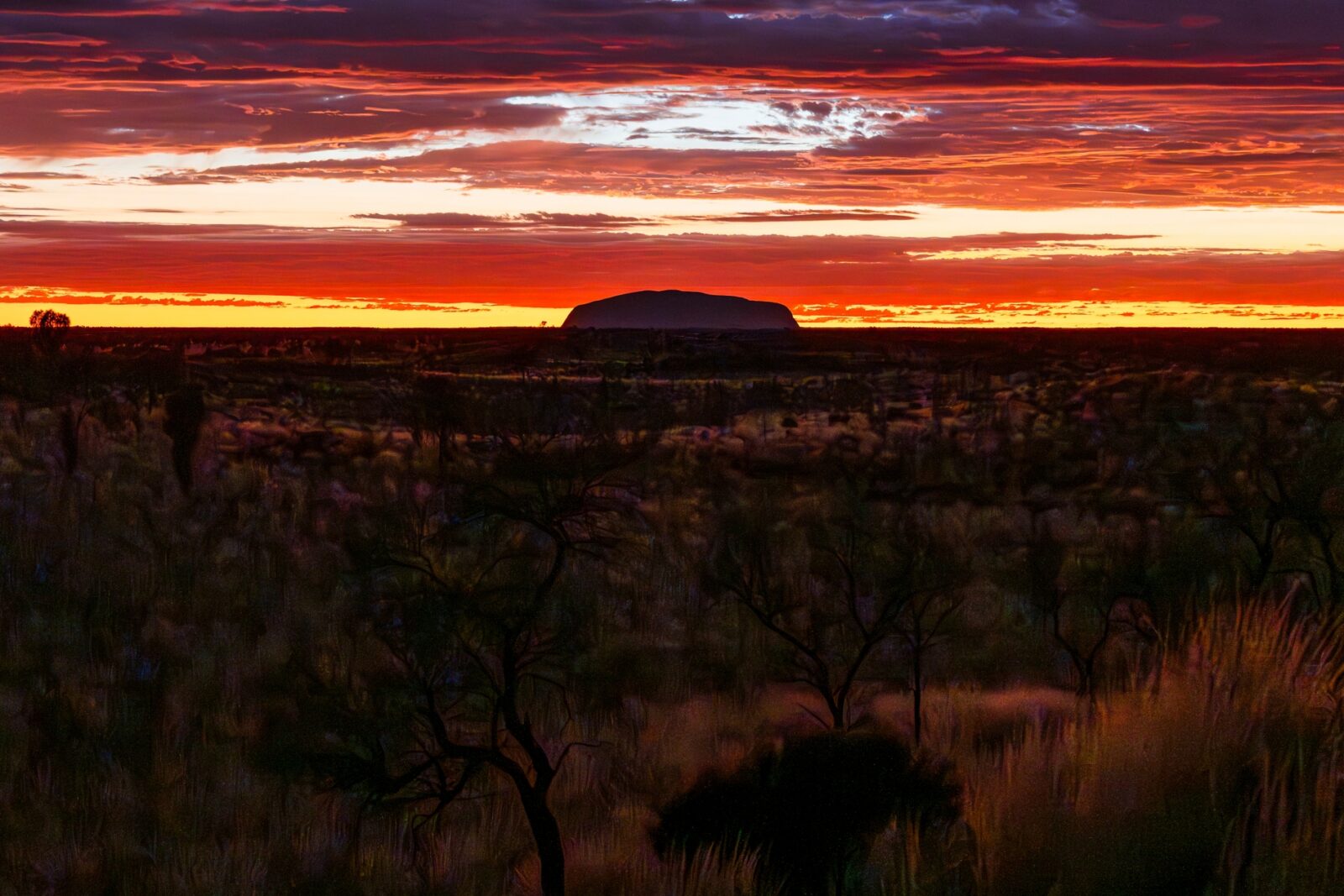
The Australian Red Centre doesn’t ease you in—it greets you with heat, silence, and a horizon so wide it feels like the world has been stripped down to its bones. On your first morning, the desert is still cool, the sky washed in pale lavender, and the red earth radiates a quiet strength beneath your boots. A lone crow cuts across the dawn, its call echoing through the stillness. Out here, survival isn’t a dramatic test of grit—it’s a slow, steady conversation with a landscape that has existed unchanged for millennia. A week in the Red Centre means learning its rhythms, respecting its extremes, and discovering the strange, magnetic pull of a place that demands your full attention.
First Light on Red Earth
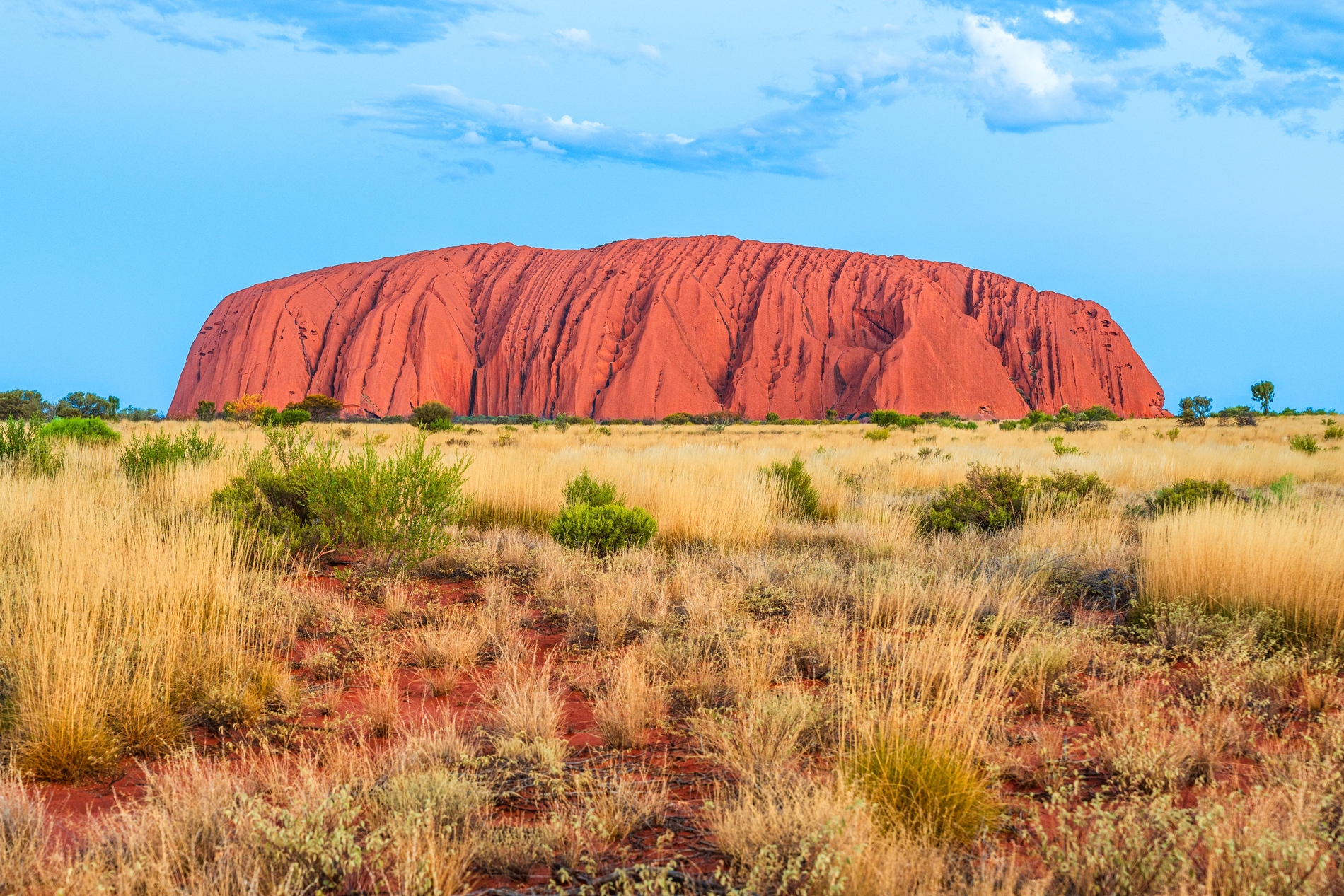
The day begins before the sun even considers rising. The air is cool, almost cold, and the desert holds its breath in the half‑dark. You kneel to tighten your boot laces, feeling the grit of red dust already working its way into the seams. When the first light finally spills across the horizon, it hits the landscape with a sudden, fierce clarity—Uluru glowing like a coal, spinifex catching fire in gold, the sky widening into a pale, endless dome. Out here, the scale of the land rearranges your sense of what’s big and what’s small. A week in the Red Centre isn’t just a trip; it’s a recalibration.
Learning the Rhythm of the Desert
Survival in the Outback isn’t dramatic in the movie sense. It’s quieter, more methodical. You learn to read the land the way you’d read a map: the direction of the wind, the shape of a cloud, the way the sand shifts under your boots. Days stretch long and warm, the heat building slowly until it presses against your skin like a hand. You carry water constantly. You move with intention. You rest in the shade of ghost gums whose white trunks glow like bone.
Hiking through the gorges of the West MacDonnell Ranges becomes a lesson in contrasts. One moment you’re walking through a dry riverbed, the stones hot enough to sting. The next, you’re stepping into a cool, narrow chasm where the light barely reaches the ground. The walls rise high and close, streaked with iron and ochre. Your footsteps echo. The air smells of stone and eucalyptus.
Nights Under a Sky That Doesn’t End
When the sun drops, the temperature falls fast. The desert exhales. You set up camp on firm red earth, the silence settling around you like a blanket. A fire crackles low, throwing sparks into the dark. Dinner is simple—bread toasted over flames, meat sizzling in a pan, the faint sweetness of billy tea. Then the stars appear.
The Red Centre sky is a spectacle that feels almost unreal. The Milky Way stretches from one horizon to the other, bright enough to cast a faint glow on the ground. Satellites drift silently overhead. Shooting stars cut quick, bright lines across the black. You lie back in your sleeping bag, the cold creeping into your cheeks, and feel the vastness of the desert pressing gently against you.
The Challenge of the Open Road
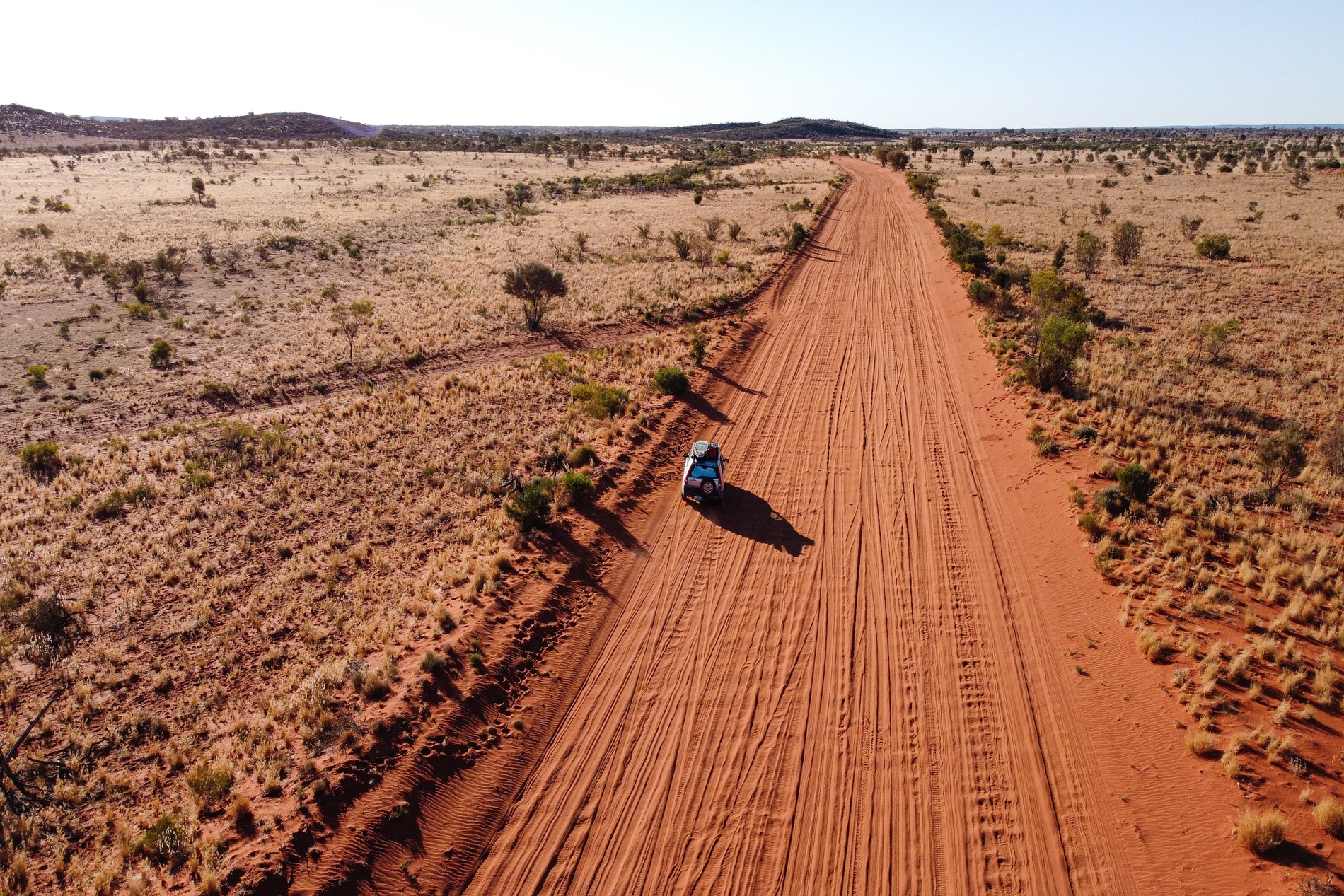
Driving the Outback tracks is its own kind of adventure. The roads are long, straight, and often empty. Red dust rises behind the vehicle in a plume that lingers for miles. Kangaroos bound across the horizon. Wedge‑tailed eagles circle overhead, riding the thermals. You stop often—not because you need to, but because the landscape demands attention. A lone waterhole. A stand of desert oaks whispering in the wind. A ridge glowing purple in the late afternoon light.
Some days bring harder moments: a flat tire on a remote track, a sudden gust of hot wind that feels like opening an oven door, the realization that the next roadhouse is still hours away. But these challenges become part of the rhythm, part of the story you’re building with each mile.
What the Red Centre Leaves Behind
A week in the Australian Outback doesn’t fade quickly. You carry home the sensation of red dust on your skin, the weight of the heat, the shock of cold desert nights. You remember the sound of your boots crunching on dry earth, the way the sky looked just before dawn, the quiet pride of navigating a landscape that asks you to pay attention.
The Red Centre teaches you to move slower, breathe deeper, and trust the land more than you trust your watch. It’s an adventure shaped by silence, space, and the raw beauty of a place that has existed unchanged for thousands of years. Long after you’ve left, you’ll find yourself thinking back to that first morning light on red earth—and the feeling that, for a brief moment, you were part of something ancient and immense.