

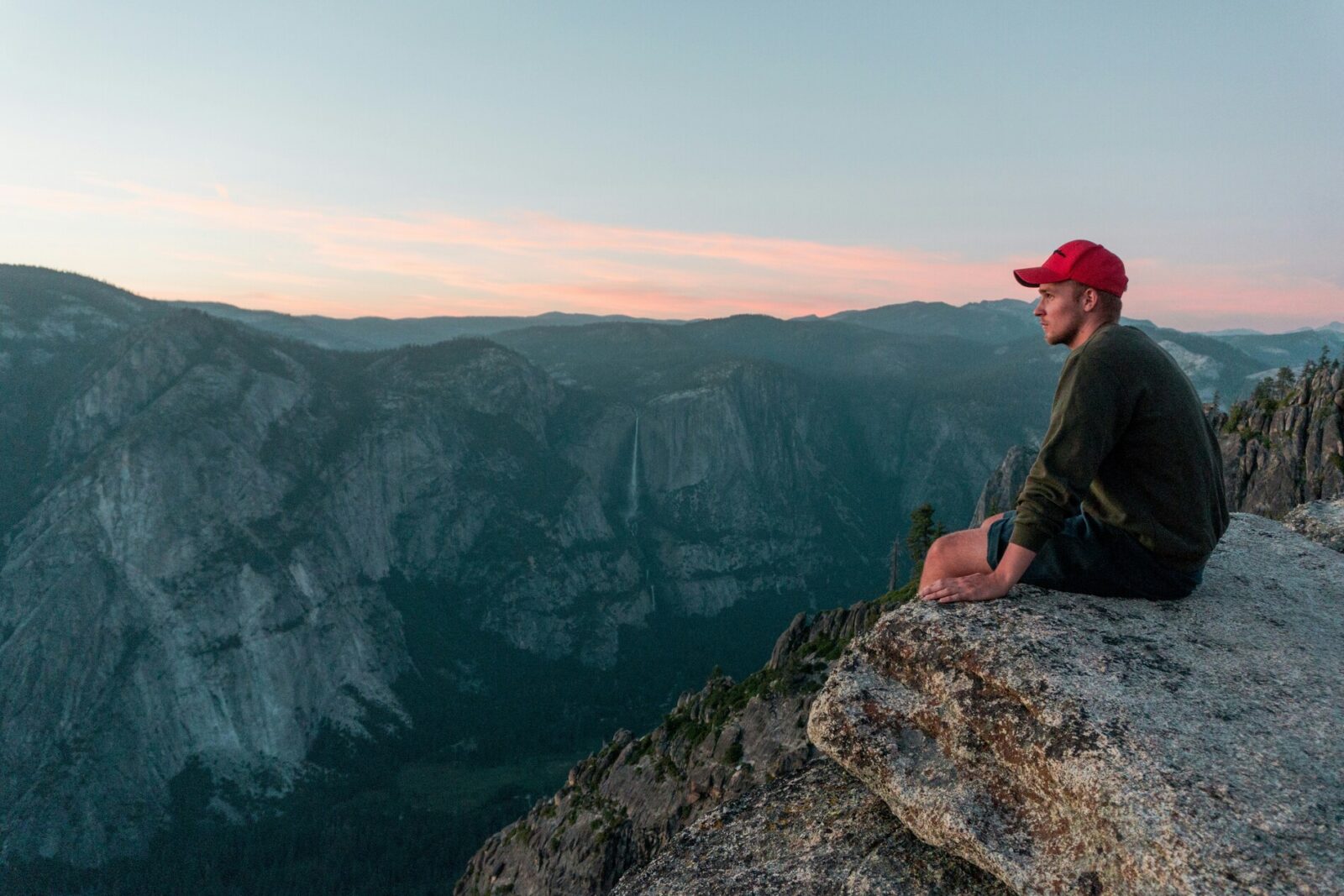
At dawn, Yosemite’s granite blushes with a soft, fleeting pink—just enough color to make the valley feel like it’s waking up with you. Standing at the base of El Capitan, you run your fingers along the cool stone and feel the faint tremor of wind sliding down the wall. A raven glides overhead, its shadow drifting across the rock as if marking the beginning of your ascent. Then the sun lifts, the face brightens, and the sheer scale of the climb settles into your chest.
The Valley That Breathes With You
Climbing here feels less like conquering a wall and more like entering a dialogue with something ancient. Yosemite’s granite has a presence—unyielding, textured, honest. Every crack and seam carries the memory of glaciers and storms, and when your hands slip into a fissure, you sense that history pressing back. The valley amplifies sound in a way that makes even a partner’s call feel ceremonial, echoing between the walls like a chant in a stone cathedral.
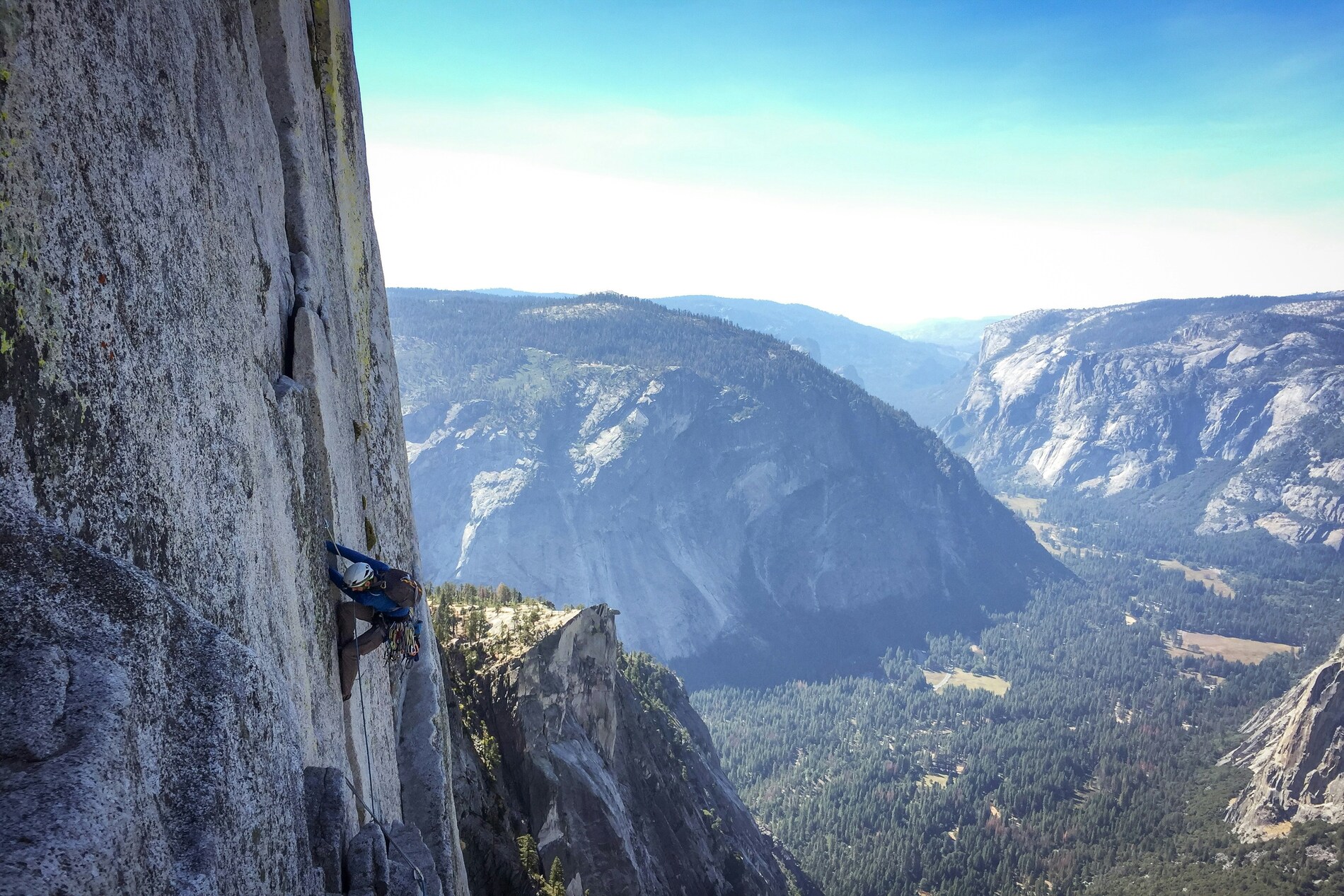
As you rise, the world below shrinks into a mosaic of pines and meadows. Your heartbeat becomes its own metronome. Chalk dust hangs in the air like pale smoke. The rope hums through your belay device with a rhythm that steadies your nerves. There’s a point—usually a few pitches up—when the climb becomes its own universe, and the exposure feels less like danger and more like clarity.
The Climb That Shapes You
Yosemite has a way of recalibrating your sense of difficulty. The routes demand patience, precision, and a willingness to trust your body in ways that feel both primal and deliberate. You learn to commit to jams that seem too narrow, to trust your feet on edges that look like suggestions rather than holds, to breathe through the burn in your forearms as you inch upward.
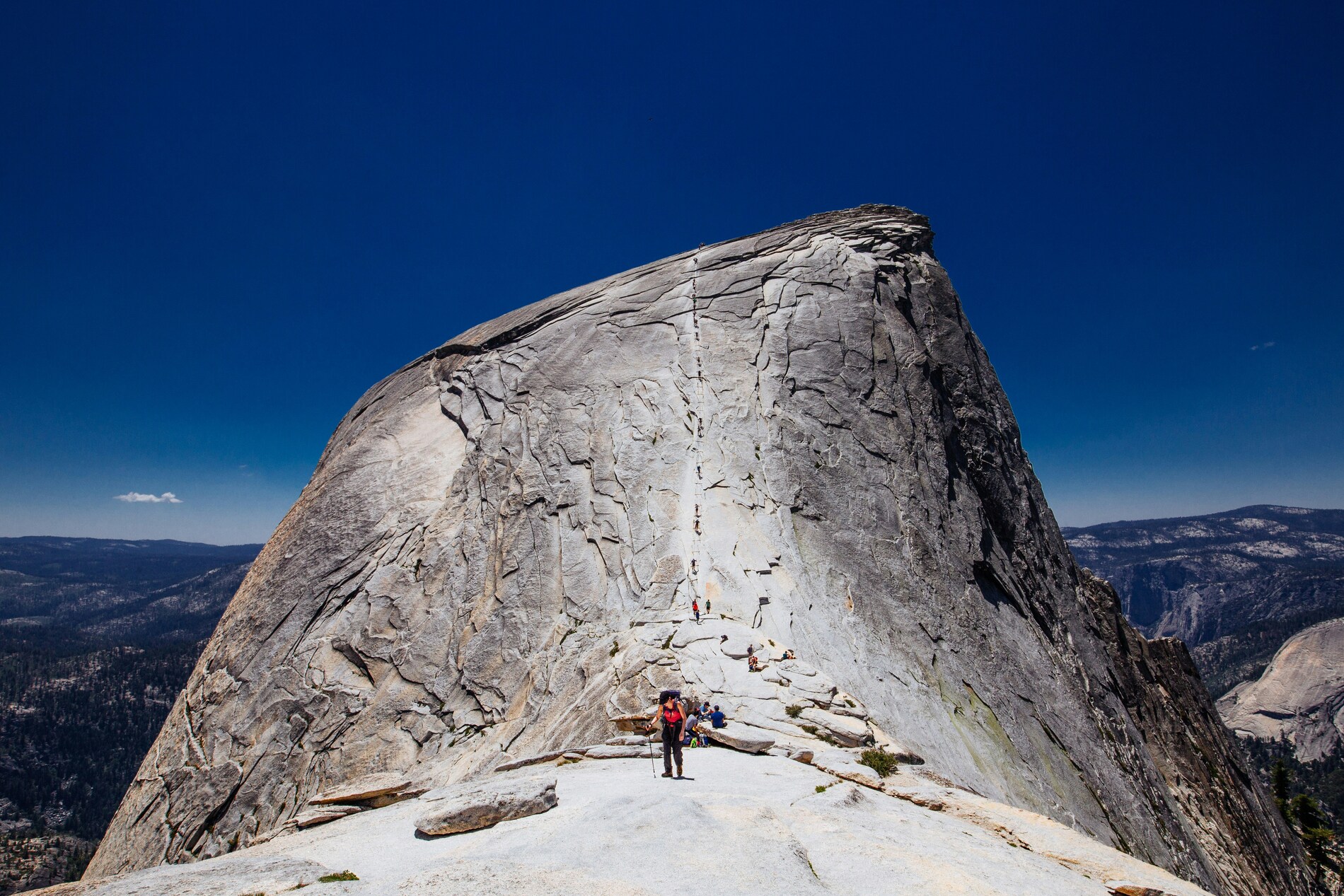
The valley rewards those who move with intention. Rushing rarely works here. The best climbs unfold slowly, each pitch offering its own mix of effort and stillness. Hanging at a belay station, you look out toward Half Dome glowing in the distance, waterfalls tracing white ribbons down the cliffs, and the scale of the place settles into you. It’s impossible not to feel changed by that view.
Timing the Ascent Without Turning It Into Instructions
Yosemite’s walls welcome climbers most of the year, but the shoulder seasons carry a particular magic. Spring brings crisp air and the roar of waterfalls. Autumn softens the valley with warm light and cooler rock that feels almost grippy under your palms. Midweek days tend to be quieter, giving you more room to find your rhythm without the hum of peak-season energy.
If you’re planning a long route, start early. The valley wakes slowly, and there’s something grounding about being on the wall before the sun fully clears the rim. Bring layers—temperatures shift quickly once you’re suspended hundreds of feet above the ground—and give yourself permission to pause on a ledge and simply look. Those moments often become the ones you carry home.
What You Take With You
By the time you coil your rope at the base, Yosemite has left its imprint. Maybe it’s a scrape on your knuckles or the ache of tired muscles, but more often it’s something quieter—a sharpened sense of perspective, a reminder of what ambition feels like when measured in vertical feet instead of noise.
Long after you’ve driven out of the valley, you’ll remember the warmth of the granite under your palms, the echo of your partner’s voice drifting up the wall, and the way the world looked from a place only the bold—or the curious—ever touch.