

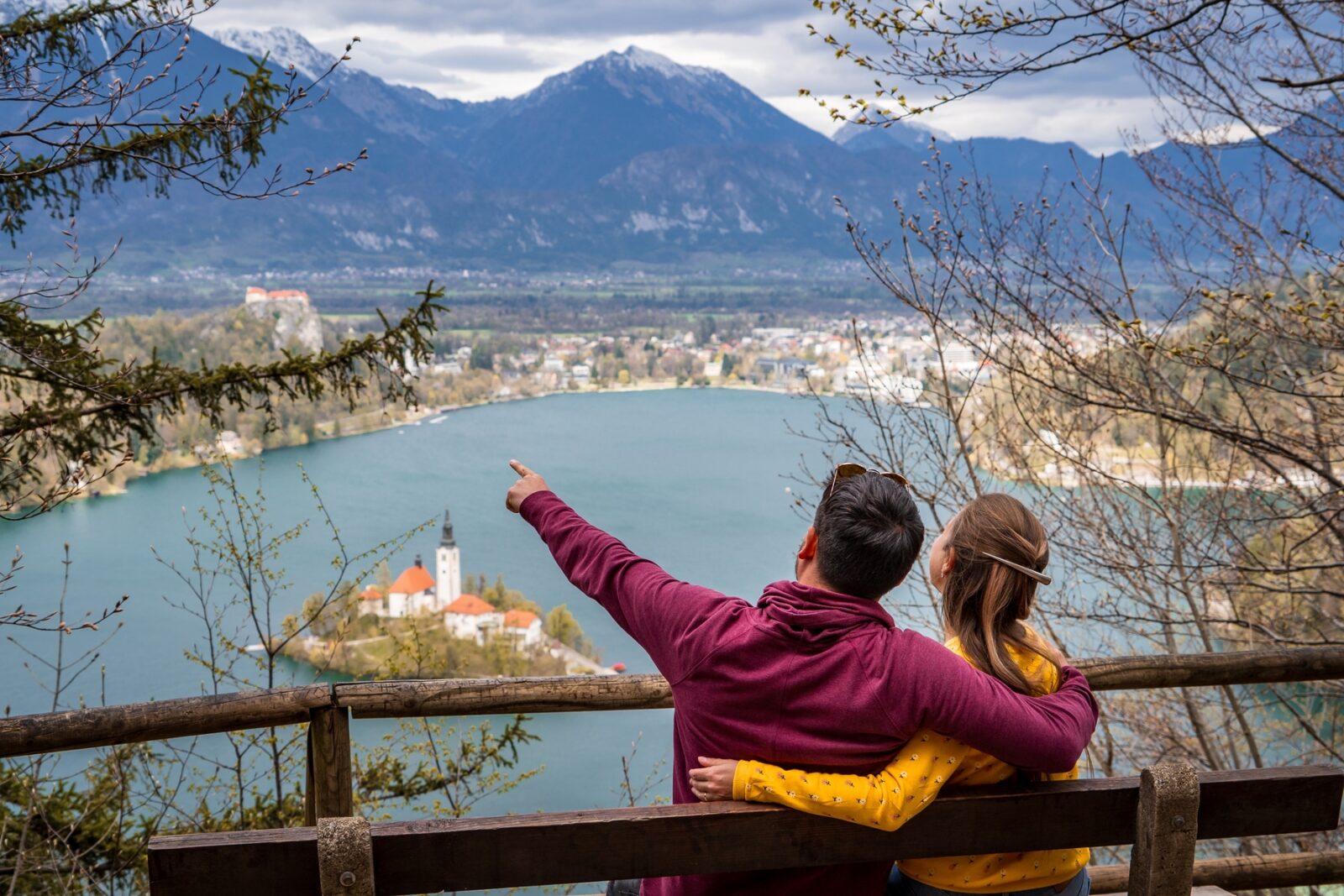
In the Julian Alps, there is a landscape that feels less like a geographic coordinate and more like a story meticulously preserved under glass. Lake Bled is Slovenia’s most enduring image, yet to view it from the shore is to miss its most intimate secret. The lake’s true resonance is not found in the emerald stillness of its water or the medieval castle clinging to the northern cliffs, but in the physical act of reaching its heart: the tiny, tear-shaped island of Blejski Otok.
To get there, one must reject the motorized shortcut and embrace the pletna—the traditional, flat-bottomed wooden boat—or, more romantically, a private rowboat. There is a profound, quiet elegance in the effort. As you pull the oars back, the wood creaking against the rowlocks, the world on the shore begins to dissolve. The sounds of the town are replaced by the rhythmic shush of the hull cutting through the glacial water. In this deliberate transition, the “fairytale” stops being a visual aesthetic and starts becoming a lived experience.
The Architecture of the Ascent
As the island grows larger, the Church of the Mother of God on the Lake reveals itself as a masterpiece of verticality. But before you reach the altar, you must confront the stairs. Rising directly from the water’s edge are 99 stone steps, built in the 17th century. There is a local tradition that a groom must carry his bride up these steps in total silence to ensure a happy marriage—a feat that turns a physical challenge into a sacred rite of passage.
Even for the casual traveler, the climb is a transition. Each step takes you further from the horizontal world of the water and higher into the canopy of chestnut and linden trees that crown the island. The vibe is one of hushed, ancient reverence. The air here feels different—cooler, filtered by the surrounding mountains and the deep, cold spring that feeds the lake. It is an environment that favors the whisper and the slow walk, where the architecture of the church and the surrounding buildings serves as a frame for the silence.
The Sound of a Wish
The climax of the island visit is not just the sight of the Baroque gold leaf and the 15th-century frescoes within the church, but the sensory experience of the “Wishing Bell.” Installed in 1534, the bell’s rope hangs directly in front of the altar. To pull it is to engage with a legend involving a grieving widow and a sunken bell, but the emotional reality is simpler: it is a moment of focused intent.
There is a visceral satisfaction in the pull—the heavy tension of the rope, the delayed chime, and the way the sound ripples out across the water to echo off the surrounding mountains. In a world of instant gratification, the physical effort required to ring the bell—and the row required to reach it—lends your wishes a certain weight. The sound doesn’t just dissipate; it lingers in the alpine air, a resonant hum that anchors the island to the peaks of the Karavanke and the Julian Alps.
The Alpine Palette
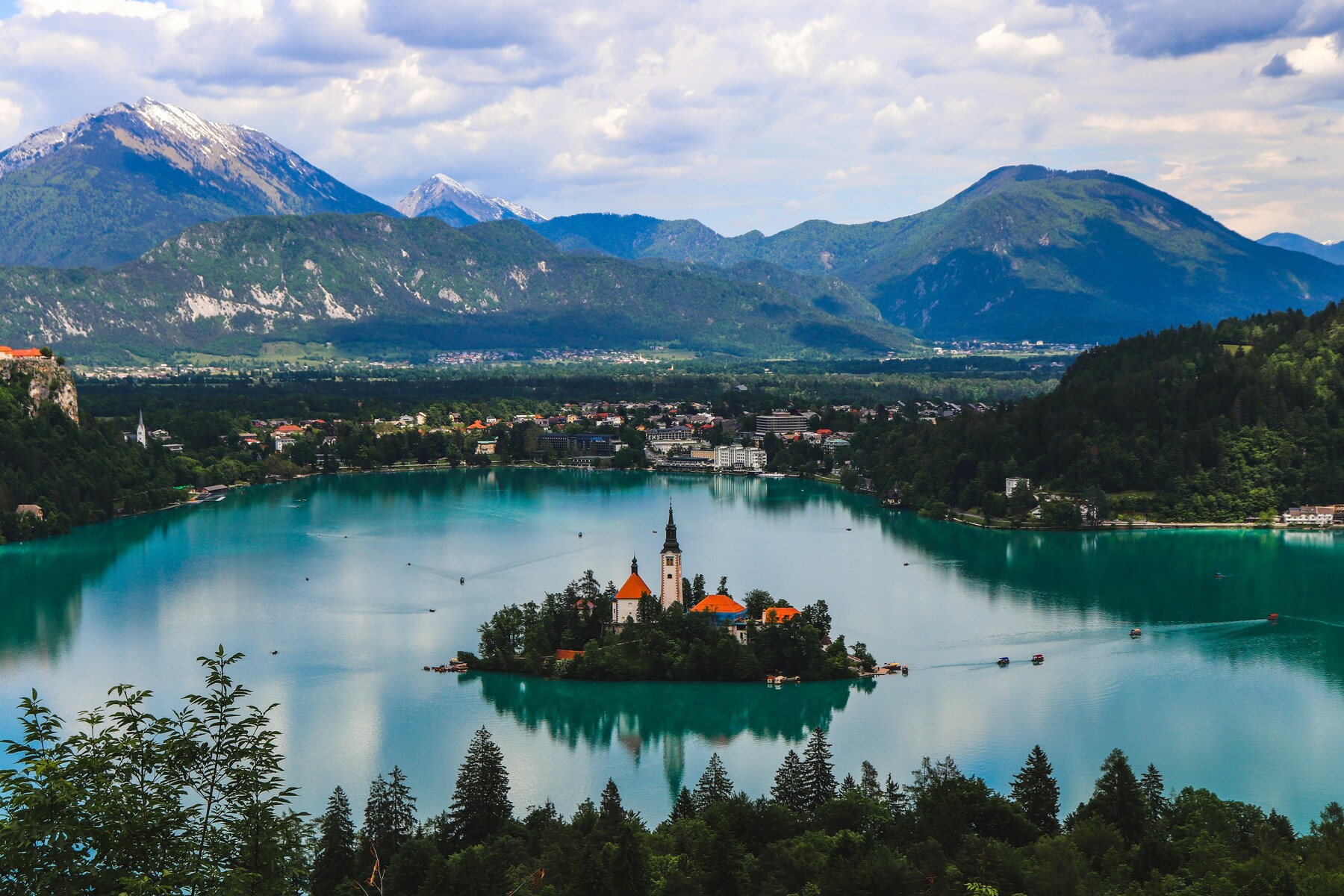
The light at Lake Bled is a study in shifting greens and blues. Depending on the cloud cover and the angle of the sun, the water can transform from a bright, translucent turquoise to a deep, brooding malachite. In the early morning, a thin veil of mist often sits on the surface, making the island appear as if it is floating in a void. This is the hour of the true romantic. The lake is a mirror, and the only disruption is the silver V of your wake.
As the sun climbs, the limestone cliffs and the distant, snow-capped Triglav peak provide a stark, dramatic contrast to the softness of the island. The romance here is found in this juxtaposition: the fragile, human-scale beauty of the church set against the raw, indifferent power of the mountains. It is a reminder of the scale of things, a place where the intimacy of a shared boat ride feels magnified by the vastness of the landscape.
Living the best moment
To capture the soul of Bled, one must master the art of the early start. The lake is at its most evocative before the first tour buses arrive from Ljubljana. Arriving at the rowing station as the mist is lifting allows you to have the water—and the island’s 99 steps—almost entirely to yourself.
While the summer months offer warm breezes and the chance to swim in the thermal springs on the lake’s northern side, the shoulder seasons of late spring and early autumn provide a more sophisticated atmosphere. In May, the linden trees are in bloom, adding a honeyed scent to the air; in October, the surrounding forests turn a fiery orange, reflecting in the emerald water with a surreal intensity.
When planning your crossing, opt for the self-rowed wooden boat over the larger pletnas. There is an inherent grace in the autonomy of the row, a chance to stop in the middle of the lake, lay the oars flat, and simply drift. It is in these moments of stillness, suspended between the castle and the church, that the true magic of Slovenia reveals itself. It isn’t just about the destination; it is about the quiet, rhythmic work of getting there, and the realization that some of the world’s most beautiful places are best reached by the strength of your own hands.
The Island Church of Lake Bled is a testament to the endurance of the fairytale. It is a place that rewards the effort of the journey, offering a rare opportunity to step out of the modern world and into a landscape where time is measured by the stroke of an oar and the tolling of a bell.