

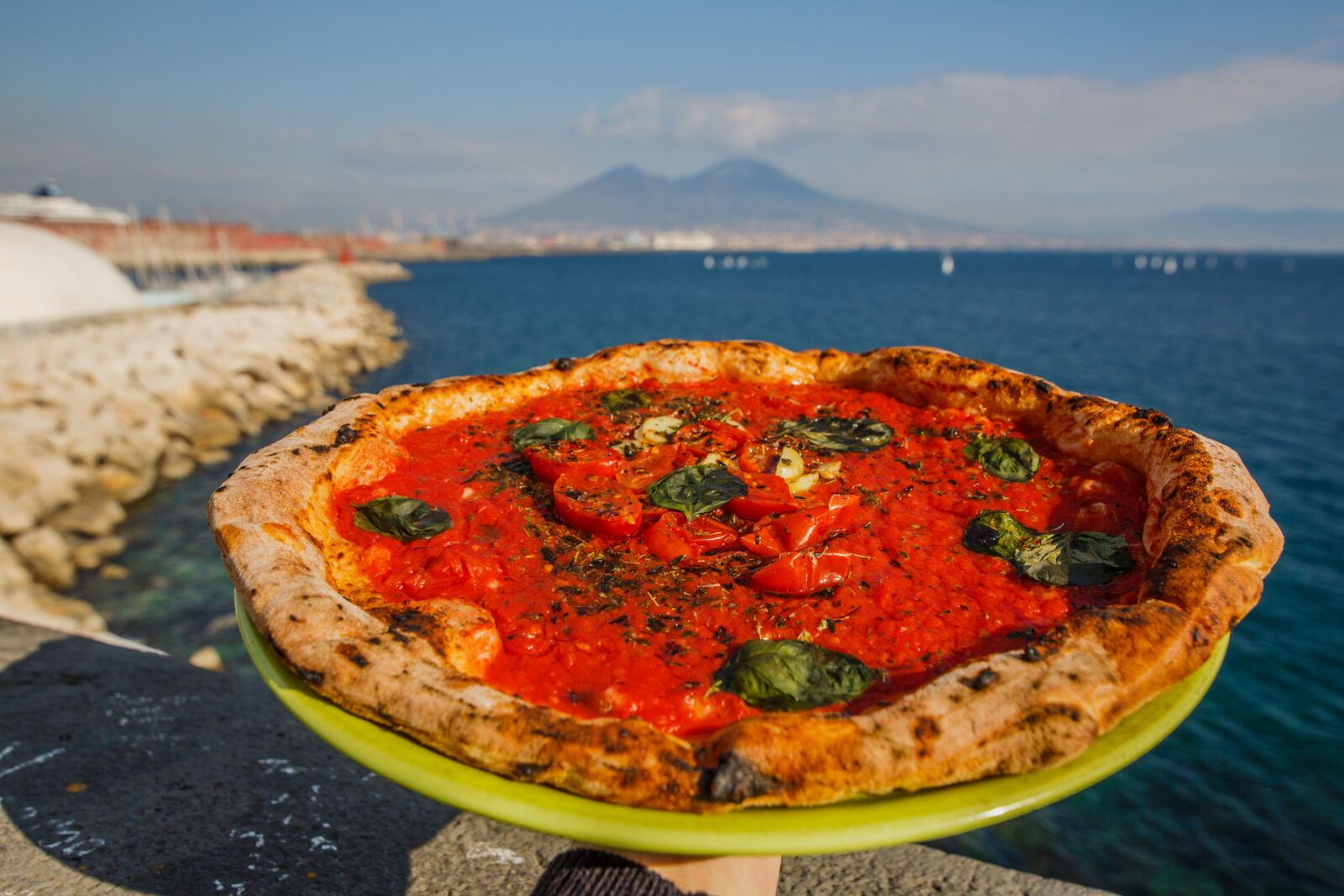
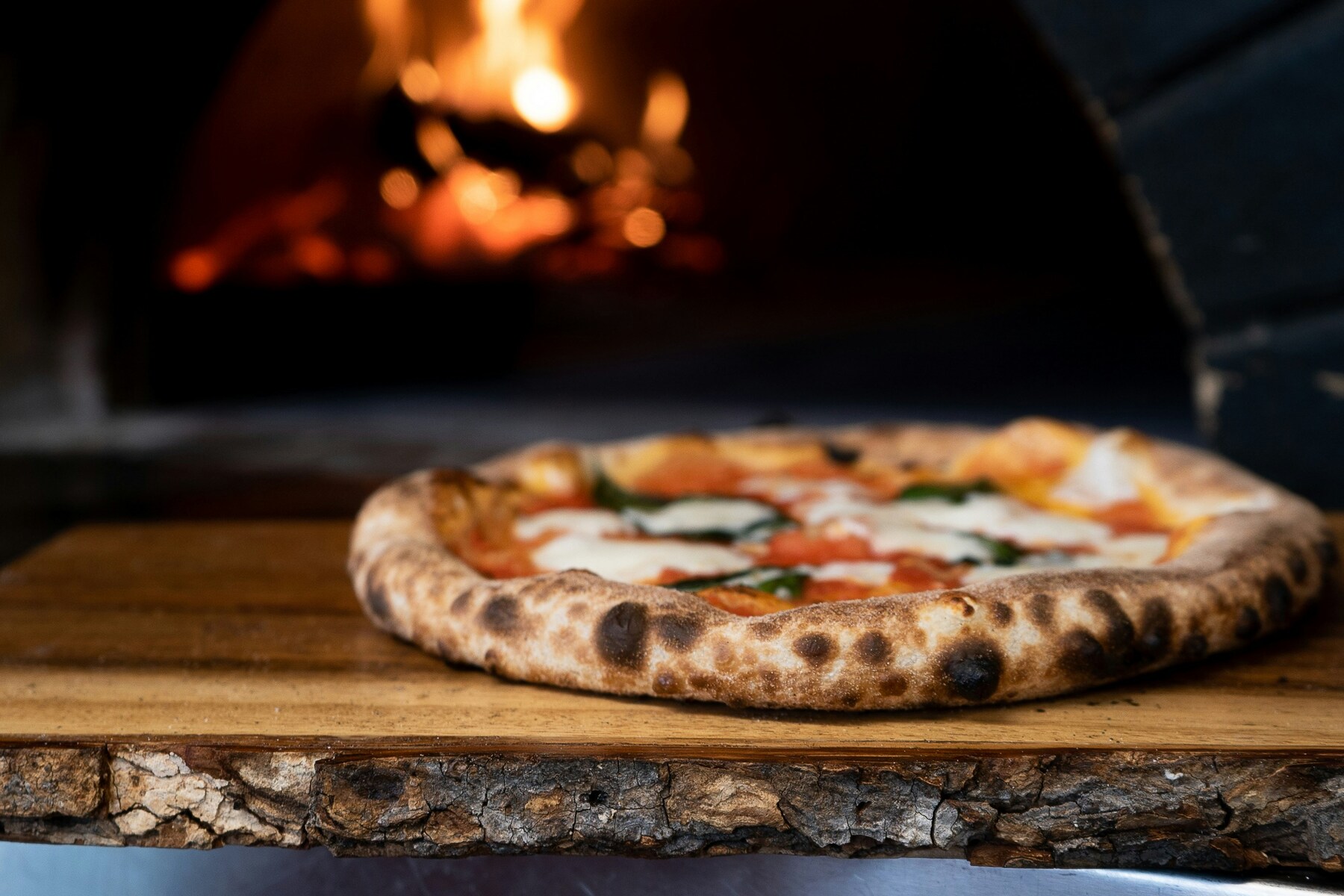
In Naples, pizza is not “fast food”; it is a protected heritage, a religious experience, and a symbol of local identity. A true Pizza Napoletana is governed by strict rules: it must be baked in a wood-fired oven at 485°C for no more than 60 to 90 seconds, resulting in a soft, elastic crust with the characteristic “leopard spotting” (charred blisters).
Naples remains a “tactile frenzy” of scooting Vespas, hanging laundry, and the intoxicating scent of toasted dough. To find the “Gospel of Fire” in the city where it all began, you must visit these legendary pizzerias.
-
The Historic Icon: L’Antica Pizzeria da Michele
Walking into Da Michele feels like entering a time capsule. Since 1870, this establishment has famously served only two types of pizza: Margherita and Marinara. The philosophy is simple—why offer variety when you have already achieved perfection?
The energy here is electric and chaotic. You take a numbered ticket and wait on the crowded sidewalk of Via Cesare Sersale. When your number is called, you are ushered into a no-frills room with marble tables. The pizza is wider than the plate, the center is “soupy” (as is tradition), and the flavor of the San Marzano tomatoes against the fresh Agerola mozzarella is a masterclass in simplicity.
-
The Creative Master: 50 Kalò
If you want to understand the modern evolution of the Neapolitan pizza, Chef Ciro Salvo at 50 Kalò is the visionary to watch. Located in the Mergellina district, this restaurant combines ancient techniques with a scientific approach to hydration and dough fermentation.
The name “50 Kalò” comes from ancient Neapolitan slang meaning “good dough,” and it delivers. The crust is impossibly light and airy—almost cloud-like. While they honor the classics, they also use high-end ingredients like extra virgin olive oil from specific Tuscan estates and artisanal cured meats, making it a favorite for those who appreciate the “alchemy” of a premium crust.
-
The Guardian of Tradition: Gino Sorbillo
Located in the heart of the Centro Storico on Via dei Tribunali, Gino Sorbillo is perhaps the most famous pizza name in the world. Despite the global fame, the original Naples location remains the soul of the operation.
The atmosphere is a sensory overload: a narrow street packed with people, the shouting of orders, and the heat radiating from the ovens. Sorbillo is known for using organic ingredients and for his commitment to the city. The pizza here is a “ruota di carro” (cartwheel) style—large, thin-centered, and overflowing with personality.
-
The Hidden Gem: Pizzeria La Notizia
For those willing to venture slightly outside the frantic city center to the Vomero hill or Via Caravaggio, Enzo Coccia at La Notizia offers a more refined, quiet pilgrimage. Coccia was the first pizzaiolo to be recognized by the Michelin Guide, and his focus is entirely on the quality of the “ancestral” ingredients.
This is where you go to taste the difference that specific flours and fermentation times make. The environment is more “restaurant” than “street-side stall,” allowing you to savor the nuances of the wood-smoke aroma and the sweetness of the buffalo mozzarella in peace.
The Laws of the Neapolitan Table
- The “Libretto” (The Wallet): For a true street experience, buy a Pizza a Portafoglio. It’s a smaller Margherita folded into fours and wrapped in paper, designed to be eaten with one hand while navigating the Neapolitan traffic.
- The Fork and Knife Debate: While you can use your hands, many locals use a fork and knife to eat the soft, molten center of a sit-down pizza first, working their way out to the cornicione (the crust).
- The “Sourdough” Secret: A proper Neapolitan pizza should never leave you feeling bloated. If the dough has been fermented correctly (usually 24 to 48 hours), it should be incredibly easy to digest.