

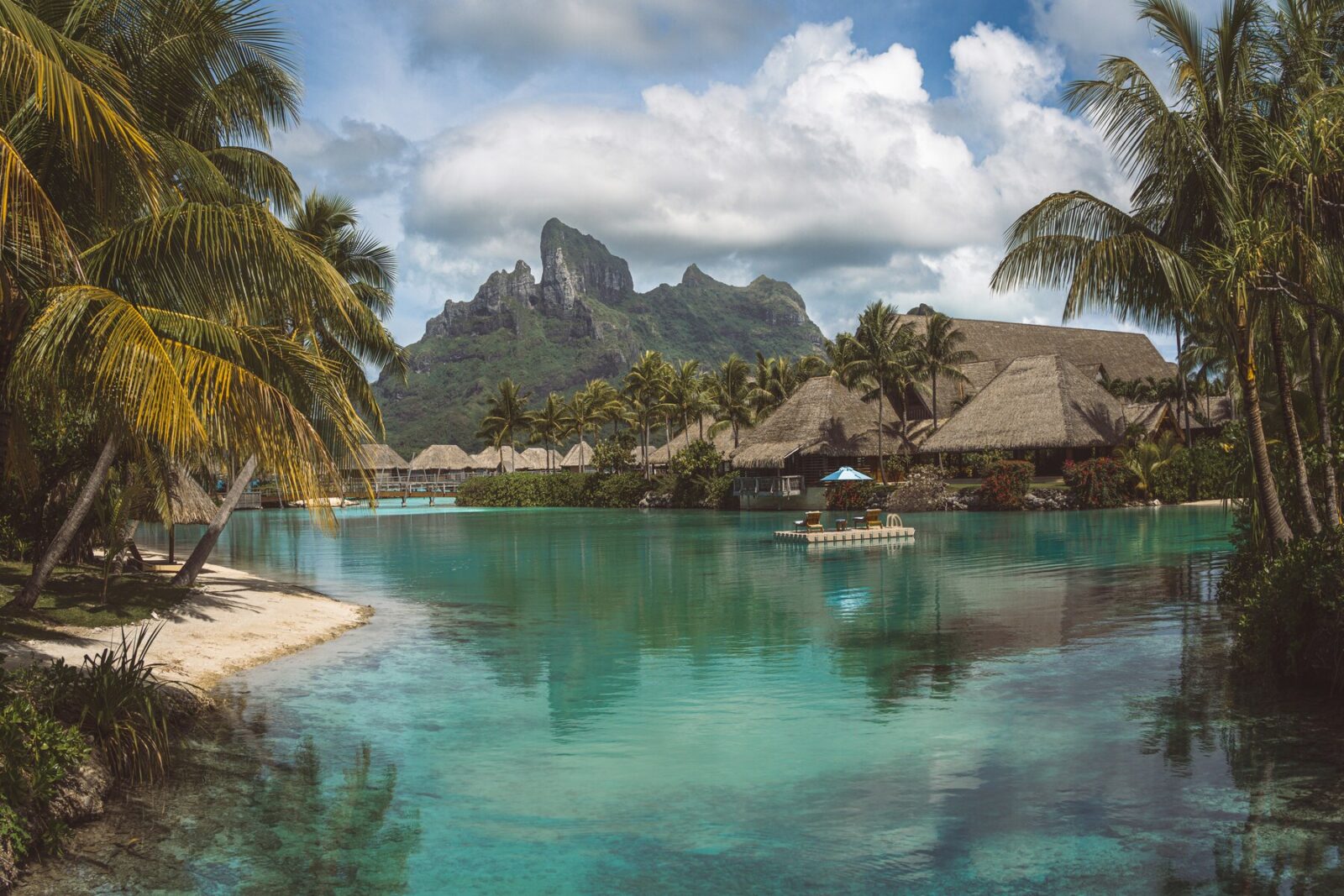
The first thing you notice isn’t the color of the water, but the vibration of the floorboards. It is a subtle, rhythmic hum—the South Pacific tapping gently against the cedar pilings that hold your world aloft. When you wake up in an overwater bungalow, there is no transition from the dream state to reality; you simply open your eyes to a horizon where the turquoise lagoon and the pale sky have negotiated a seamless truce. There are no roads here, no footsteps, and no background noise of a city in motion. There is only the liquid pulse of the reef and the realization that, for the first time in years, no one knows exactly where you are.
The Vibe: Suspended in the Infinite
Bora Bora is often reduced to a postcard cliché, but the actual “vibe” of the island is far more introspective. It is the architecture of isolation. To stay in an overwater villa is to live in a state of suspension. You are anchored to the earth by wooden stilts, yet you feel entirely adrift.
The sensory experience is dominated by a single color: a blue so vivid it feels like a physical weight. As the sun moves, this blue shifts from a translucent glass to a deep, glowing neon. This isn’t a place for “sightseeing” in the traditional sense; it is a place for “site-being.” The atmosphere is thick with the scent of salt and crushed tiare flowers, and the emotional resonance comes from the sheer lack of demand on your attention. It is a luxury not of things, but of space.

The Deep Dive: The Intimacy of Two
For a couple, this solitude is transformative. On land, romance is often a performance—a dinner date, a shared movie, a planned excursion. In the overwater solitude of Bora Bora, romance becomes a shared meditation. The privacy is absolute. You can spend an entire morning watching the sunlight play across the sandy floor of the lagoon through the glass viewing portal in your floor, never seeing another human soul.
The most evocative moments are the ones that lean into this isolation. There is the ritual of the “canoe breakfast,” where a wooden outrigger glides to your private deck, bringing fresh mango and coffee across the water. It turns a simple meal into a quiet ceremony. Later, as the shadow of Mount Otemanu begins to stretch across the lagoon, the intimacy deepens. Sunset here isn’t just a visual event; it’s an emotional shift. As the water turns to liquid gold and then to a dark, bruised violet, the world shrinks until it is only the size of your wooden deck. Sitting together in that silence, watching the stars reflected in the still water beneath your feet, creates a bond that is visceral and wordless. It is the “moody romance” of the tropics—the feeling that you are the only two people left on a very beautiful planet.
Mastering the Stillness
To truly capture this sense of disconnection, timing is everything. While the dry season (May to October) offers the most consistent sun, there is a particular romanticism to the “shoulder” months of April and November. During these windows, the air is heavy with the scent of impending rain, and the lagoon often takes on a dramatic, moody stillness that makes the solitude feel even more profound.
When choosing your sanctuary, look for villas positioned at the end of the pontoon. These offer the most unobstructed views of the horizon and the highest degree of privacy. Resist the urge to fill your days with jet-ski tours or group excursions. The true soul of Bora Bora is found in the “nothingness”—in the hours spent swimming directly from your deck into the warm, salt-thick water, or simply lying still enough to hear the wind move through the thatched roof. It is a place that reminds you that the most important journey isn’t across the ocean, but the quiet space you create with the person beside you.