

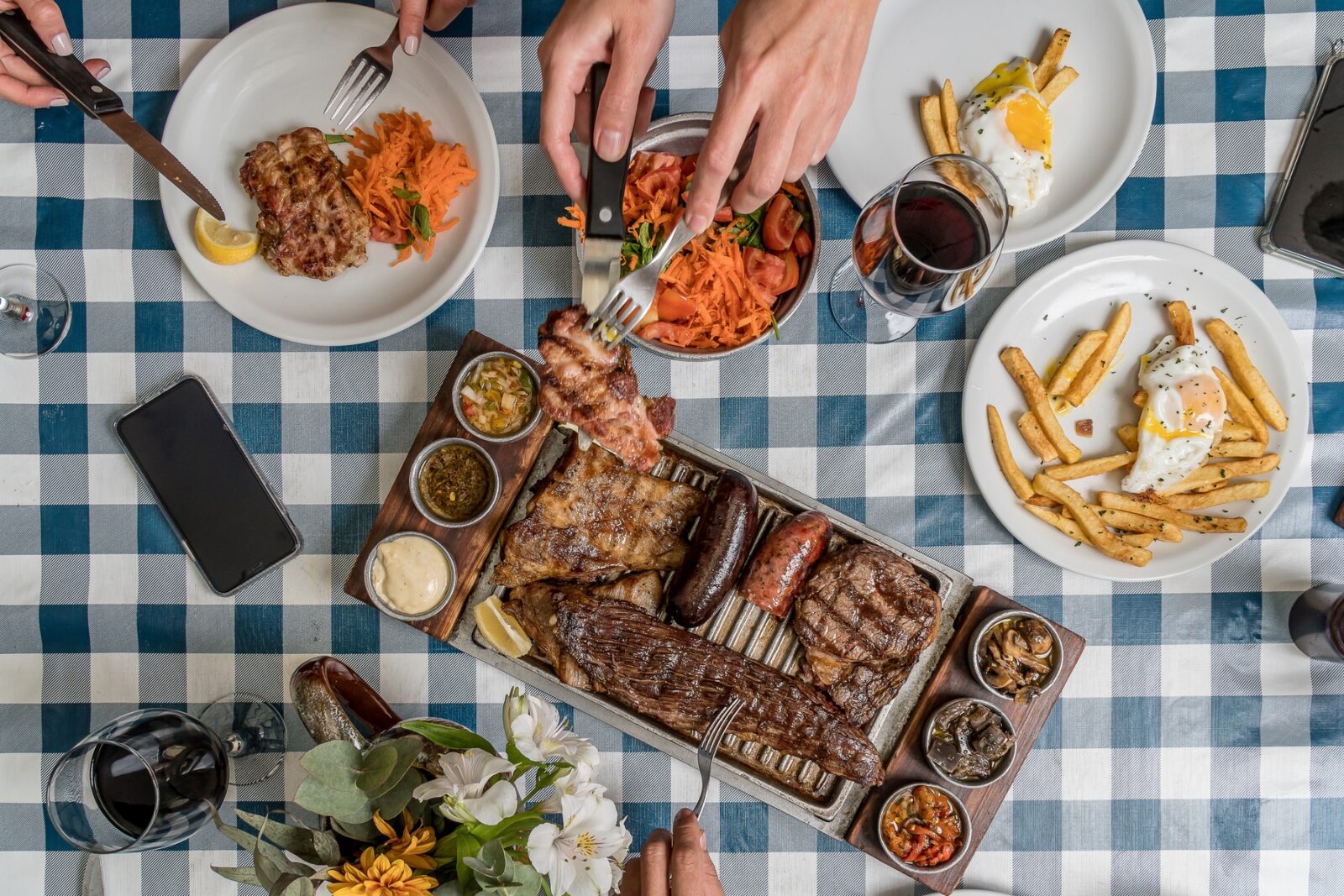
In Argentina, an asado is not a barbecue; it is a secular religion. It is a ritual of patience, a celebration of friendship (la amistad), and a masterclass in the elemental power of fire. While other cultures might drown their meat in sauces or rush the cooking process, the Argentine asador (grill master) uses only three ingredients: premium grass-fed beef, coarse salt, and time.
As we move through 2026, Buenos Aires remains the global cathedral for this carnivorous pilgrimage. To truly understand the “Gospel of Fire,” you must look past the smoke and find the masters of the flame.
-
The Modern Cathedral: Don Julio
Regularly topping the lists of the world’s best restaurants, Don Julio in Palermo Viejo has become the definitive destination for the modern asado. The walls are lined with empty wine bottles signed by grateful diners, and the iron grill (parrilla) is a constant hive of activity.
The philosophy here is transparency. They source only Aberdeen Angus and Hereford cattle, grass-fed in the humid pampas. Their Ojo de Bife (ribeye) is legendary, but for a true taste of the ritual, you must try the Vacio (flank steak), which is slow-cooked until the exterior is a salty crust and the interior is a deep, crimson silk.
-
The Neighborhood Sentinel: El Ferroviario
For a “tactile frenzy” that rivals the busiest markets in the world, head to the outskirts of the city to El Ferroviario. Located in a massive, converted railway warehouse, this is where the locals go for a high-energy, no-frills feast.
This is the place to embrace the Parrillada Completa. In Argentina, the ritual begins with “the precursors”: Chorizo (pork sausage), Morcilla (blood sausage), and the prized Mollejas (sweetbreads), which are grilled until they achieve a candy-like crispness. At El Ferroviario, the portions are gargantuan, the noise is deafening, and the spirit of the Argentine family Sunday is alive and well.

-
The Vanguard of the Flame: Fogón Asado
If you want to understand the “alchemy” behind the fire, Fogón Asado offers a more intimate, educational perspective. Instead of a traditional dining room, guests sit at a bar surrounding the chef, who explains each cut and the specific wood-fire technique used to prepare it.
They specialize in the Asado de Obra style—traditionally the mid-day feast prepared by construction workers. Their signature move is the Pine-cone smoked Provoleta (grilled cheese) and the multi-course exploration of beef textures. It is a sophisticated, “new-age” way to experience the tradition without losing the smoky soul of the pampas.
-
The Riverside Classic: La Cabrera
Another Palermo icon, La Cabrera, is famous for its “more is more” approach. While the meat is the star, they are renowned for the dozens of tiny ramekins of creative side dishes—from caramelized garlic to mashed pumpkin—that accompany every order.
The Bife de Chorizo (sirloin) here is often served “butterfly” style (mariposa) to ensure a perfect char-to-tenderness ratio. It is a vibrant, colorful, and slightly chaotic experience that captures the joyful, social heart of Argentine dining.
The Laws of the Parrilla
- The “Aplauso para el Asador”: It is an unbreakable tradition that at the end of the meal, the guests must give a round of applause to the grill master.
- The Chimichurri Myth: While famous abroad, authentic asados often use only salmuera (brine) during cooking. Chimichurri is usually served on the side for the bread or the sausages, not to mask the flavor of high-quality steak.
- The Pacing: An asado is a marathon. Expect to spend at least three hours at the table. The meat comes out in waves, starting with the sausages and ending with the “heavy” cuts.