

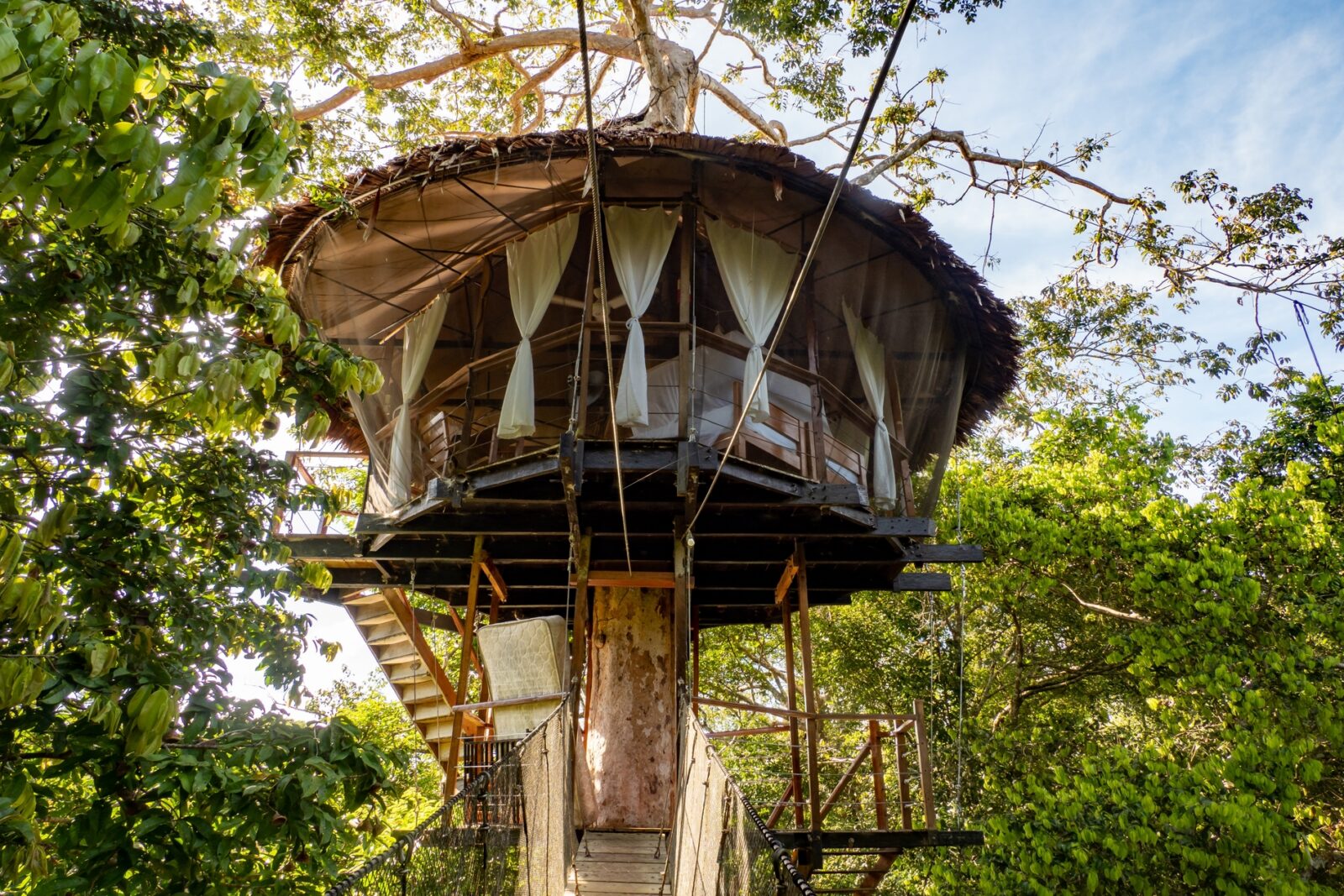
Just after a warm equatorial rain, the Amazon smells alive—earthy, green, electric. You climb the final steps of a suspended walkway, the boards still damp beneath your feet, and step into your private treehouse suite. The forest greets you instantly. Leaves drip in slow rhythms. A toucan calls from somewhere unseen. Mist rises from the canopy in soft spirals, catching the early light like breath on glass. Through the floor‑to‑ceiling windows, the jungle stretches in every direction—dense, layered, endlessly shifting. In this moment, suspended above the forest floor, you understand the rare privilege of this kind of luxury: immersion without intrusion.
Architecture That Floats Among Leaves
Ultra‑exclusive Amazonian treehouses are feats of engineering disguised as sanctuaries. Built on stilts or anchored to ancient trunks, they hover above the forest like quiet observatories. The structures rely on natural materials—bamboo, reclaimed hardwood, woven palm—shaped with a precision that respects the ecosystem rather than dominating it.
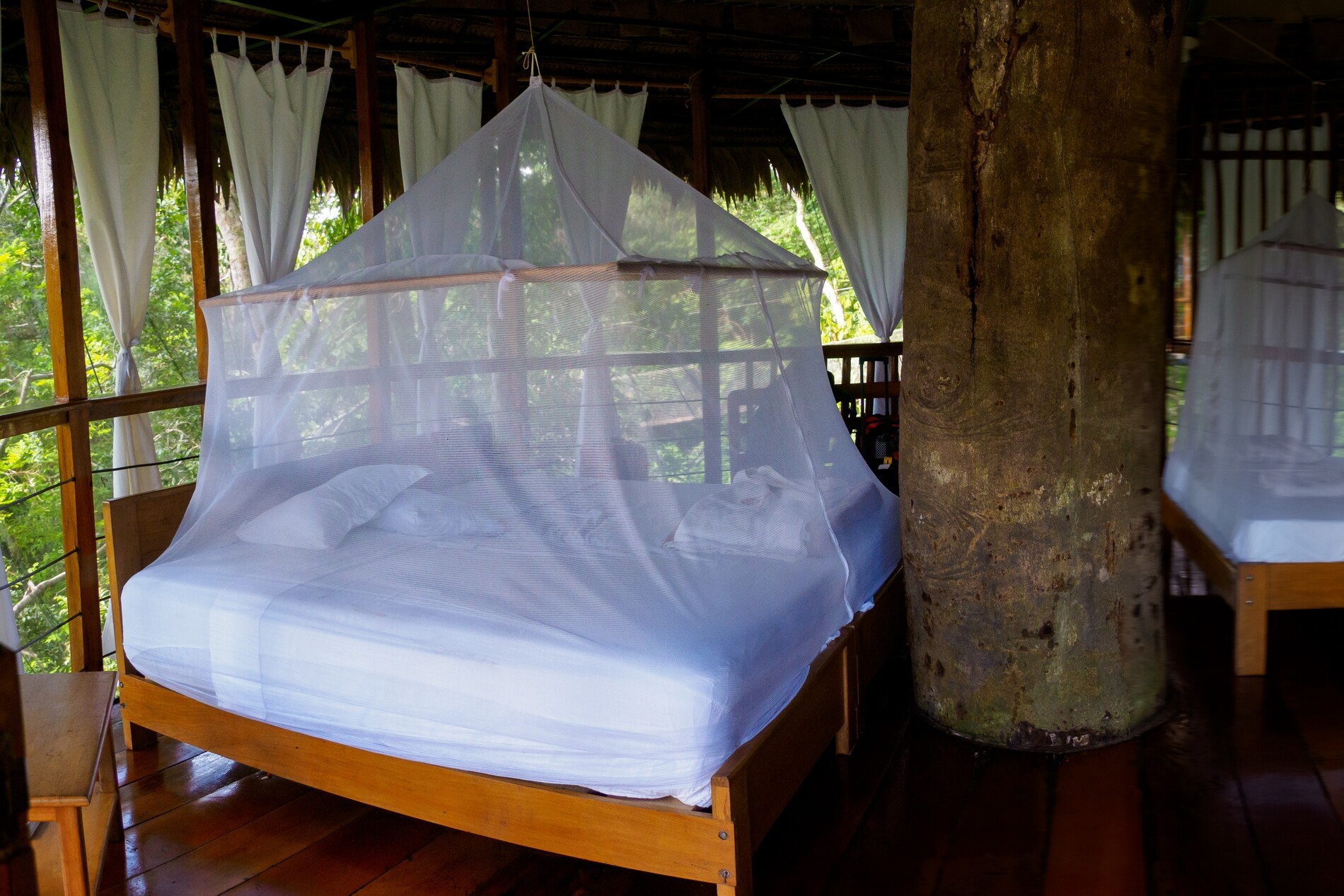
Inside, the design leans toward organic minimalism. Smooth wooden floors warm under bare feet. Linen drapes move with the slightest breeze. Soft lighting glows against the grain of the timber, echoing the filtered sunlight outside. The architecture doesn’t try to compete with the jungle. It frames it, allowing the forest to become the true interior.
The Luxury of Immersive Solitude
Life in the canopy unfolds at a different pace. You wake to the rustle of monkeys leaping between branches. You fall asleep to the layered hum of insects and distant river currents. The air is warm, fragrant, alive with the scent of orchids and wet leaves.
Meals arrive quietly via elevated walkways—fresh river fish grilled with citrus, cassava bread still warm, fruits so ripe they taste like sunlight. Everything feels elemental, shaped by the land and prepared with a kind of reverence.
Afternoons invite stillness. You might sink into a hammock suspended above the treetops, watching macaws streak across the sky in flashes of red and cobalt. Or sit on your terrace with a book, the forest offering a soundtrack that never repeats.
Days That Follow the Rhythm of the Forest
Exploration here is intimate rather than performative. Guided walks reveal medicinal plants used for generations. Canoe rides slip through narrow waterways where giant lilies float like green shields. You might spot a sloth curled in a canopy cradle or a caiman gliding silently beneath the surface.
Heat rises and falls in waves. Light shifts from gold to emerald to deep amber. The forest breathes around you, and you begin to match its cadence.
Evenings Wrapped in Green
Night in the Amazon is a sensory tapestry. The sky darkens to ink. Fireflies pulse between branches. The forest’s nocturnal chorus swells—frogs, insects, distant calls that echo through the trees. Lanterns glow along the walkways, guiding you back to your suite where the air feels cooler, the silence deeper.
Dinner might be served on a private deck overlooking the canopy, the table lit by candles that flicker in the warm breeze. The flavors are bold—tamarind, chili, wild herbs—yet balanced with a delicacy that honors the region’s culinary traditions.
A Season for Every Shade of Green
The Amazon doesn’t have seasons in the traditional sense; it has moods. The high‑water months turn the forest into a flooded labyrinth, perfect for canoe exploration. The drier months reveal hidden trails and sun‑drenched clearings. Rainstorms arrive without warning, transforming the canopy into a symphony of sound. Each moment offers its own kind of beauty.
What the Canopy Leaves Behind
A week in a luxury Amazonian treehouse lingers long after you’ve returned to the world of roads and walls. It’s the memory of waking to birdsong at eye level. The scent of rain evaporating from leaves. The feeling of being held—not by architecture, but by the forest itself.
Luxury here isn’t about excess. It’s about presence. It’s about living, however briefly, in harmony with a world that is ancient, intricate, and profoundly alive.