

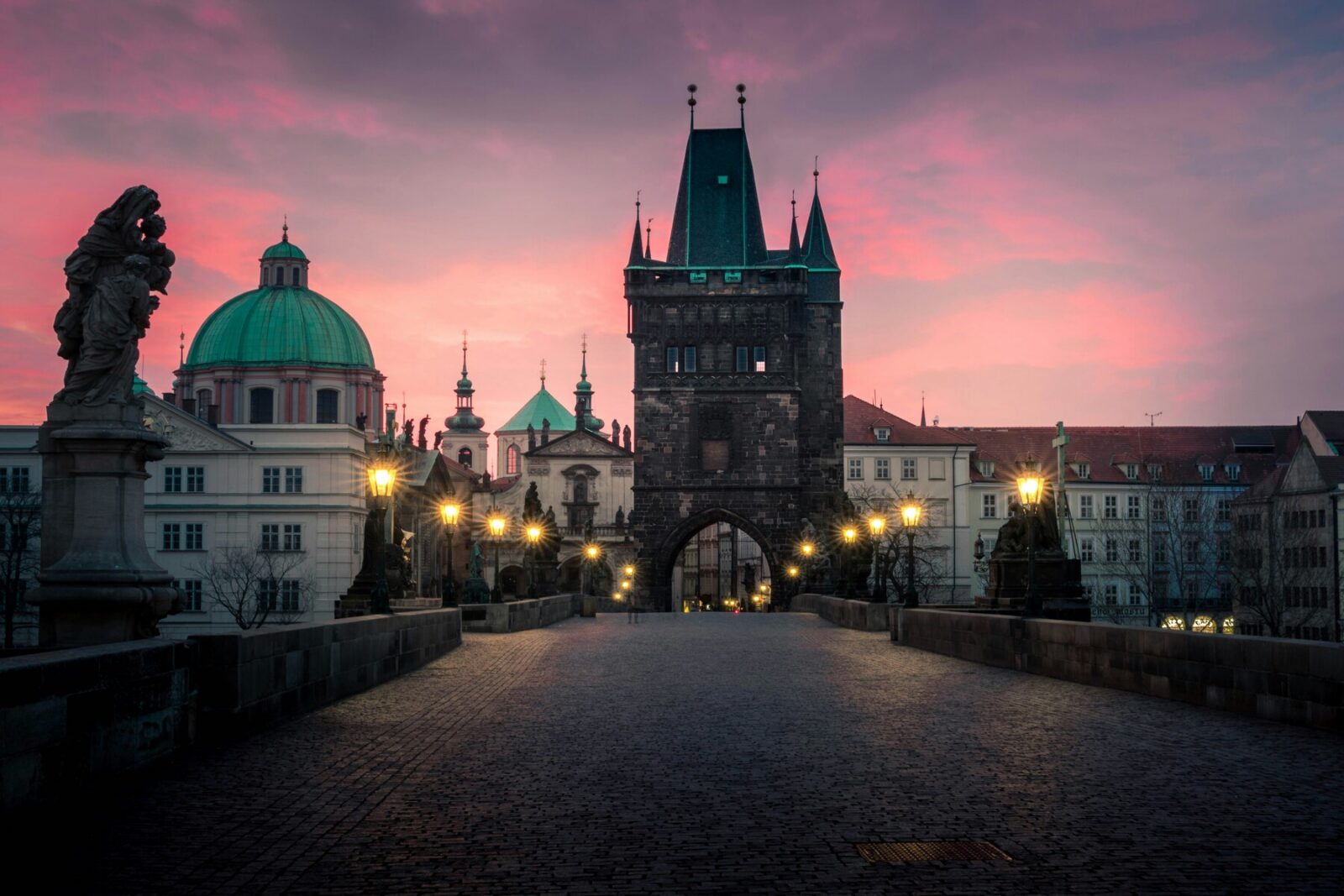
The cobblestones of Prague are never truly silent, but at four in the morning, their voice changes. The rhythmic clatter of midday heels and the hum of a thousand voices are replaced by a heavy, expectant hush. To walk toward the Charles Bridge in this bruised, pre-dawn light is to enter a version of the city that exists only for the disciplined and the romantic. The air is sharp, carrying the metallic tang of the Vltava River and the faint, sweet scent of baking pastry from the dormant cafes of Old Town.
As you step onto the bridge, the world contracts. The expansive Gothic majesty of Prague Castle, usually a postcard-perfect backdrop, is partially erased by a thick, spectral mist rising from the water. It is a moment of profound sensory isolation. The bridge—typically a frantic artery of commerce and tourism—becomes a private gallery of shadows. You are no longer a visitor in a modern capital; you are a ghost wandering through a monochromatic dream of the fourteenth century.
The Architecture of the In-Between
The Charles Bridge is more than a river crossing; it is a psychological threshold. At dawn, the bridge towers at either end—the Staroměstská and Malostranská—act as gatekeepers to a different era. The vibe is one of Gothic intimacy, a paradoxical feeling where the massive scale of the sandstone blocks feels strangely protective. The mist acts as a natural dampener, softening the sharp edges of the spires and making the distance feel infinite.
There is a specific weight to the atmosphere here and is ideal for romance. It is the feeling of a city holding its breath. The silence is not empty; it is thick with the presence of the thirty statues that line the balustrades. In the full glare of noon, these figures are mere background noise for the bustle of caricaturists and musicians. But in the blue-grey light of dawn, they reclaim their authority. They emerge from the fog like calcified residents, their baroque gestures—frozen pleas, outstretched hands, and bowed heads—suddenly vibrant with emotional intent.
For the traveler seeking resonance and romance over spectacle, this is the bridge’s true form. It is a place that demands a slower pace, a willingness to stop and lean against the cold stone, watching as the river below churns in obsidian swirls, moving with a silent, heavy purpose toward the Elbe.
The Bronze and the Breath
To walk the length of the bridge at this hour is to engage in a silent dialogue with history. Each statue has a story, but none is more tactile than that of St. John of Nepomuk. The bronze plaques at the base of his monument have been polished to a brilliant gold by the hands of millions seeking a return to the city. At dawn, however, the bronze is cool to the touch, and the absence of a queue allows for a moment of genuine connection. Touching the metal isn’t a tourist ritual here; it’s a quiet acknowledgement of the bridge’s endurance.
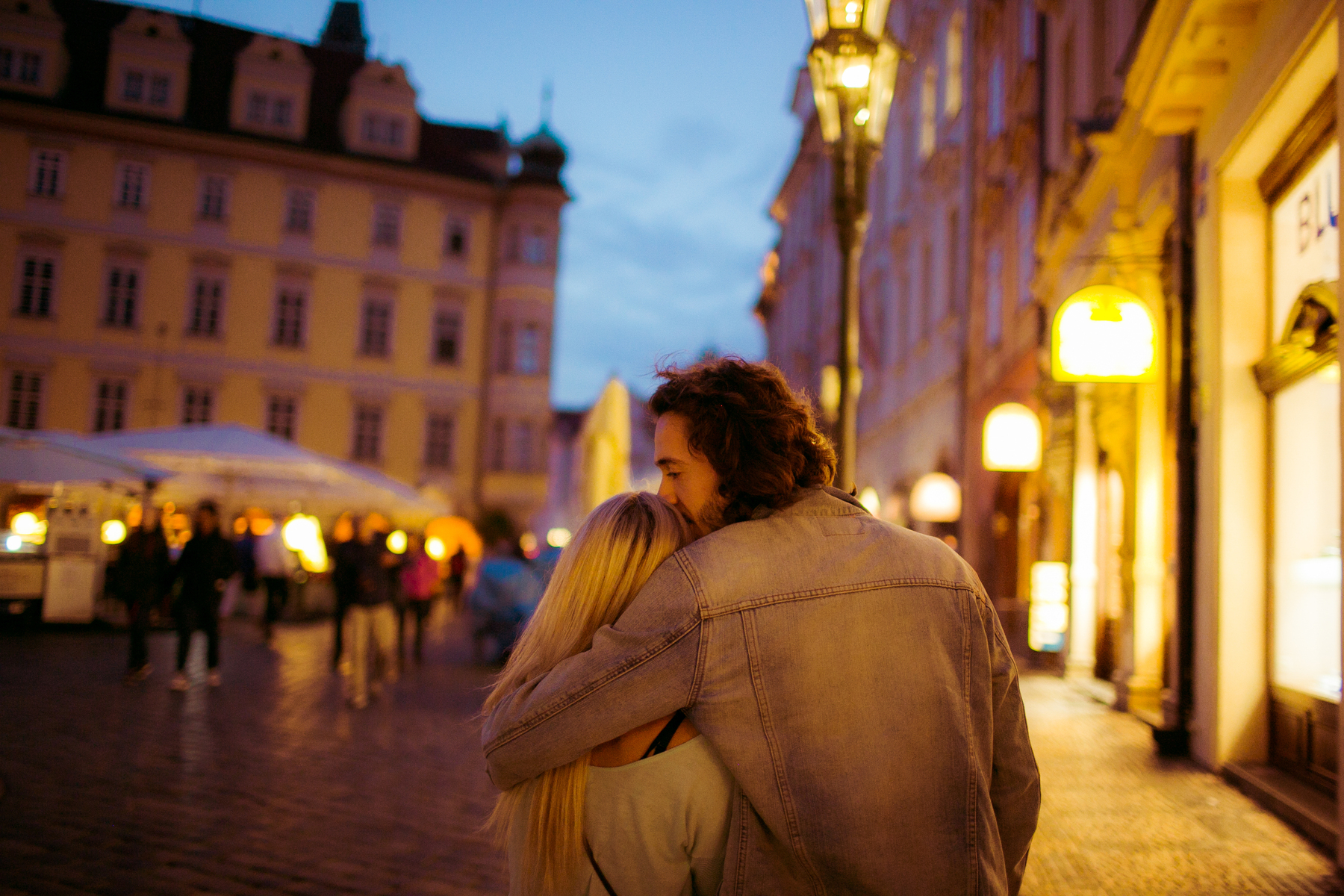
The romantic appeal lies in this shared solitude. Four couples, the bridge offers a rare form of privacy in an increasingly crowded world. The mist creates “rooms” of visibility; you might see another soul fifty feet away, a mere silhouette in a trench coat, before they are swallowed again by the grey. It creates an environment where every footfall and every whispered word feels significant.
As the light begins to shift from indigo to a pale, pearlescent lavender, the statues undergo a transformation. The light catches the weathered textures of the stone—the pits and grooves earned over centuries of Bohemian winters. The figures of saints and scholars seem to lean into the morning, their blackened sandstone skin contrasting with the lightening sky. It is a study in texture: the roughness of the rock, the smoothness of the mist, and the fluid glass of the Vltava.
The Vltava’s Veiled Pulse
The river is the soul of this romantic experience. At dawn, the Vltava is a living entity, its breath forming the very mist that defines the morning. Watching the fog roll under the bridge’s sixteen arches is a lesson in the fluidity of time. The river has seen the coronation of kings and the passage of armies, yet in the stillness of the morning, it feels entirely contemporary, a constant force that anchors the city’s shifting identities.
As the “Blue Hour” fades, the first hints of gold begin to touch the spires of the Castle on the hill. This is the climax of the dawn watch. The sun doesn’t just rise in Prague; it ignites the city’s heights while the bridge remains in shadow. The transition is subtle and sophisticated. The mist begins to thin, revealing the red-tiled roofs of Malá Strana (the Lesser Town) and the green dome of St. Nicholas Church. The water turns from black to a deep, reflective silver, catching the first glints of the day.
This is the most resonant moment of the journey—the precise point where the Gothic mystery of the night meets the Baroque elegance of the day. It is a reminder that Prague is a city of layers, and that to truly understand it, one must be present for its most vulnerable moments.