

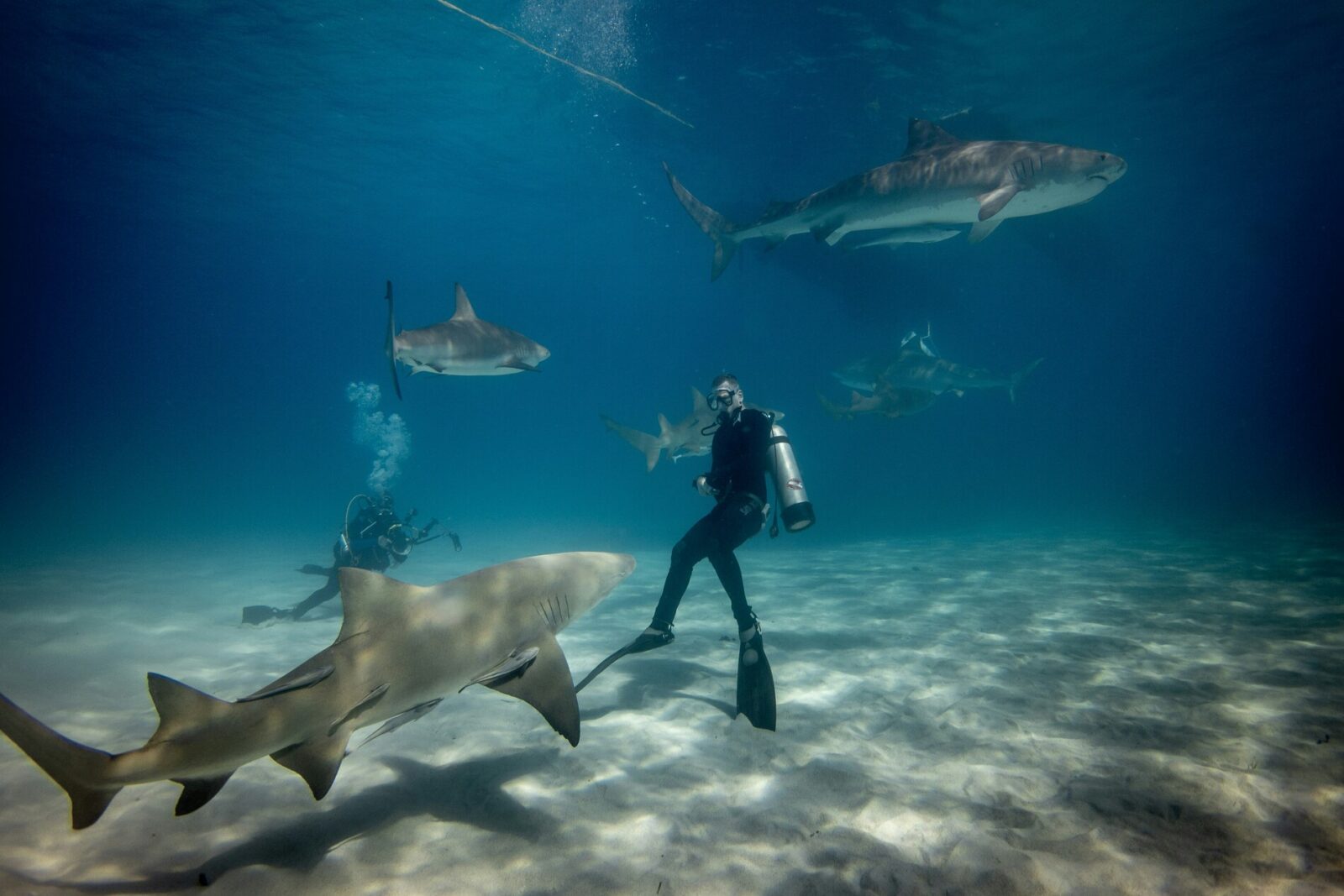
Just before sunrise, the ocean feels impossibly calm. The sky is a muted wash of silver, the air cool and salted, and the only sound is the soft slap of waves against the hull. Then the light shifts—barely—and a dark shape glides beneath the surface, smooth and deliberate. A shark. Wild, uncontained, moving with the kind of grace that makes your breath catch. You and your dive guide sit at the edge of the boat, wetsuits half‑zipped, watching the water pulse with life. It’s a moment suspended between adrenaline and, an invitation into a world ruled by instinct and precision.
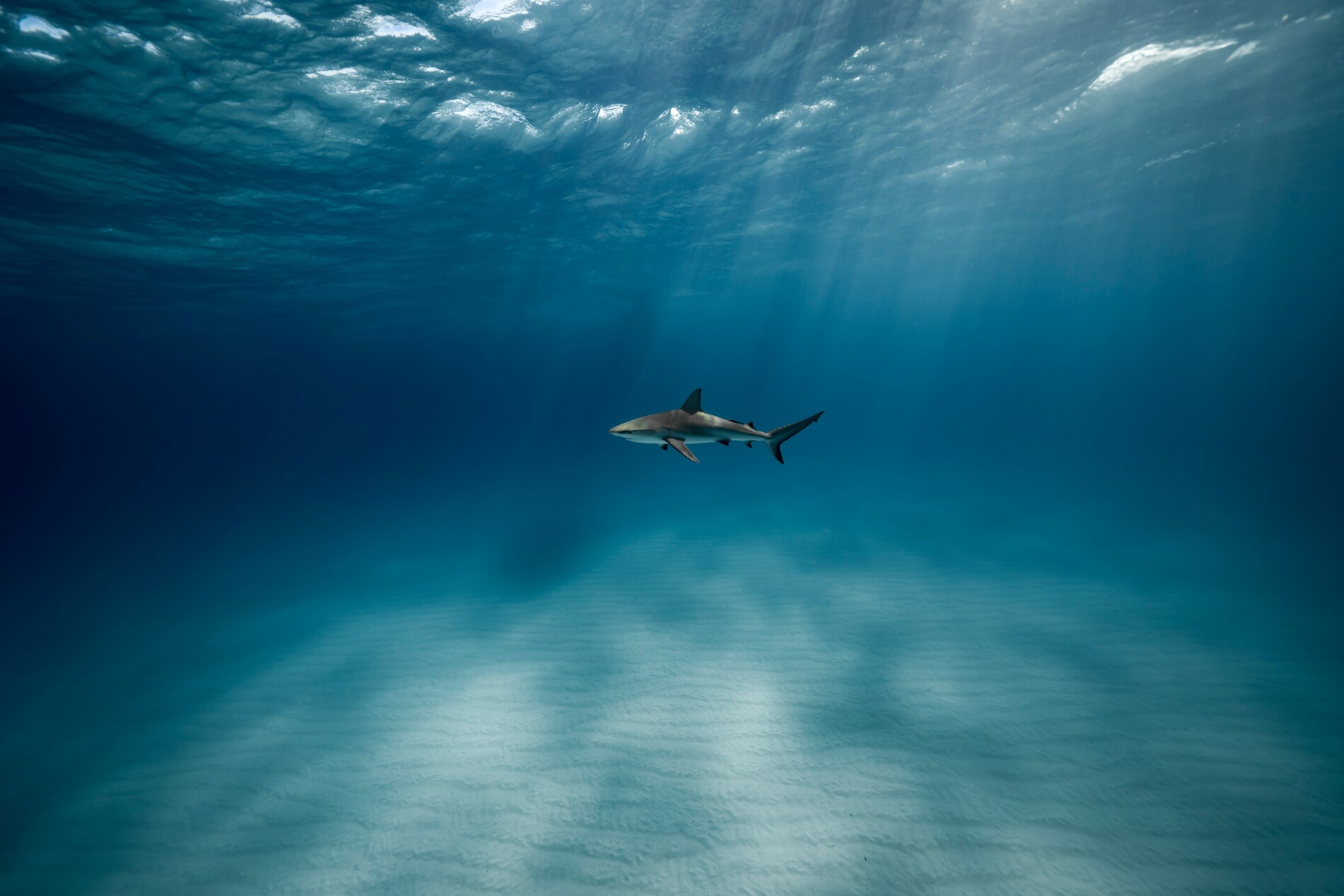
An Ocean Built for Respect
Shark diving without a cage doesn’t hide its intensity. It leans into it with a kind of quiet authority—open water stretching in every direction, currents shifting like invisible architecture, and the knowledge that you’re entering a space where you are not the apex.
Descending into the blue, you feel it immediately: the pressure of depth, the hum of your breath through the regulator, the way the water absorbs sound until the world becomes heartbeat and motion. The adventure isn’t chaotic. It’s controlled, intentional, shaped by discipline and presence.
The ocean doesn’t perform. It reveals.
The Sharks and Their Spell
Meeting a shark in open water is one of those rare experiences that feels both cinematic and deeply personal. The oceanic whitetip circles with slow confidence. The tiger shark approaches with curious, deliberate passes. The reef sharks move like shadows, quick and fluid.
Their presence is unmistakable—powerful but not aggressive, curious but not careless. You watch the way their bodies arc through the water, how their eyes track movement, how they glide with a calmness that feels almost meditative.
It’s not fear that rises in you. It’s clarity.
Adventure in the Details
The magic of shark diving lies in the subtleties. The flick of a tail that shifts direction. The shimmer of sunlight on a dorsal fin. The sudden stillness when a shark pauses to assess you. The way your own breathing slows to match the rhythm of the sea.
A dive becomes a ritual. You descend slowly, maintaining eye contact, keeping your movements smooth and deliberate. You hover in the water column, letting the sharks decide the distance. Your guide signals calmly, reading the animals’ behavior with practiced ease.
Even simple moments feel charged. The sound of bubbles rising past your ears. The cool brush of a current. The way a shark’s silhouette appears out of the blue, growing clearer with each second.
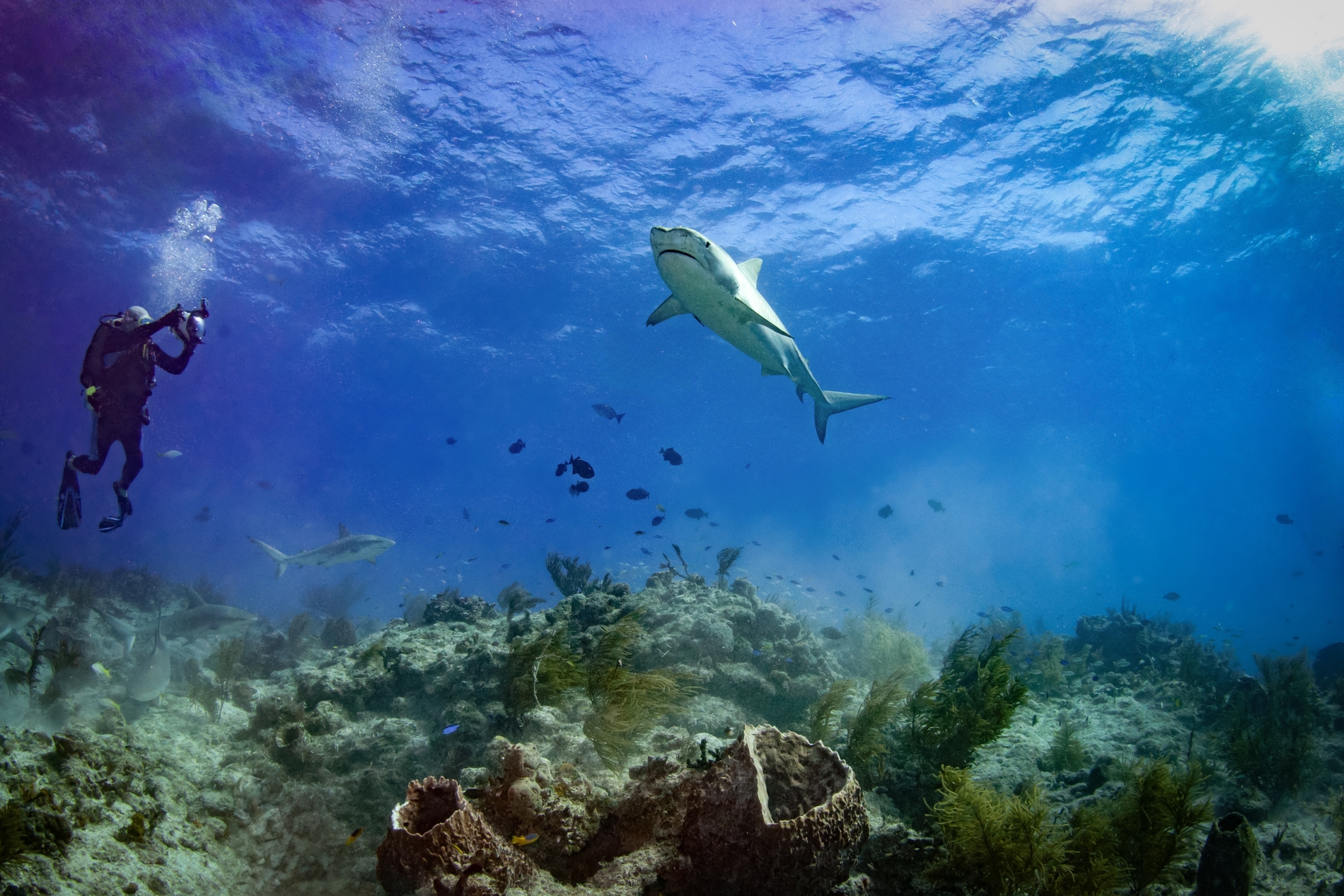
When the Ocean Feels Most Alive
Shark diving is compelling year‑round, but certain seasons heighten the experience depending on the species:
- Summer — warm currents bring larger pelagic sharks closer to shore.
- Autumn — visibility peaks, offering crystal‑clear encounters.
- Winter — migratory giants like hammerheads gather in schools.
- Spring — calmer seas create ideal conditions for long, meditative dives.
Early mornings offer the quietest waters. Late afternoons turn the ocean gold. Evenings belong to the surface—sunset reflecting off the waves, adrenaline settling into a deep, steady calm.
What You Carry Home
Shark diving stays with you in fragments: the glint of an eye in the blue, the slow arc of a powerful body, the feeling of being fully present in a world that doesn’t bend to you. But the deeper imprint is the shift in perception—fear dissolving into respect, adrenaline into awe.
Long after you’ve surfaced, you’ll remember the moment a shark glided past you, close enough to feel the water move, and you realized that some adventures don’t just challenge you—they recalibrate you.