


The descent feels ceremonial. You step into a wooden elevator that rattles softly as it carries you deep beneath the earth—past layers of rock, past centuries of history, past the noise of the world above. When the doors open, the air changes. Cool. Dry. Mineral‑rich. You walk through a cathedral‑like chamber carved entirely from salt, its walls shimmering under soft amber lights. A guide invites you to sit in a reclining chair, breathe slowly, and let the halotherapy begin. As the silence settles, you feel the lungs expand in a way that feels both physical and emotional. Down here, the air itself is medicine.
Poland’s ancient salt mines—Wieliczka, Bochnia, and others—carry an atmosphere unlike any other wellness space. The chambers are vast yet intimate, carved by miners who shaped entire underground worlds: chapels, lakes, corridors, sculptures. The air is crisp and clean, infused with microscopic salt particles that feel almost silky as you inhale. The lighting is warm, the acoustics soft, the silence deep enough to feel like a presence.
It’s a sanctuary carved from the earth, a place where the body instinctively slows and the mind follows.
Where Salt Becomes a Healer
Halotherapy—salt‑based healing—has roots in the 19th century, when Polish physicians noticed that miners working in salt chambers had remarkably healthy lungs. Today, the practice blends tradition with modern science. The air underground is naturally saturated with sodium chloride, magnesium, and potassium, creating an environment that supports respiratory ease, reduces inflammation, and calms the nervous system.
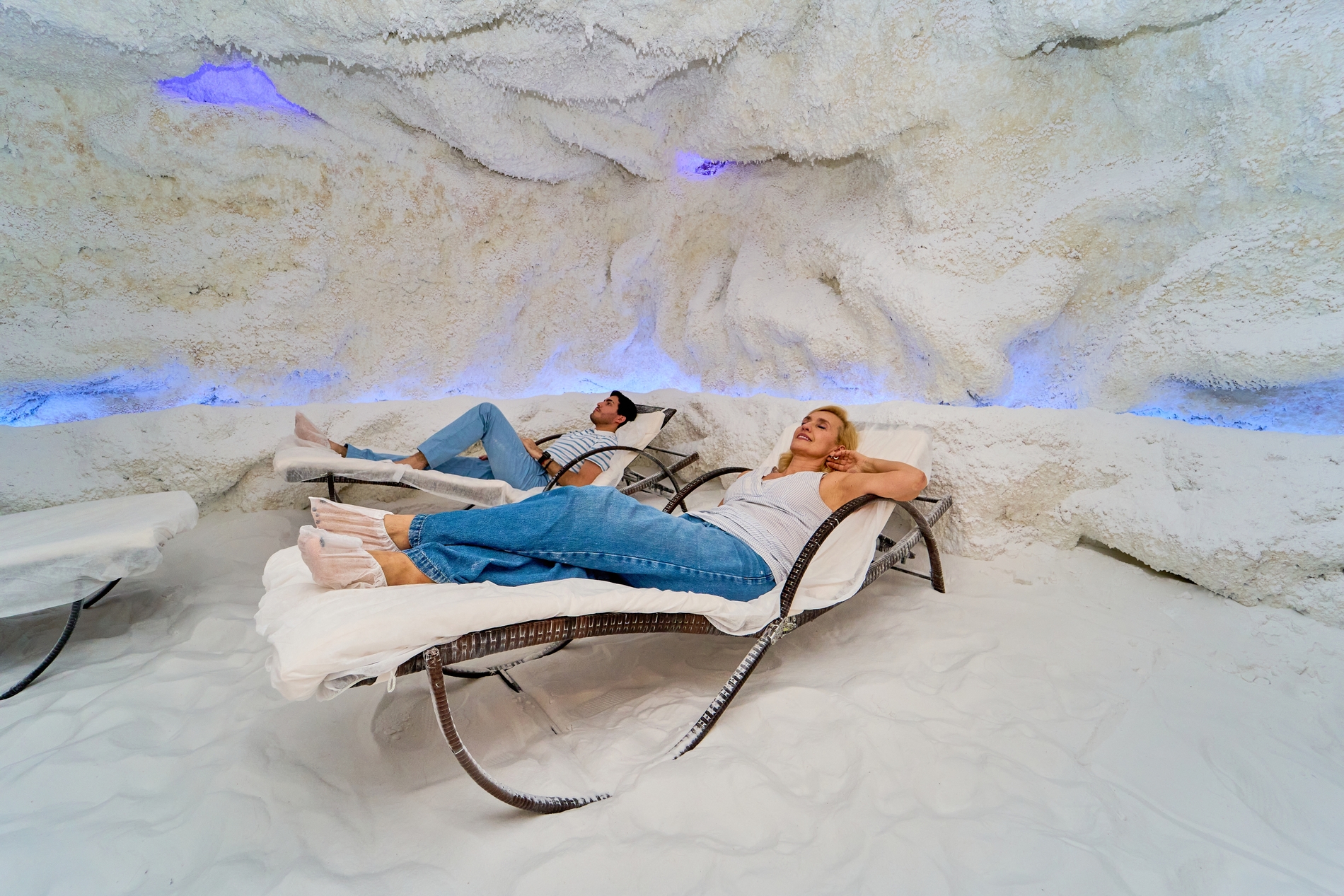
You settle into a lounge chair as a halogenerator disperses fine salt particles into the air. Breathing becomes effortless. The chest softens. The mind quiets. The salt doesn’t just cleanse the lungs—it seems to clear mental fog as well.
The Deep Dive
A halotherapy session in the mines unfolds slowly. You sit in a chamber lit by salt lamps, their glow reflecting off crystalline walls. Some retreats offer guided meditation, the instructor’s voice echoing gently through the cavern. Others incorporate sound therapy—singing bowls or low chimes that resonate beautifully in the mineral‑lined space.
Between sessions, you wander through underground corridors where chapels carved from salt depict saints, angels, and entire biblical scenes. You cross wooden bridges suspended over subterranean lakes so still they look like glass. You sip warm herbal tea in a chamber where the air tastes faintly of minerals.
The experience feels both ancient and futuristic—like stepping into a wellness ritual shaped by geology and time.

When the Mines Feel Most Restorative
Halotherapy is effective year‑round, but the mines feel especially soothing in winter. Above ground, the air is cold and sharp; below, it’s steady and temperate, a refuge from seasonal dryness. Spring and autumn offer quieter visits, with fewer crowds and longer, more meditative sessions. Summer brings a welcome coolness underground, a contrast to the heat outside.
These are the seasons when the mines feel most like sanctuaries—timeless, grounding, deeply restorative.
What You Carry Home
The memory of the salt mines lingers in the lungs. You remember the coolness of the air, the soft glow of the lamps, the way your breath felt deeper and more deliberate. You return home with a calmer nervous system, clearer breathing, and a sense of having touched something ancient and enduring.
Halotherapy teaches that healing doesn’t always come from sunlight or open air. Sometimes it comes from descending into the earth, breathing minerals shaped by centuries, and letting silence do its quiet work.