

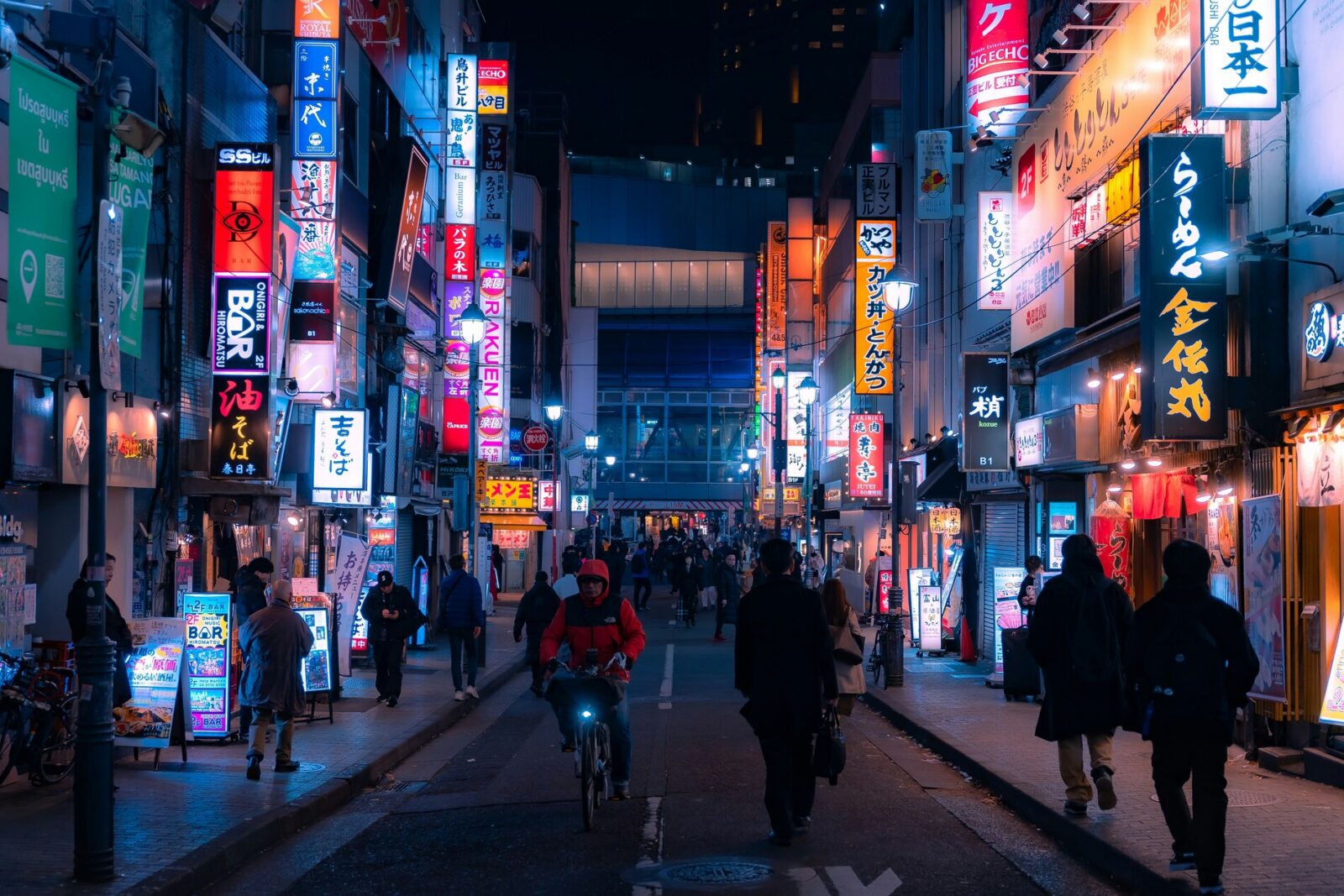
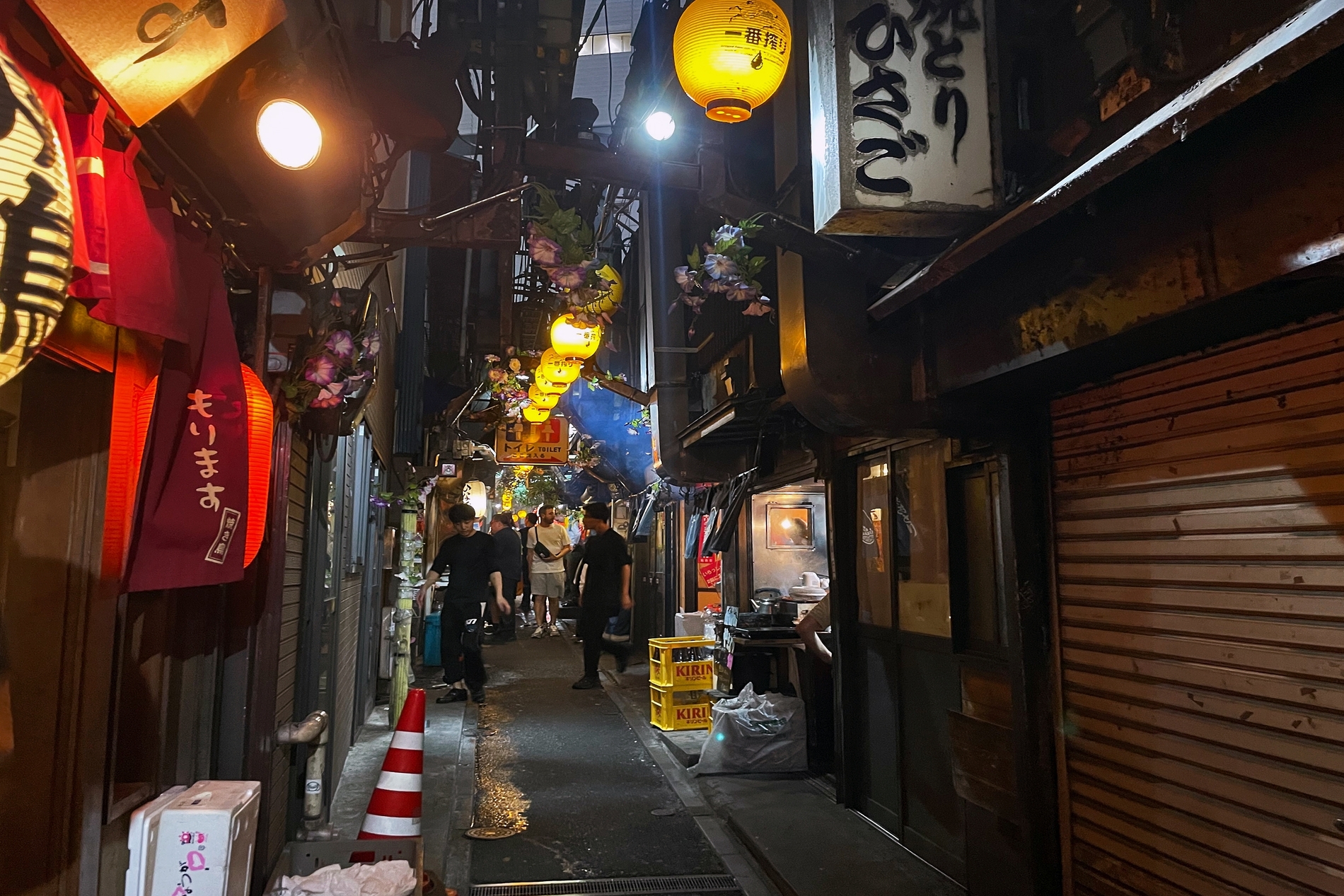
Shinjuku’s neon glow fades as you slip into a narrow alley no wider than your outstretched arms. Lanterns flicker overhead. The hum of the city softens into something more intimate—laughter behind sliding doors, the clink of tiny glasses, a jazz riff drifting from a second‑floor window. You turn a corner and suddenly you’re in Golden Gai: six alleys, two hundred micro‑bars, each no bigger than a living room and each with its own universe. A bartender nods you in. The door closes behind you. The room is warm, dim, and filled with regulars who look up just long enough to welcome you. In this moment—tucked into a wooden booth, surrounded by strangers who feel like characters—you understand why Tokyo after dark is less a nightlife scene and more a pilgrimage.
A Maze of Stories
Golden Gai is a relic of post‑war Tokyo, preserved not by nostalgia but by devotion. Every bar has a story: a former writer’s den, a haunt for underground musicians, a hideout for actors, artists, and night owls who prefer their nightlife with a side of mystery. The alleys twist and fold into each other, creating a sense of discovery with every turn. Some bars glow with red lanterns. Others hide behind curtains or unmarked doors. The thrill is in the wandering.
Micro‑Bars With Mega Personalities
Each bar in Golden Gai is a world unto itself. One might be plastered with punk posters and vinyl sleeves. Another might feel like a 1960s film set, all velvet and cigarette smoke. A third might be dedicated entirely to French cinema, or whiskey, or jazz, or horror films. The intimacy is the point: most bars seat six to ten people, forcing conversation, connection, and the kind of serendipity that only happens in small spaces.
Some bars welcome newcomers. Others prefer regulars. But once you’re inside, the night unfolds like a secret shared.
The Art of the Entrance
Navigating Golden Gai is as much about etiquette as exploration. You slide open a door gently. You greet the bartender with a soft konbanwa. You order something simple—highball, plum wine, a local beer—before asking about the bar’s theme. The bartender might tell you the history of the place, or the story behind the décor, or the reason a particular record is playing. The exchange is quiet, respectful, and deeply human.
This is nightlife built on ritual rather than spectacle.
Music That Shapes the Night
Sound is the soul of Golden Gai. Bars curate their playlists with the precision of art directors. Jazz bars spin vinyl until dawn. Rock bars blast classics from speakers older than the building. Some bars host impromptu acoustic sets, the kind that feel like private concerts. Others play ambient electronica that turns the tiny room into a dreamscape.
The music doesn’t overwhelm. It envelops.
A Crowd That Moves Like Water
The people who drift through Golden Gai are as eclectic as the bars themselves: filmmakers, designers, students, expats, chefs finishing their shifts, travelers who stumbled in by accident and stayed until sunrise. Conversations flow easily—sometimes in English, sometimes in Japanese, sometimes in a mix of both. The intimacy of the space dissolves barriers. You share stories, recommendations, secrets, and sometimes even the next bar to visit.
Golden Gai is a social ecosystem where everyone is both guest and guide.
Dawn Over Shinjuku
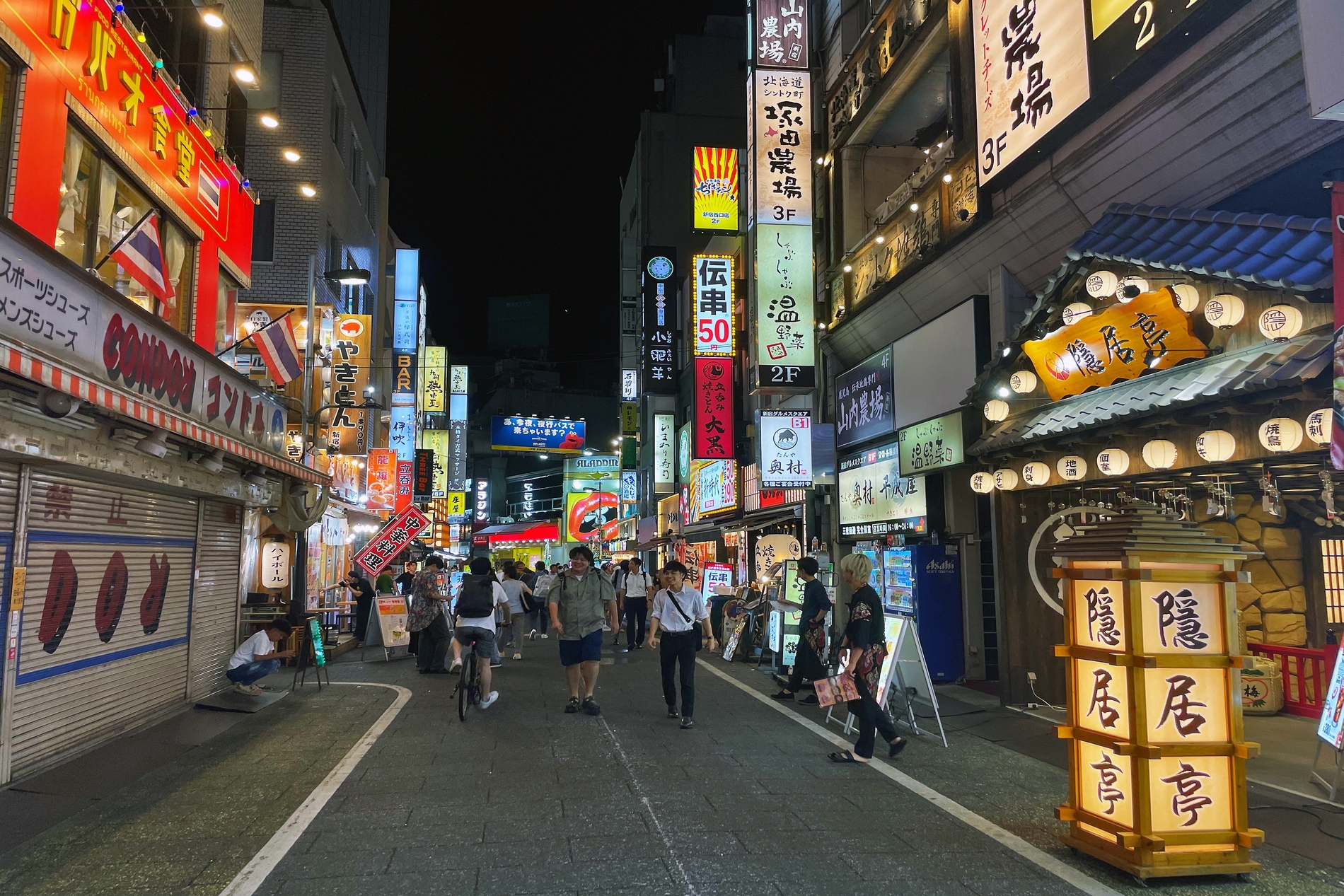
Eventually, the night thins. The bartender wipes down the counter. The last record spins to silence. You step back into the alley, where the sky has turned a pale shade of blue. Delivery bikes hum past. The city begins to wake. You walk toward Shinjuku Station with the scent of smoke and whiskey still clinging to your clothes, carrying the quiet thrill of having slipped into a world that feels both hidden and infinite.
What Tokyo Leaves Behind
A night in Golden Gai lingers long after you’ve left Tokyo. It’s the memory of a bar no bigger than a hallway, where strangers became companions. The glow of lanterns reflected in puddles. The sound of jazz echoing down an alley. The feeling of discovering a city not through its landmarks, but through its stories.
Tokyo doesn’t just offer nightlife. It offers intimacy—one tiny bar at a time.