

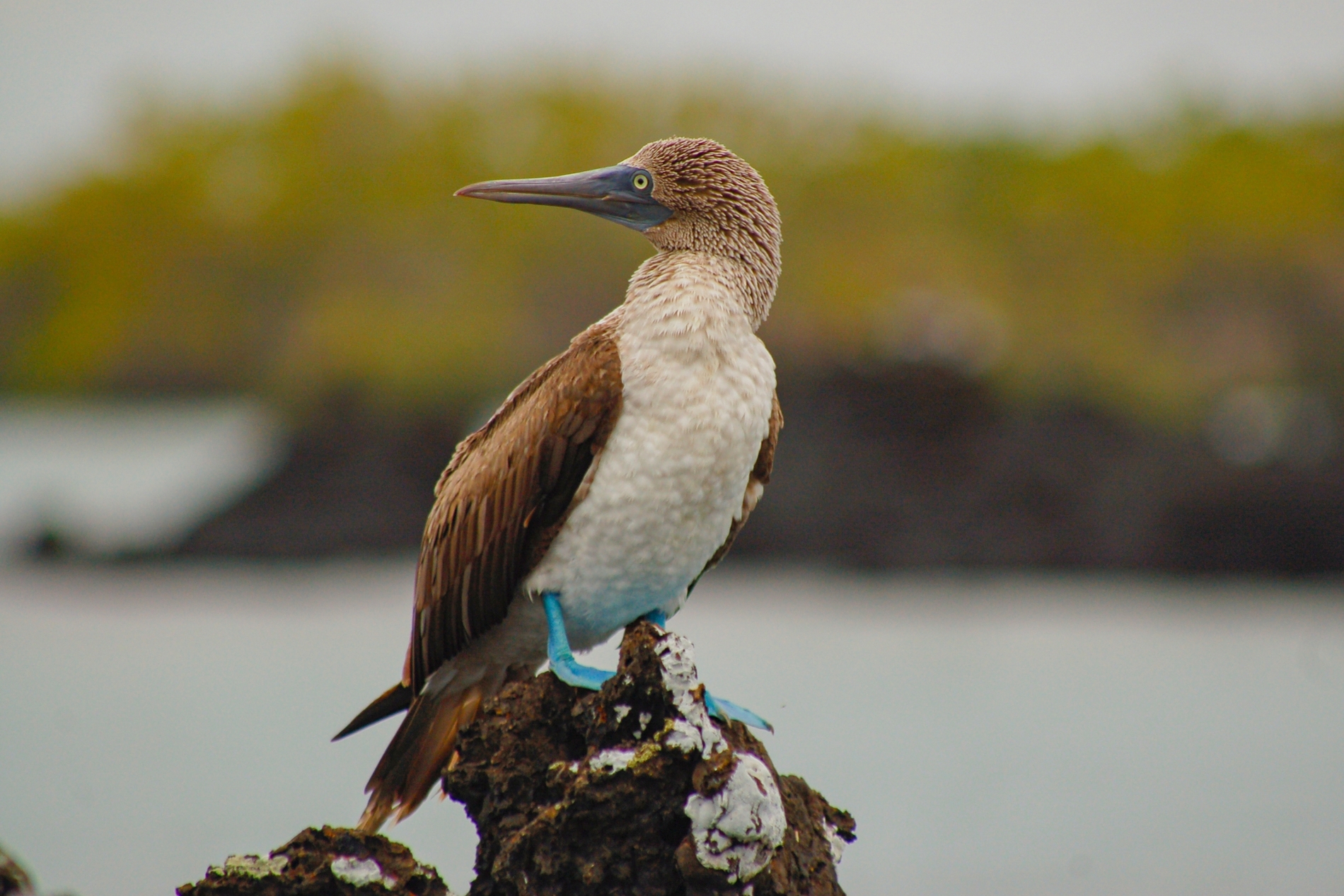
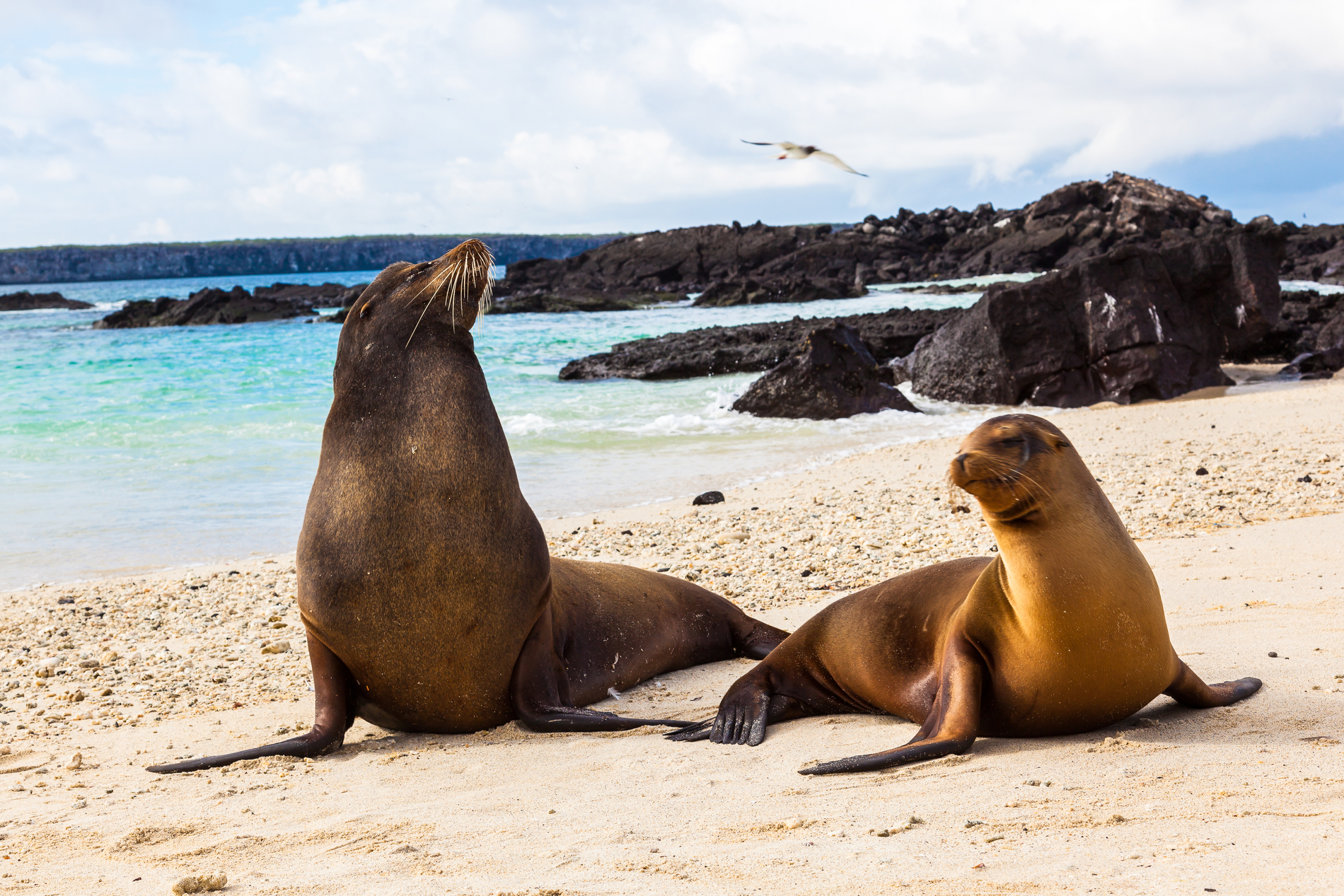
The morning begins with a ripple. A sea lion pup pops its head above the water, whiskers twitching, eyes wide with the kind of curiosity only the Galapagos can inspire. Your child leans over the edge of the panga, pointing, whispering, trying not to squeal. The boat drifts closer to a black‑lava shoreline where marine iguanas bask in the sun like tiny dragons. Blue‑footed boobies dive in perfect arrows beside you. The air smells of salt and warm stone. It’s the kind of moment that imprints itself on a young mind—wild, unscripted, unforgettable.
The Galapagos isn’t a theme park. It’s a living classroom where wildlife doesn’t retreat from humans—it simply coexists. Kids feel that immediately. The islands have a way of slowing them down, sharpening their attention, pulling them into the rhythm of the natural world. Beaches glow white and soft under equatorial sun. Lava fields stretch like frozen waves. Giant tortoises move with the patience of centuries. Everything feels both ancient and immediate.
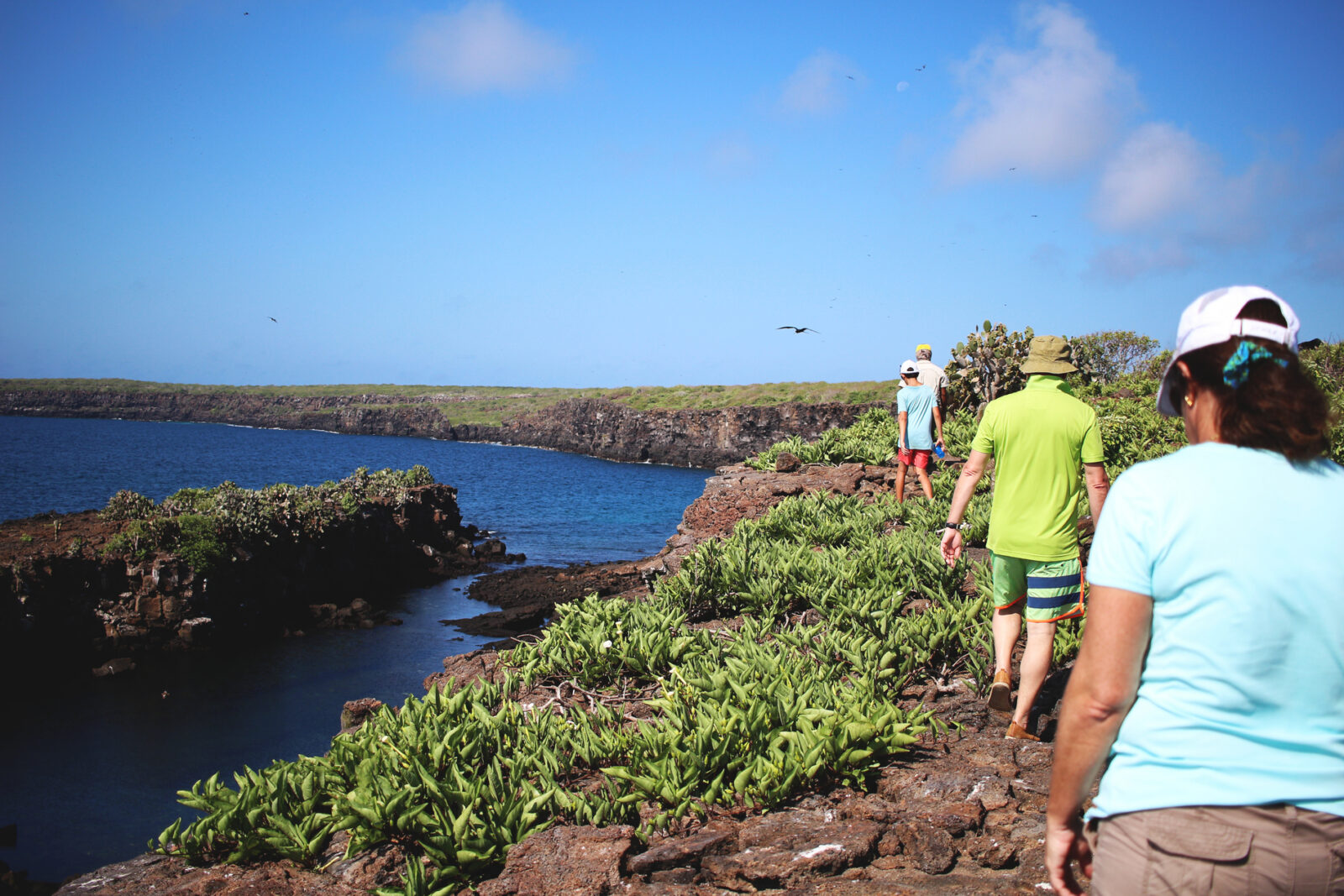
There’s a gentleness to the experience. Guides speak softly, inviting questions. Animals approach without fear. Even the landscapes—harsh at first glance—reveal a quiet beauty when you walk them at a child’s pace. Families fall into this rhythm easily. You hike, you snorkel, you listen. The islands do the teaching.
Connecting the Dots in a Living Classroom
A family trip to the Galapagos is less about checking off species and more about watching kids connect the dots between ecosystems, evolution, and their own sense of wonder. On Española, waved albatrosses perform their clacking courtship dance, and children mimic the sounds, laughing as the birds answer back. On North Seymour, frigatebirds inflate their scarlet throat pouches like living balloons—an image that stays with kids long after the trip ends.
Snorkeling becomes its own revelation. Sea turtles glide past with unhurried grace. Reef sharks circle in the blue, elegant rather than frightening. Schools of surgeonfish shimmer like underwater confetti. Even hesitant swimmers find confidence here; the water is calm, clear, and full of life.
On Santa Cruz, the Charles Darwin Research Station turns science into story. Kids peer into incubators holding tiny tortoise hatchlings, learning how conservation works in real time. Later, in the highlands, they walk among giant tortoises grazing in the mist—creatures older than their grandparents, older than most human histories.
Every island offers a different lesson. Volcanic geology. Bird behavior. Marine ecosystems. Adaptation. Resilience. Kids absorb it all because the learning is tactile, immediate, and woven into every step.
Walking at a Child’s Pace
The Galapagos rewards families who move slowly. Early mornings are best for wildlife encounters, when the air is cool and the animals are active. Midday brings heat that invites long swims and shaded breaks on deck. Late afternoons soften into golden light—perfect for short hikes or quiet beach time.
The shoulder seasons—April to June and September to November—offer calm seas, warm water, and fewer crowds. Small‑ship expeditions or land‑based stays both work well for families; the key is choosing guides who understand how to keep kids engaged without overwhelming them.
Pack lightly. Bring curiosity. Let the islands set the pace.
What You Carry Home
The Galapagos lingers in a child’s memory in flashes: the tickle of a sea lion brushing past during a snorkel, the slow blink of a giant tortoise, the shock of seeing a penguin in equatorial sun. But the deeper imprint is the shift in perspective. Kids leave with a sense of connection—to animals, to ecosystems, to the idea that the world is bigger and more intricate than they imagined.
For families, the islands become a shared story—one told in saltwater, laughter, and the quiet awe of watching nature unfold without filters.