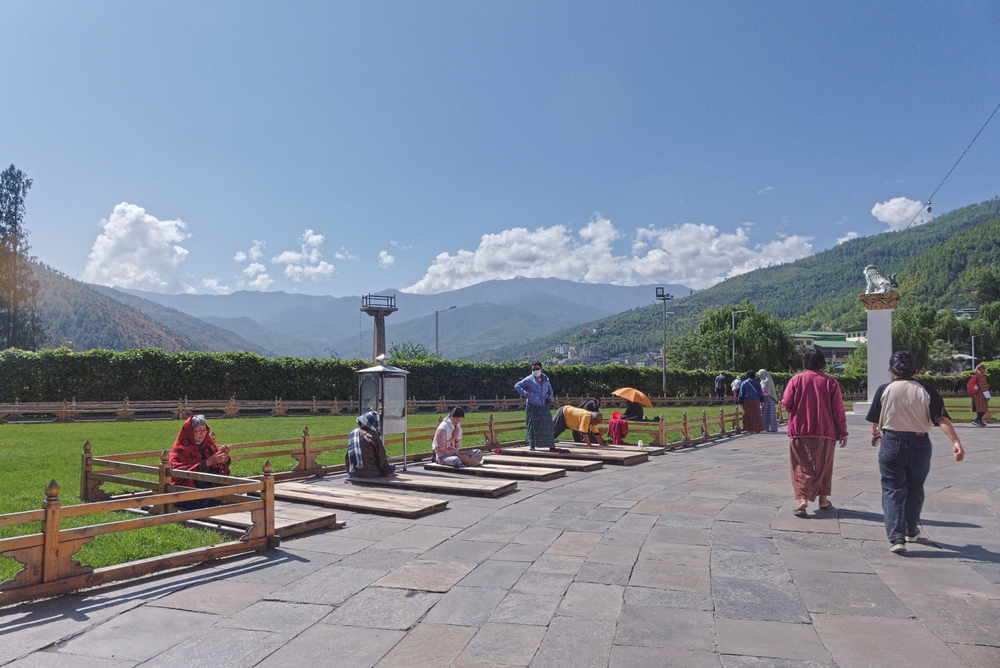

Close your eyes for a second and imagine breathing air so cold and pure it feels like drinking from a mountain spring.
You’re perched on a jagged limestone ledge, 3,000 meters above the world. To your left, a waterfall freezes mid-descent; to your right, a string of weather-beaten prayer flags snaps against the wind, sending “wind horses” carrying silent prayers across the Himalayas. There are no notifications here. No hum of traffic. Just the rhythmic thrum of a distant ceremonial drum and the realization that, for the first time in years, your internal monologue has finally gone quiet.
Welcome to Bhutan—a kingdom where the mountains don’t just provide a backdrop; they act as a massive, granite tuning fork for the human soul. In the “Land of the Thunder Dragon,” meditation isn’t a trendy app on your phone; it’s the ancient, oxygen-thin pulse of a country that measures its success by the collective smile of its people rather than the thickness of its wallet.
Why Bhutan? (It’s Not Just the Altitude)
Most places offer “wellness retreats.” Bhutan offers a spiritual reset. As the world’s first carbon-negative country, the literal atmosphere here is different. But the real magic lies in its philosophy of Gross National Happiness (GNH).
In 2026, Bhutan is leaning even further into this “mindfulness first” identity. They are currently building the Gelephu Mindfulness City, a massive, eco-friendly hub designed specifically around meditation, walking, and spiritual health. It’s essentially the world’s first “meditation metropolis.”
The “Must-Sit” Spots for 2026
If you’re planning a journey to the mountains, here is where the silence speaks the loudest:
- Tiger’s Nest (Paro Taktsang): Yes, it’s iconic, but have you ever meditated in the caves behind the main temple? This is where Guru Rinpoche supposedly meditated for three years. The energy is heavy, ancient, and incredibly grounding.
- The Phobjikha Valley: If you prefer “walking meditation,” this glacial valley is your sanctuary. In the winter, it’s home to rare black-necked cranes. The rhythmic sound of their wings against the silence of the valley is a natural metronome for your breath.
- Nalanda Buddhist Institute: Tucked above the Punakha Valley, this is a place for the curious. You can actually sit with the monks, share a cup of butter tea, and practice “Lü Sem”—a Bhutanese body-scanning technique that uses the physical self as an anchor against the wandering mind.
3 Bhutanese Secrets to Bring Home
You don’t need to be a monk to practice like one. Bhutanese meditation often focuses on three unique pillars:
- Chöying (Nature Connection): Monks here believe the landscape is a teacher. Instead of closing your eyes, you find a natural element—a flowing river or a swaying pine—and synchronize your breath with its movement.
- The 3-Breath Reset: Many Bhutanese locals, from taxi drivers to government officials, practice a “mini-meditation” of three conscious breaths before every meeting or task. It’s a simple way to stay “High Value, Low Volume” in your own mind.
- Thukdam (Compassion Focus): Meditation in Bhutan is rarely just about me. It’s about us. A common practice is “Tonglen,” where you visualize breathing in the stress of the world and breathing out peace.
The “Mindful Traveler” Checklist
If you’re feeling the pull of the Himalayas, keep these logistics in mind for 2026:
- The SDF: Bhutan charges a Sustainable Development Fee (SDF) of $100 per day. Think of it as a mandatory investment to keep the mountains pristine and the healthcare free for locals.
- Go Digital-Lite: Most high-end retreats now offer “Digital Detox” programs where you trade your screen for a view of the snow-capped peaks.
- Hot Stone Baths: Don’t skip the post-meditation soak. Traditional Bhutanese baths use river stones heated in wood fires and infused with medicinal herbs. It’s the ultimate physical punctuation to a day of mental stillness.