

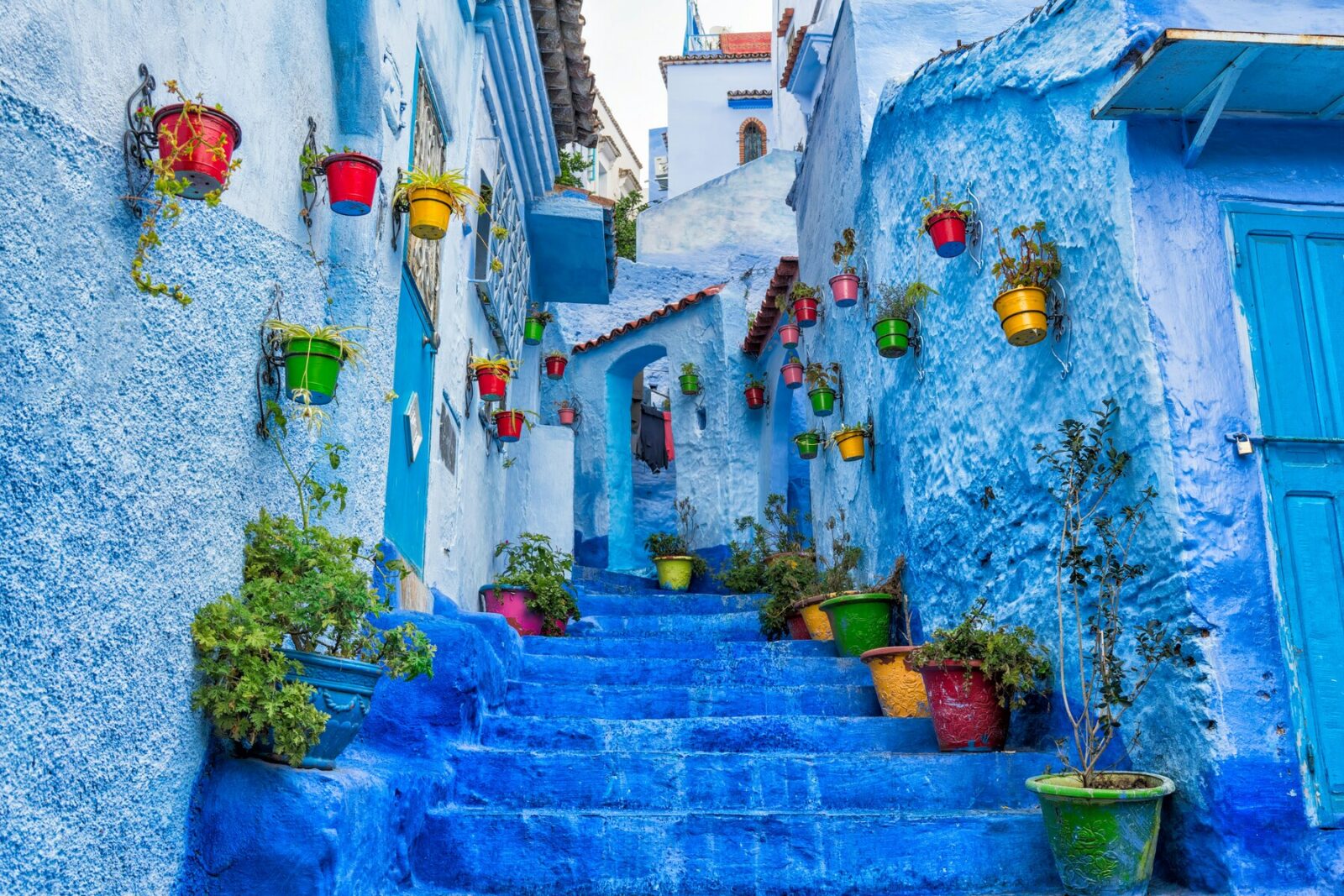
As the sun retreats behind the jagged limestone peaks of the Rif Mountains, a curious phenomenon overtakes the medina of Chefchaouen. It is not merely the arrival of twilight, but a total atmospheric saturation. In the “Blue Hour”—that liminal space between sunset and true night—the sky and the city begin to mirror one another with an intensity that feels almost supernatural. The cobalt, cerulean, and powder-blue walls of the medina seem to release the heat of the day, exhaling a cool, indigo light that blurs the boundaries between the cobblestones beneath your feet and the heavens above.
To stand in a quiet alleyway at this moment is to feel less like a traveler and more like a diver submerged in a deep, still pool. The world becomes monochromatic, yet incredibly detailed. The sharp edges of the mountain air soften, and the city’s famous blue hues—ranging from a pale, icy wash to a deep, royal velvet—deepen until they vibrate against the retina. This is the heartbeat of Chefchaouen: a visual and emotional calm that defies the frantic energy often associated with Moroccan medinas.
The Aquatic Labyrinth
Walking through the medina is a rhythmic experience. Because the town is built on a slope, every few steps offer a new perspective. You turn a corner and find a staircase that appears to lead directly into the sky; you look down a narrow passage and see a solitary cat perched on a blue-painted ledge, its eyes catching the last of the light. There is a weightlessness to the air here. Perhaps it is the altitude, or perhaps it is the psychological effect of being surrounded by the color of the sea and the sky, but the typical “tourist” anxiety—the need to see everything, to capture every moment—slowly dissolves. You find yourself walking slower, breathing deeper, and speaking in lower tones, as if any sudden noise might shatter the sapphire stillness.
The Texture of a Myth
The romance of Chefchaouen is rooted in its tactile nature. The blue is not a flat, industrial pigment; it is a living, breathing skin. Traditionally, the walls are painted with a mixture of lime, water, and pigment. This creates a porous, matte texture that absorbs light rather than reflecting it. If you run your hand along a wall, you feel the irregularities of the stone beneath and the soft, chalky residue of the wash.
The origins of this color palette are shrouded in a mix of history and local lore. Some say the Sephardic Jews who fled the Spanish Inquisition brought the tradition with them, painting their homes blue to mirror the sky and remind them of God. Others suggest a more practical purpose: that the color repels mosquitoes or keeps the interiors cool during the fierce Moroccan summers. Whatever the true catalyst, the result is a city that feels like a collective work of art.
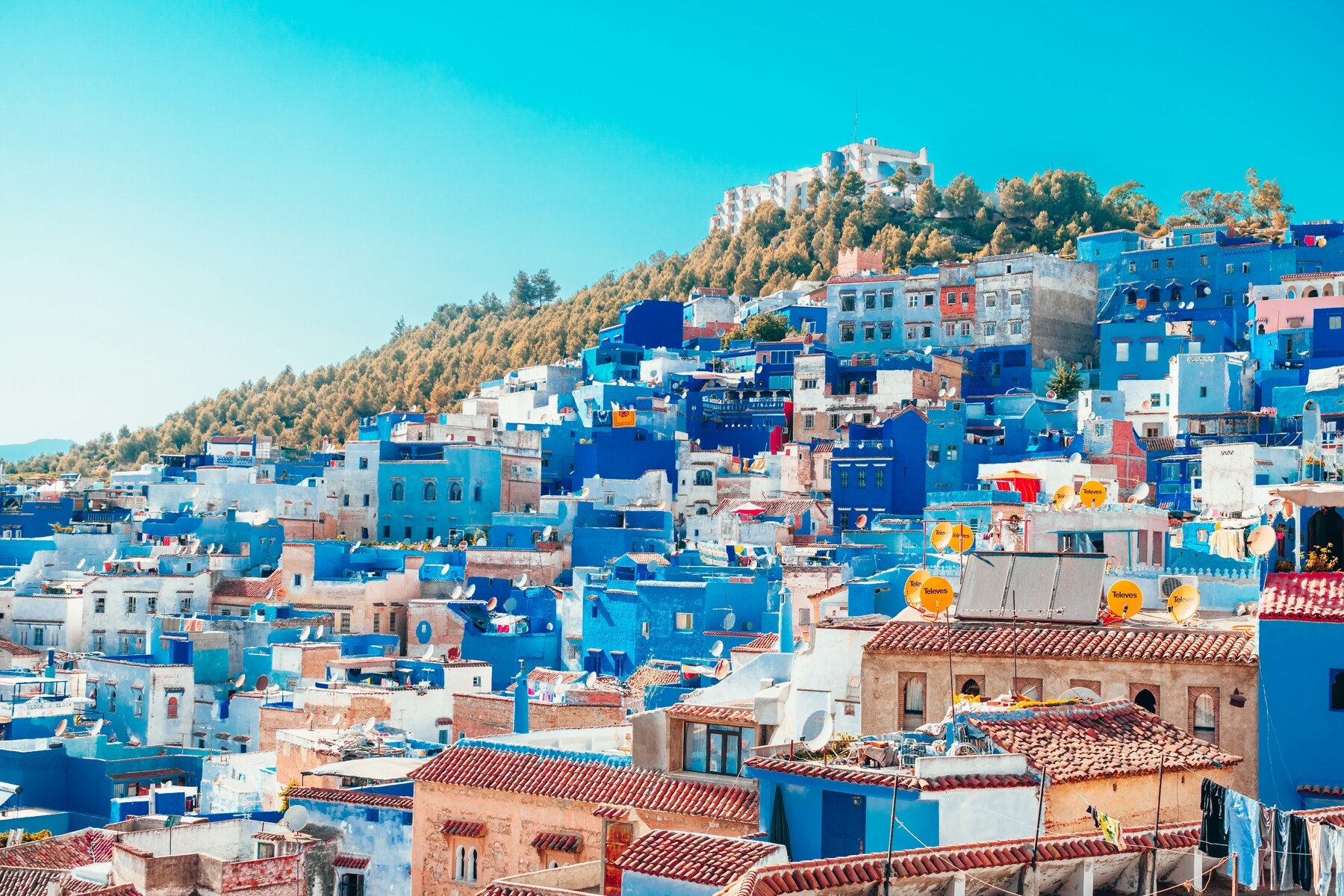
As night falls, the emotional resonance of the city shifts. The blue walls catch the warm, golden glow of the wrought-iron lanterns, creating a high-contrast world of deep shadows and amber highlights. This is when the city feels most private. Behind the heavy doors, you can hear the faint clatter of tagines being prepared and the rhythmic pouring of mint tea. The scent of the city—a blend of woodsmoke, dried mountain herbs, and the earthy dampness of the nearby Ras El Maa spring—becomes more pronounced. It is an invitation to retreat, to find a rooftop terrace or a hidden corner in a small café and watch the stars emerge over the peaks of the Rif.
The Resonance of Silence
True romance in travel is often found in the absence of noise. In the Blue Hour, as the Adhan (the call to prayer) echoes across the valley, the city reaches a peak of spiritual and sensory clarity. The voices of the muazzin from different mosques overlap in a haunting, melodic canon that bounces off the limestone cliffs. It is a moment of total immersion. You are no longer observing a destination; you are part of its evening breath.
This silence is particularly poignant given the ruggedness of the surrounding landscape. Chefchaouen is a mountain town at its heart. The Rif Mountains are wild, green, and often shrouded in mist, providing a stark, dramatic backdrop to the soft, aquatic medina. This juxtaposition—the harshness of the mountains versus the gentleness of the blue city—creates a unique emotional tension. It feels like an outpost of civility and calm in a beautiful, unforgiving wilderness.
Finding the perfect Indigo Shift
To experience Chefchaouen’s authentic soul, one must move against the tide of the day-trippers. The city is often flooded with visitors from Tangier or Tetouan between 11:00 AM and 4:00 PM, a time when the sun is harshest and the colors can feel washed out. The sophisticated traveler stays overnight, allowing themselves the luxury of the early morning and the late evening.