


The first thing you notice is not the view, but the scent. It is a heavy, citrus-laden humidity that clings to the skin, carried by a breeze that has traveled over thousands of lemon trees before finally tumbling down the limestone cliffs of the Amalfi Coast. In Positano, the air is thick with the Sfusato Amalfitano—the oversized, knobby lemons that have defined this vertical landscape for centuries. To stand on a balcony here is to feel suspended between two versions of infinity: the deep, shimmering cobalt of the Tyrrhenian Sea below and the unblemished Mediterranean sky above.
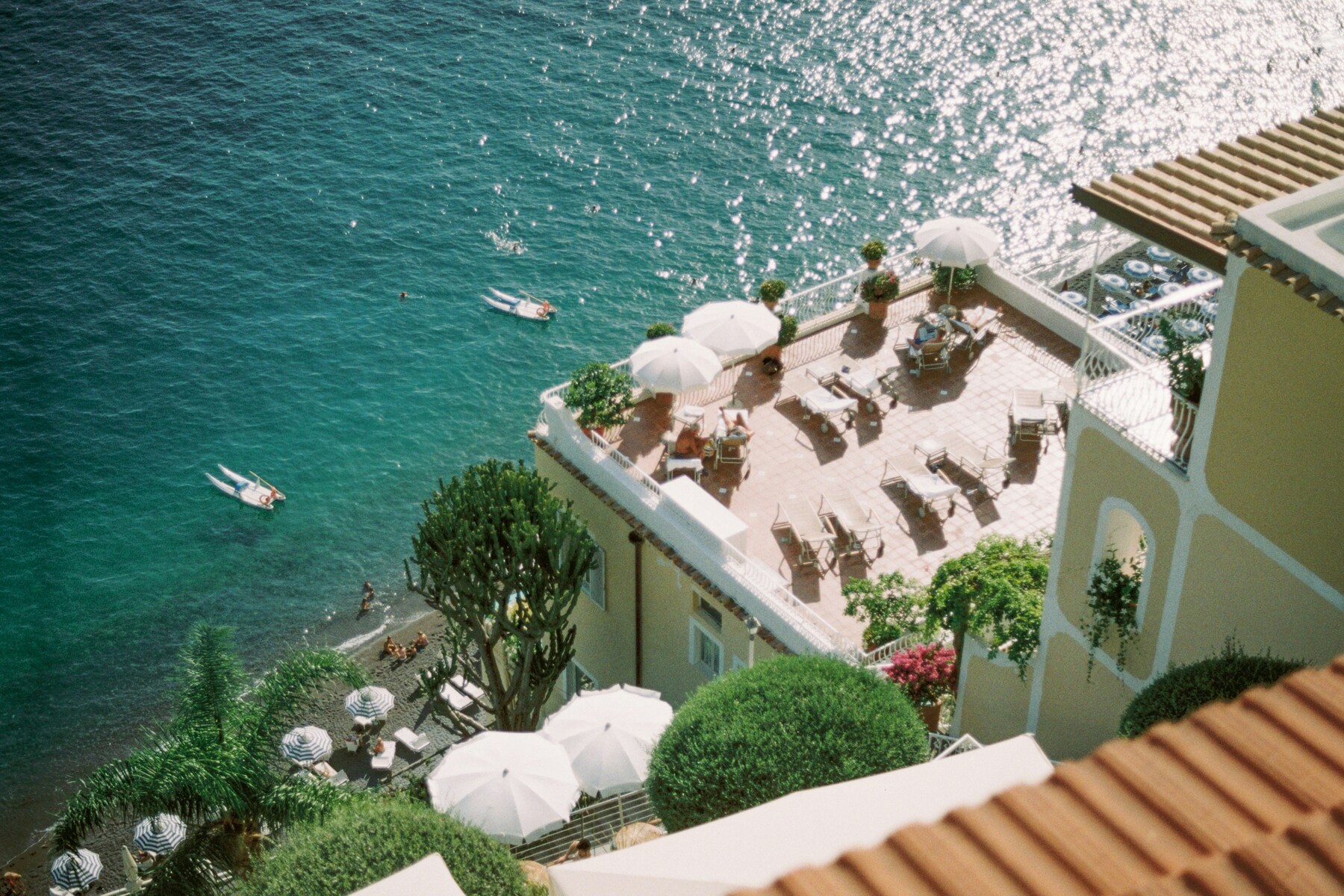
Positano does not sit on the land; it clings to it. It is a town built on a dare against gravity. The pastel-washed houses—shades of faded rose, sun-bleached ochre, and pale terracotta—are stacked one atop the other like a collection of precious stones discarded by a giant. There is a profound, almost primal romance in this precariousness. It suggests a world where the laws of geography have been negotiated to make room for beauty, a place where every window is a frame for a masterpiece.
The Architecture of Intimacy
To understand Positano, one must accept the tyranny of the staircase. There are very few “streets” in the traditional sense; instead, there is a labyrinthine network of scalinatelle—steep, narrow stone steps that wind between houses and gardens. This verticality dictates the rhythm of life. It is not a place for the hurried or the practical. It is a place for the slow climb, for stopping midway to catch your breath and finding yourself staring directly into a private garden where bougainvillea spills over a whitewashed wall in a riot of magenta.
This layout creates a unique sense of intimacy. Because the town is built upward rather than outward, privacy is a vertical concept. You might be dining on a terrace, feeling entirely alone with the sea, while ten feet above you, a local grandmother is hanging laundry, and twenty feet below, a hidden garden is hosting a quiet conversation. The sounds of the town—the distant chime of the bells from the Church of Santa Maria Assunta, the hum of a solitary Vespa on the lower road, the rhythmic shushing of waves against the Spiaggia Grande—filter through the air in a way that feels curated rather than chaotic.
For those seeking a romantic reprieve, this architectural density is a gift. It forces a certain closeness. You walk hand-in-hand because the paths are narrow; you linger over dinner because the trek back up to your villa is a journey in itself. The very effort of navigating the town makes every reached destination—a hidden bar, a quiet cove, a sun-drenched terrace—feel like an earned secret.
The Light and the Lemon Groves
The Amalfi Coast is a place of shifting moods, dictated entirely by the angle of the sun. In the early morning, the light is cool and silver, catching the mist that often hangs over the water. This is when the lemon groves are at their most fragrant. Higher up the cliffs, above the crowded boutiques of the lower town, the air cools, and the scent intensifies. The groves are terraced into the mountainside, supported by ancient dry-stone walls and shaded by pagliarelle—traditional straw mats that protect the fruit from the wind. Walking through these groves is a sensory immersion; the leaves are a deep, waxy green, and the lemons are so bright they seem to glow from within.
As the day progresses, the light warms, turning the pastel houses into a glowing mosaic. But it is at sunset that Positano reveals its true emotional weight. As the sun dips behind the Lattari Mountains, the town undergoes a structural transformation. The shadows stretch long and blue across the water, and the buildings begin to catch the final, honeyed rays of the “Golden Hour.” The peach and rose walls deepen into orange and crimson. From a distance, as the first lanterns are lit, the town begins to resemble a presepe—a traditional Italian nativity scene—mirrored in the darkening sea.
There is a specific stillness that settles over the coast at this hour. The day-trippers have retreated to the ferries, leaving the town to those who have stayed to witness its transition into night. It is a moment of profound resonance, where the beauty of the landscape feels almost overwhelming, a reminder of why this stretch of coast has inspired poets, painters, and lovers for generations.
Positano is not a place you visit; it is a place you feel. It is the ache in your legs after a day of climbing, the salt on your skin after a swim in the deep blue, and the lingering scent of lemon that follows you long after you’ve left the cliffs behind. It is a testament to the idea that the most beautiful things in life are often the most difficult to reach—and that the view from the top is always worth the climb.