

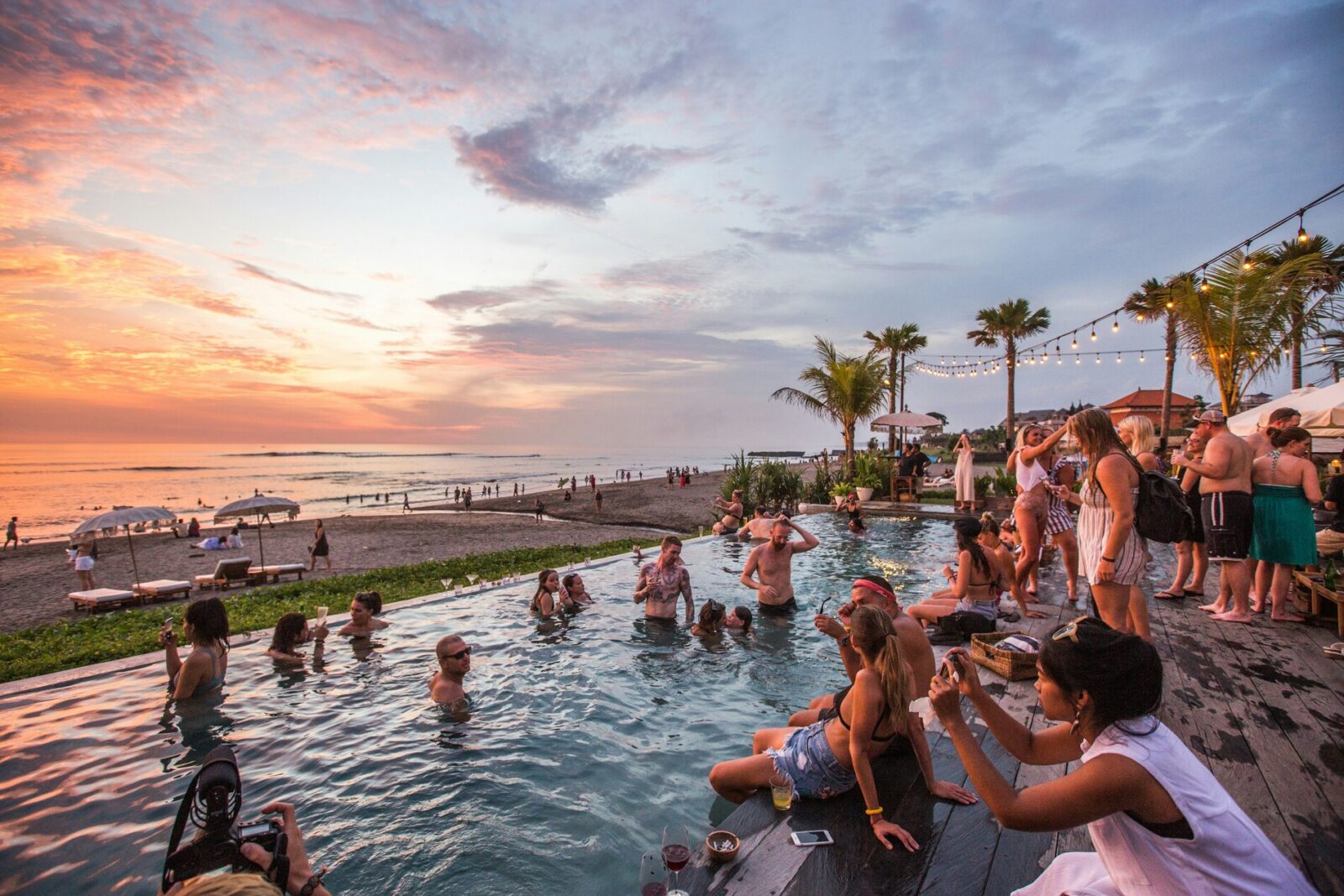
The sun melts into the Caribbean in a wash of coral and gold, and Tulum exhales. The beach cools. The palms sway. The air thickens with copal smoke and anticipation. You follow a sandy path lit by flickering torches, the sound of drums growing louder with every step. A wooden archway opens into a clearing where bodies move in silhouette—barefoot, sun‑kissed, glitter‑dusted. A DJ perched in a bamboo tower raises the tempo, and the jungle responds: lights pulsing through the trees, shadows dancing across the canopy, the night alive with rhythm. In this moment—feral, free, impossibly electric—you understand why Tulum has become the global capital of barefoot hedonism. It’s not a party. It’s a pulse.

The Ritual of Sunset
Tulum’s nights begin long before darkness falls. As the sun dips, beach clubs shift from languid to luminous. Cushions are rearranged, candles lit, mezcal poured. The crowd gathers barefoot on the sand, swaying to slow, hypnotic beats that feel like a prelude to something deeper. The sky turns violet. The first fire dancer appears. The night begins to stretch.
This is the Tulum tempo: a slow burn that becomes a wildfire.
Jungle Raves Hidden in the Green
Once darkness settles, the real pilgrimage begins. Guests slip into tuk‑tuks or follow locals down unmarked paths into the jungle. There, beneath towering ceiba trees, the world transforms. Bamboo stages rise from the earth. Laser lights cut through the canopy. The bass vibrates through the ground like a heartbeat. DJs from Berlin, Mexico City, Tel Aviv, and Ibiza spin sets that blend tribal percussion with deep house and melodic techno.
The jungle becomes a cathedral. The dancers become a tribe.
The Barefoot Code
Tulum’s party culture is defined by a kind of effortless, sun‑bleached glamour. Shoes are optional. Sequins mix with linen. Tattoos glow under UV light. The crowd is a global mosaic—creatives, nomads, founders, models, mystics, and the beautifully unclassifiable. Conversations drift between English, Spanish, French, and Portuguese. Everyone is here for the same reason: to dissolve into the rhythm.
There is no VIP section. The dance floor is the democracy.
Mezcal, Smoke, and Midnight Feasts
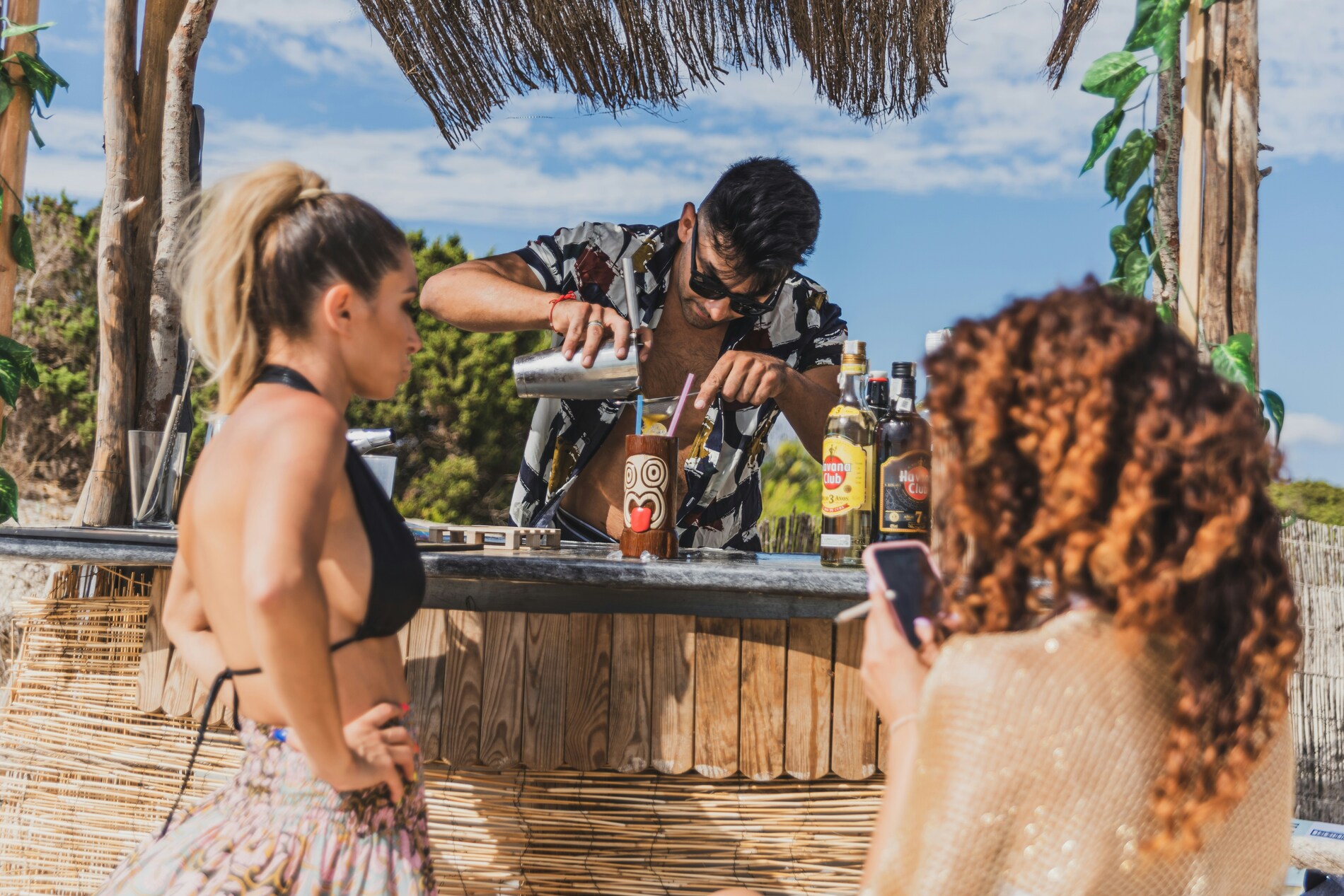
Between sets, guests gather around open‑air bars carved from driftwood. Bartenders pour smoky mezcal, hibiscus cocktails, and fresh coconut water. Food stalls offer midnight feasts—grilled octopus, handmade tortillas, ceviche bright with lime. The scent of copal drifts through the air, mingling with salt and sweat. The night tastes like fire and citrus.
Dawn on the Beach
As the jungle rave winds down, the crowd migrates back to the beach. The sky begins to pale. The waves soften. A final DJ plays a sunrise set—something slow, emotional, expansive. People dance with their eyes closed, faces turned toward the horizon. The sun rises, and the night dissolves into a warm, golden hush.
Tulum’s magic is not in the chaos. It’s in the transition—from wildness to stillness, from darkness to light.
A Season for Every Rhythm
Tulum’s party calendar shifts with the tides.
- Early winter brings intimate gatherings and slow, soulful nights.
- New Year’s week is a supernova—global DJs, massive jungle productions, sunrise marathons.
- Spring softens again, the energy more local, more grounded.
- Summer is humid, raw, and perfect for those who prefer their nights unpolished.
But the tempo remains constant: primal, hypnotic, unforgettable.
What the Jungle Leaves Behind
A Tulum night stays with you long after you’ve rinsed the sand from your hair. It’s the memory of dancing barefoot under a canopy of stars. The echo of drums vibrating through the trees. The feeling of being part of something ancient and modern at once—a celebration that feels less like nightlife and more like ritual.
Tulum doesn’t just host parties. It awakens something.