

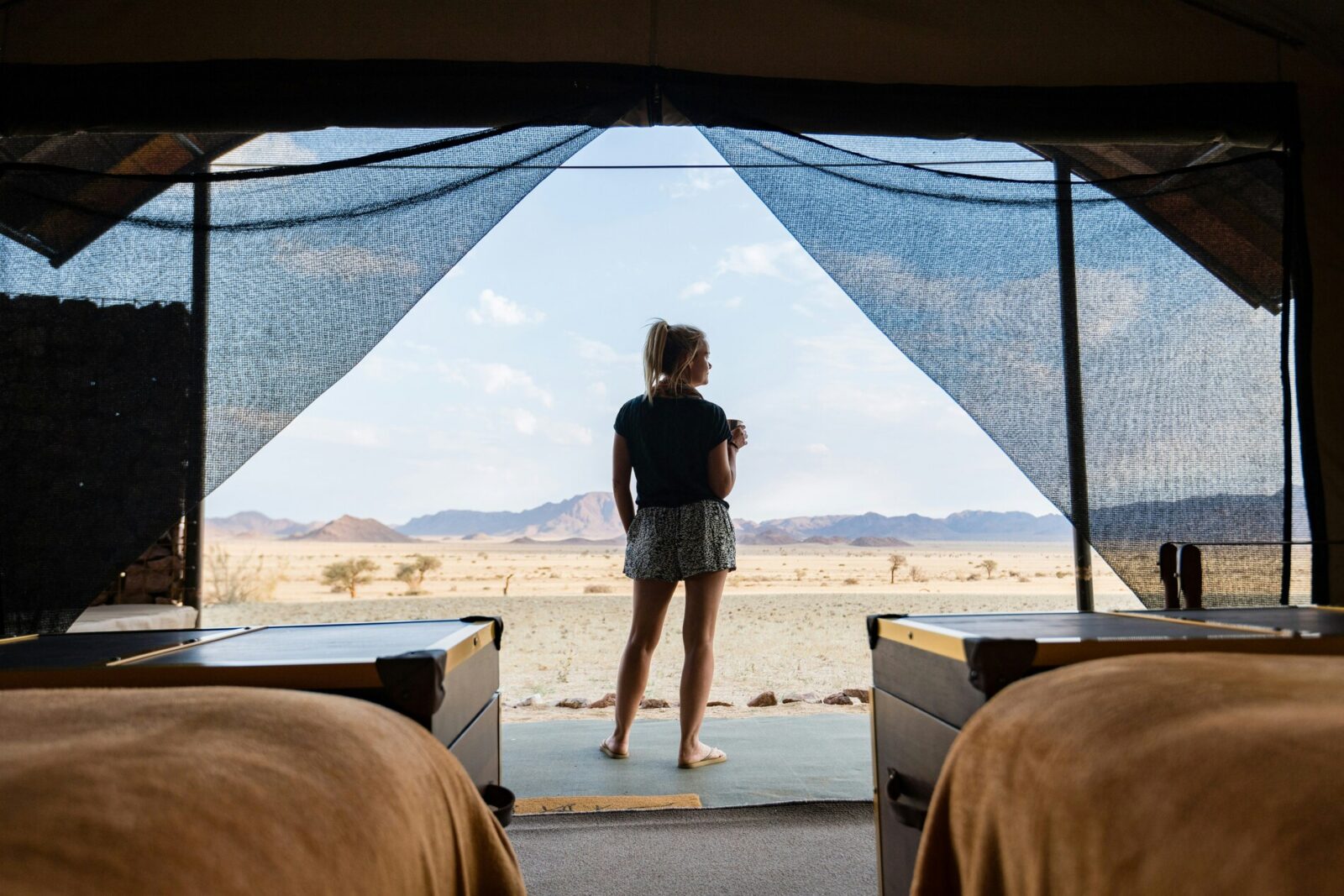
Dawn breaks over the Namib like a slow exhale—soft apricot light spilling across dunes that look sculpted rather than formed. The desert is silent except for the faint rustle of wind brushing over sand. As you approach your lodge, it rises from the landscape like a mirage of stone and shadow: sharp lines, monolithic geometry, glass panels reflecting the endless horizon. A guide hands you cool rooibos tea. The air is warm, dry, ancient. In this moment—still, cinematic, impossibly vast—you understand why Namibia has become the new frontier of luxury design. Here, modernist architecture doesn’t compete with the desert. It surrenders to it.
Architecture Carved From Silence
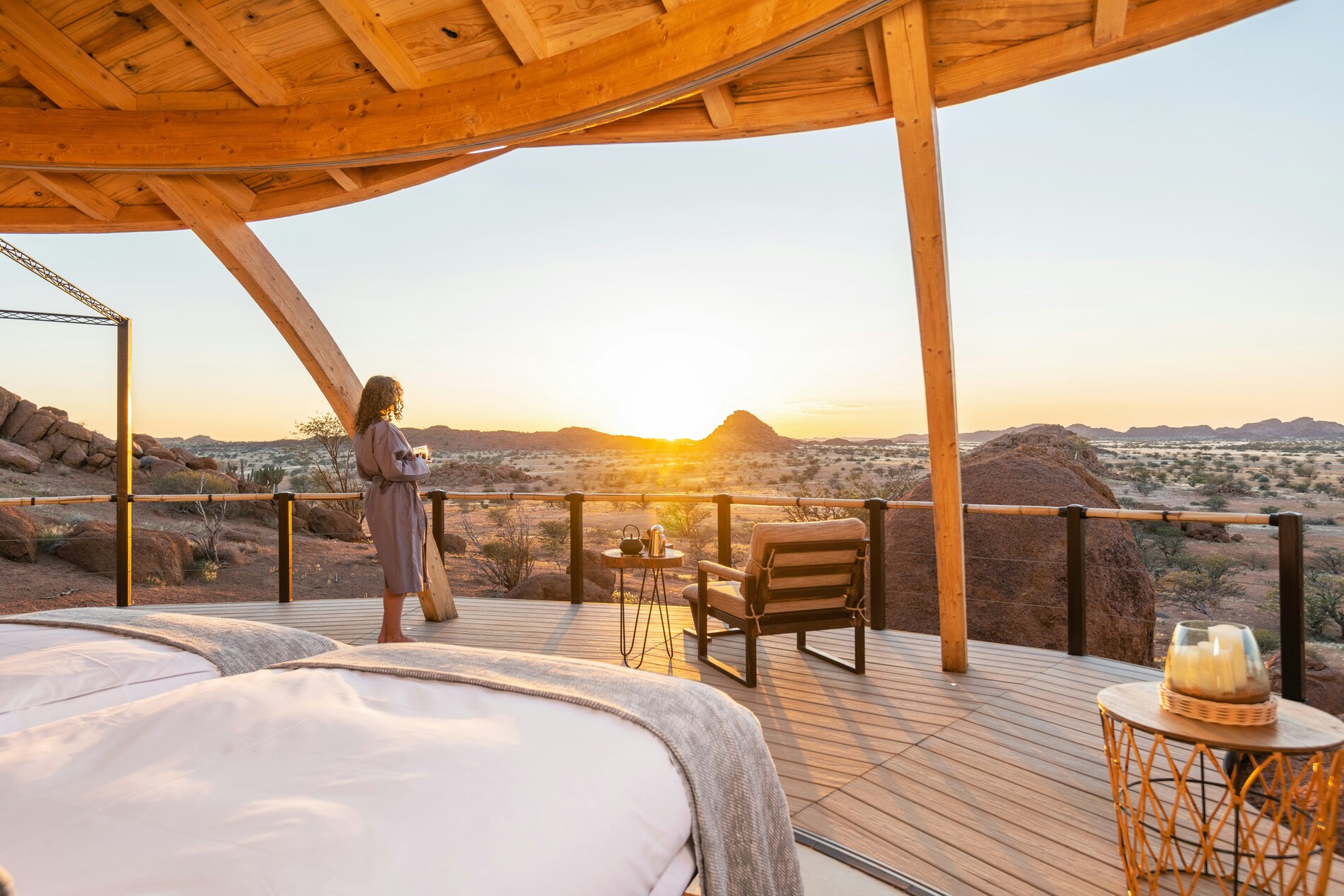
Namibia’s most exclusive desert lodges embrace a design philosophy rooted in restraint. Structures emerge from the earth in geometric silhouettes—concrete slabs, rust‑toned steel, smooth stone—materials chosen to echo the desert’s mineral palette. Interiors are minimalist but tactile: linen, raw timber, polished cement, and sculptural furniture that casts long shadows in the afternoon light.
The architecture is not meant to dominate the landscape. It is meant to disappear into it. From a distance, these lodges look like ancient outcrops. Up close, they reveal a precision that feels almost ceremonial.
Suites That Frame the Infinite
Inside, suites are designed as sanctuaries of stillness. Floor‑to‑ceiling windows frame dunes that shift with every gust of wind. Beds are positioned to face the horizon, allowing sunrise to become part of the morning ritual. Outdoor showers open onto private courtyards where the only sound is the desert breathing. Some suites include plunge pools carved into stone, their water reflecting the sky like a second horizon.
The luxury is elemental—light, shadow, heat, silence.
Days That Move With the Desert
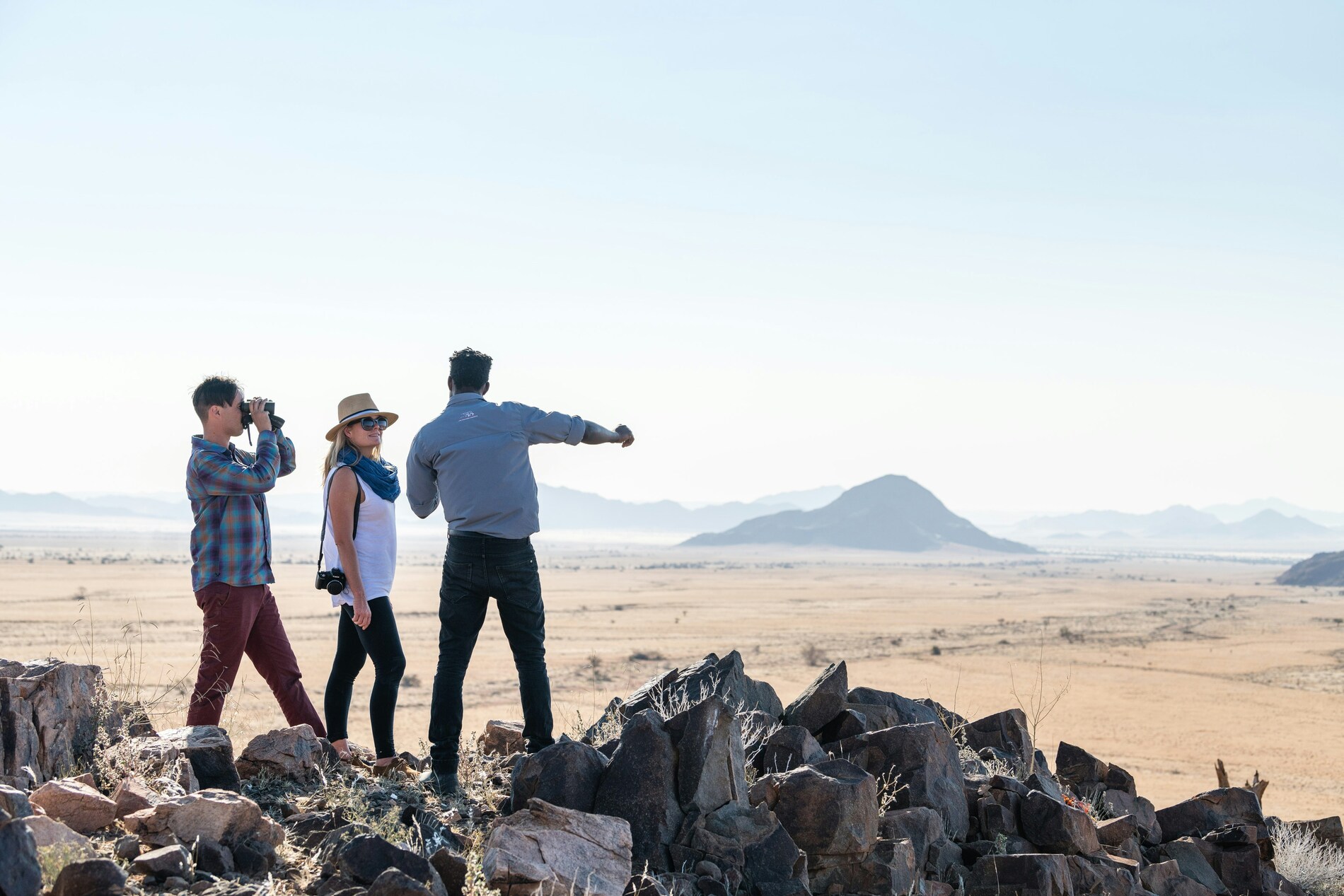
Life in Namibia’s modernist retreats follows the rhythm of the land. Mornings begin with guided walks across ochre dunes, where the sand feels cool beneath your feet. Midday invites stillness: reading in shaded courtyards, floating in pools that mirror the sky, or watching oryx move across the plains like brushstrokes.
Afternoons bring exploration—private drives through Sossusvlei’s red dunes, visits to ancient rock engravings, or flights over the Skeleton Coast where shipwrecks lie half‑buried in sand. The desert shifts constantly, revealing new colors, new textures, new moods.
Evenings Wrapped in Firelight
As the sun sets, the desert cools and the sky turns violet. Lanterns glow along stone pathways. Dinner is served outdoors beneath a canopy of stars so bright they feel close enough to touch. The cuisine blends local ingredients—game, wild herbs, desert truffles—with contemporary techniques. Afterward, guests gather around fire pits carved into the rock, the flames flickering against monolithic walls.
Night in the desert is profound. The silence is absolute. The stars feel infinite.
A Season for Every Shade of Sand
Namibia’s desert transforms with the seasons. Winter brings crisp air and long, golden afternoons. Summer offers dramatic heat and lightning storms that illuminate the dunes. Autumn and spring bring soft winds and clear skies perfect for stargazing. Each season reveals a different face of the desert—sometimes gentle, sometimes fierce, always mesmerizing.
What the Desert Leaves Behind
A stay in Namibia’s modernist monoliths lingers long after you’ve returned home. It’s the memory of walking across dunes that feel older than time. The way the architecture framed the horizon like a living painting. The sensation of being held by a landscape so vast it recalibrates your sense of scale.
Luxury here isn’t about excess. It’s about perspective—about inhabiting a place where the world feels both ancient and newly discovered.